51 Photos That Will Convince You to Visit Antarctica
A Visual Guide to Antarctica: Photos of What You’ll Actually See on an Expedition to Antarctica
Antarctica is one of the most remote places on Earth and one of the few places left that sitll feels genuinely untouched by humans. There are no cities, no roads, no permanent population. It’s just ice, wildlife, and the ocean – all on a scale that feels impossible to comprehend.
After spending 22 days exploring the Antarctic Peninsula on an expedition cruise with National Geographic–Lindblad Expeditions, I came home with tens of thousands of photos and a much clearer understanding of what defines Antarctica beyond the headlines.
This collection of my Antarctica travel photos is curated to show you what Antarctica actually looks like during a real expedition: the landscapes, the wildlife, the ice, the landings, and the quieter moments in between.
If you’re planning a trip (or wondering whether Antarctica is worth the effort) these photos tell that story better than words alone.
All photos are from my 22-day expedition to the Antarctic Peninsula with National Geographc-Lindblad Expeditions (Oct/Nov)
Psssst: If Antarctica is on your radar, this will save you a lot of guesswork…
I created a free Antarctica packing list based on my own expedition – including layers, boots, camera gear, and cold weather essentials that you actually need to bring (and what you can leave at home) 👇
Antarctica Landscapes in Photos (Ice, Mountains, and Scale)
The Antarctic Peninsula is where most people get to experience Antarctica for the first time.
And the very first thing that strikes you about this place isn’t the penguins…it’s the ice.
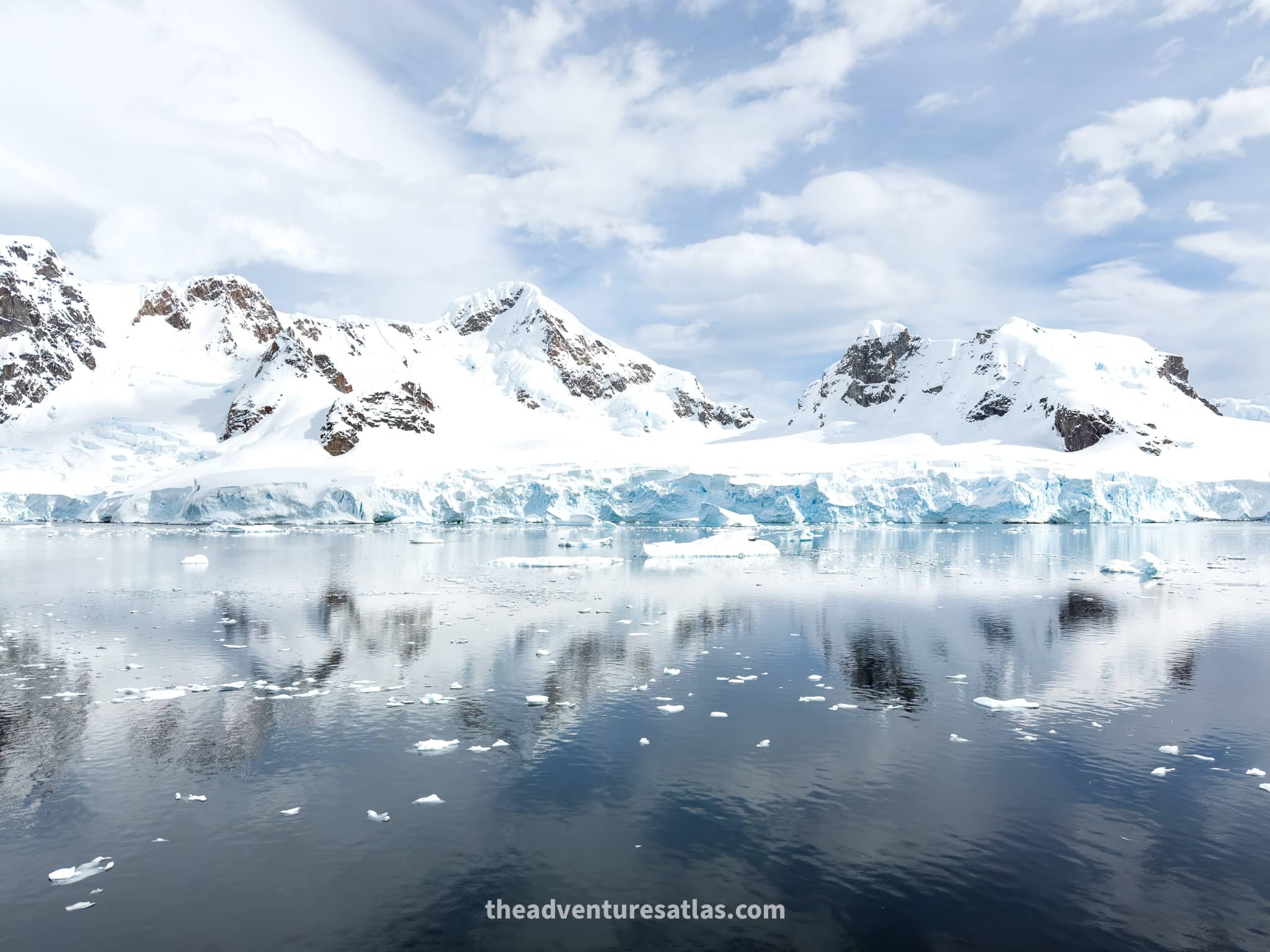

Antarctica isn’t just white and flat, like we thought it was.
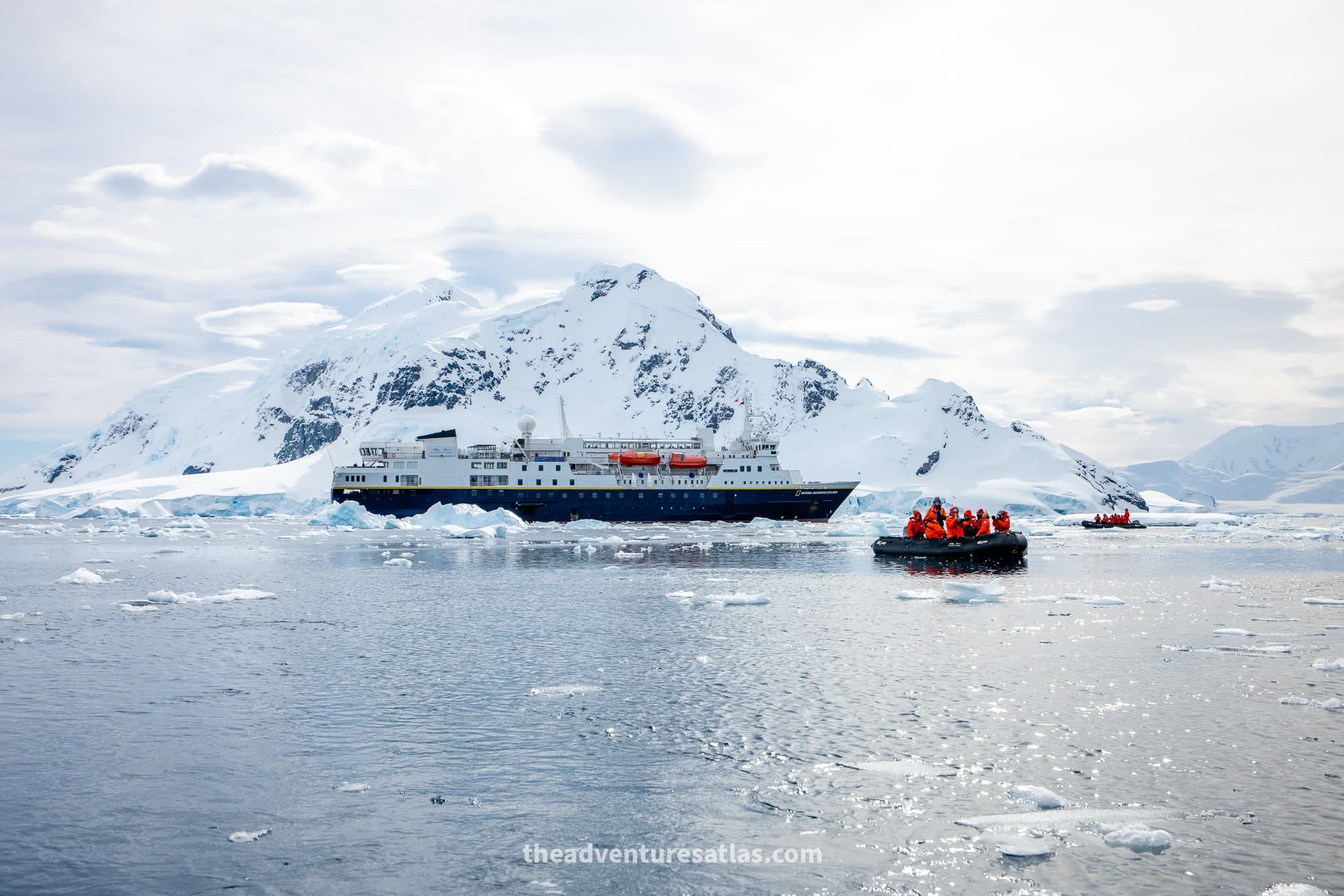
The Antarctic Peninsula is defined by jagged mountains, massive glaciers and towering icebergs that make ships and people look impossibly small.

Much of what you’ll see is experienced from the water, where the scale of the continent becomes most apparent.

This is the Antarctica people imagine, but seeing it in person changes your sense of scale almost immediately. Look how tiny that zodiac is!

Weather and light change constantly, which means the same location can look completely different within minutes.
These shifting conditions are part of what makes Antarctica so visually striking and so unpredictable.

Snow covered mountains rise straight out of the ocean. Glaciers spill into sheltered bays. Icebergs drift silently past the ship. Every day looks different depending on the weather, ice conditions and the light.
Wildlife You’ll See in Antarctica (Up Close and Unfiltered)
You don’t just “spot” wildlife in this part of the world. You are completely immersed in it.
Animals move freely, show little interest in humans, and often dictate where you can and can’t go. You’re very clearly a visitor in their world. Penguins regularly cross landing sites, seals nap beside walking routes, and whales will surface right next to the Zodiacs without warning. Strict guidelines protect animals from disturbance, but proximity is unavoidable and completely unforgettable.
Wildlife encounters are never guaranteed, but during peak season, it’s common to see multiple species in a single day. Penguins dominate the landscape, but seals and whales are frequent highlights as well.


Weddell and crab eater seals hang out along rocky beaches or lounge out on snow covered icebergs. They spend most of the day sleeping, occasionally lifting their heads as Zodiacs pass.
Some are completely unbothered by human presence, while others are closely monitored by guides due to territorial behavior.
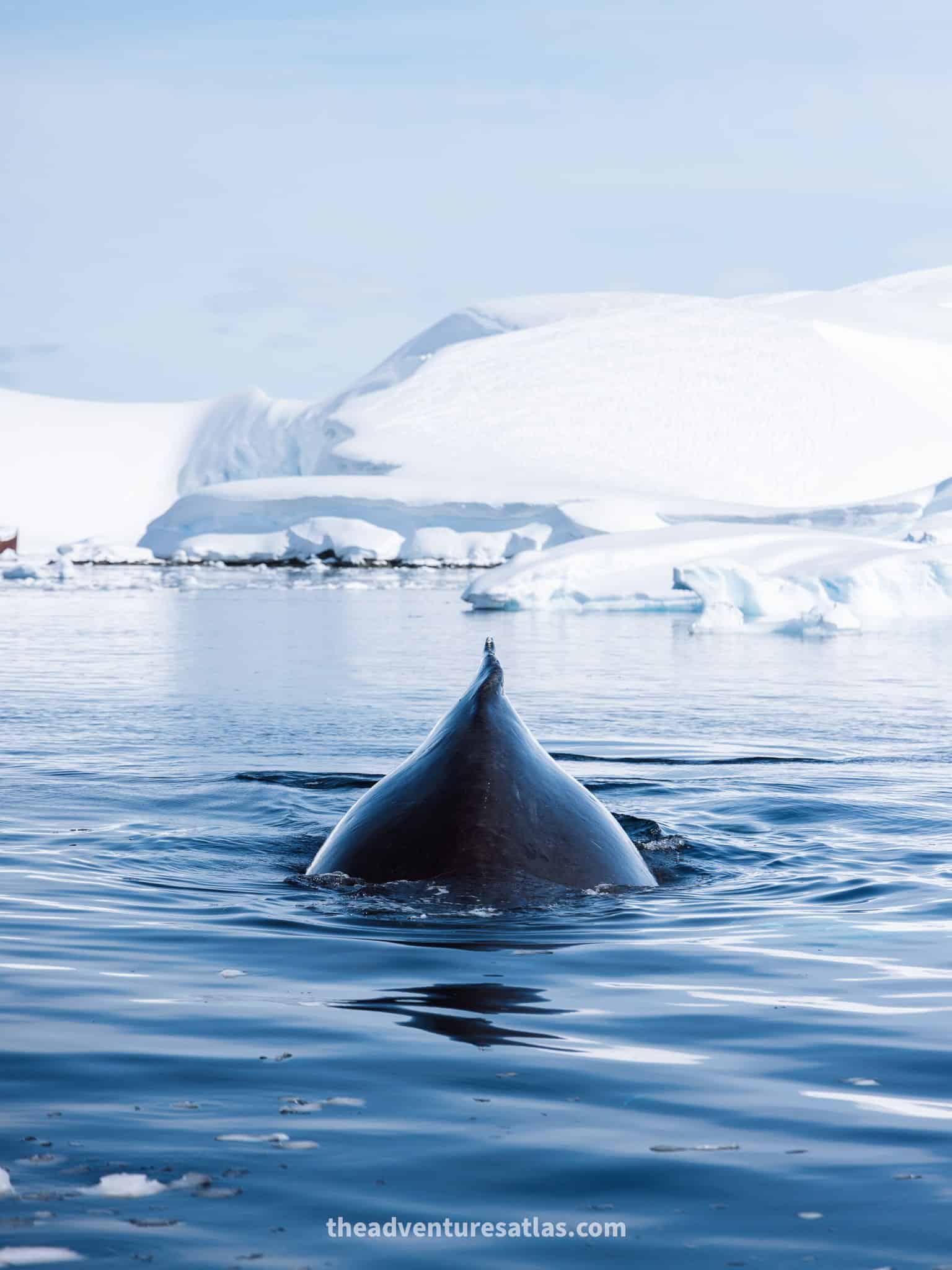
Humpback whales are the most commonly spotted species near the Peninsula. Sightings often happen unexpectedly with a a spout in the distance, a tail lifting out of the water, or whales feeding near ice edges.


Antarctica’s wildlife doesn’t live behind fences or at a distance. Wildlife encounters are frequent, unscripted and happen on the animals’ terms. You learn to stand still and let life move around you.

Penguins in Antarctica (Yes, They’re Everywhere)
Penguins aren’t an occasional sight…they define the experience.
Penguins are the most visible and constant presence in Antarctica, and probably the animals you’re most excited to see! You’ll encounter them on beaches, snowfields, rocky slopes, and even blocking your path during landings.

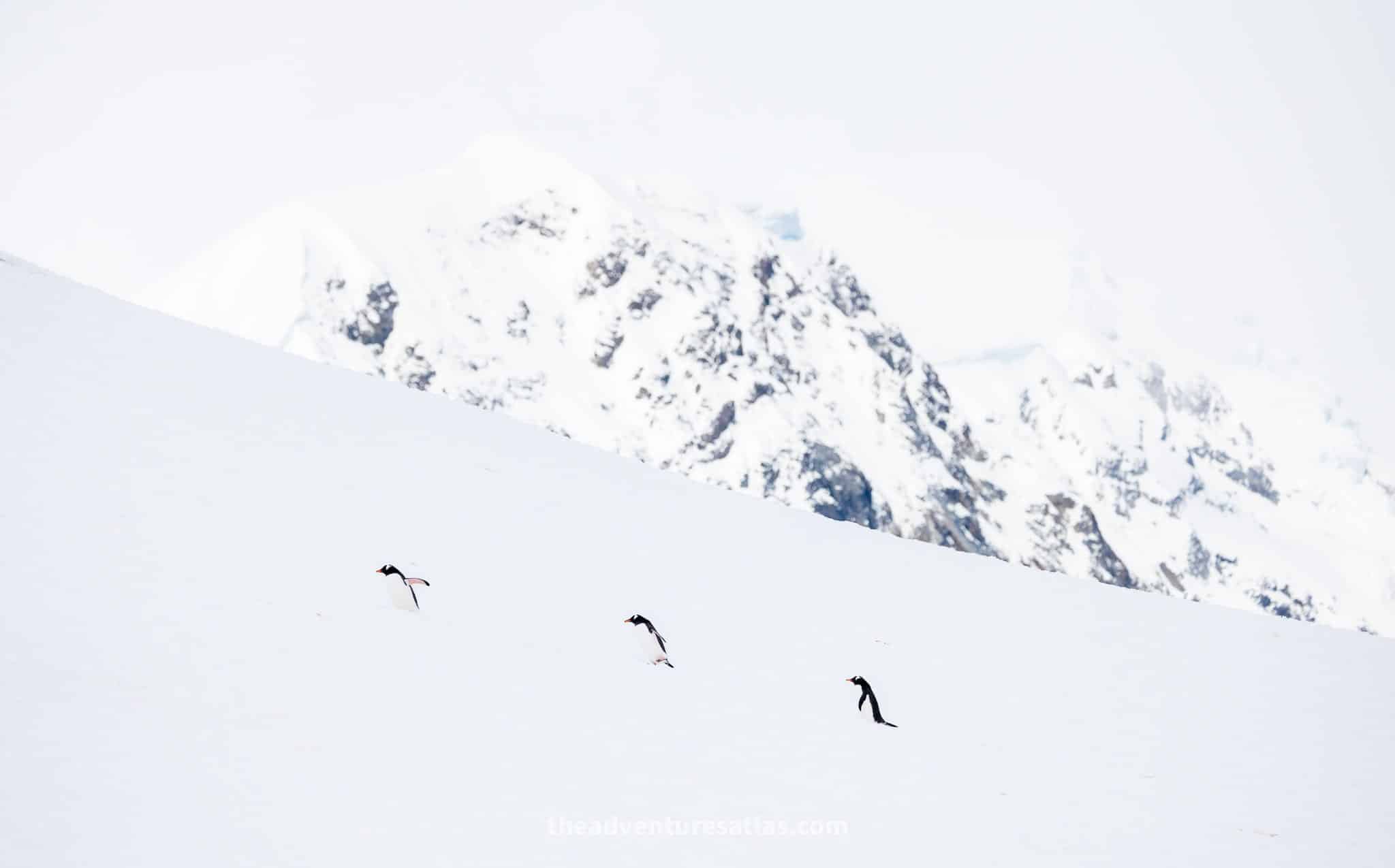
Penguins have absolute right of way at all times. IAATO rules require that you stop, wait, and let penguins move freely, which often leads to some of the most memorable moments of the trip!
They nest along rocky shorelines, travel in well-worn “penguin highways,” and waddle directly through human traffic without hesitation. Watching their daily routines — nesting, stealing pebbles, sliding on their bellies — never gets old.


There are five species of penguin that live in Antarctica:
- Gentoo Penguin
- Chinstrap Penguin
- Emperor Penguin
- Adélie Penguin
- Macaroni Penguin
Emperors and Adélie are the only two that are truly endemic to the continent. Gentoo and chinstrap penguins are most common on the Antarctic Peninsula, with colonies ranging from a few dozen to thousands.

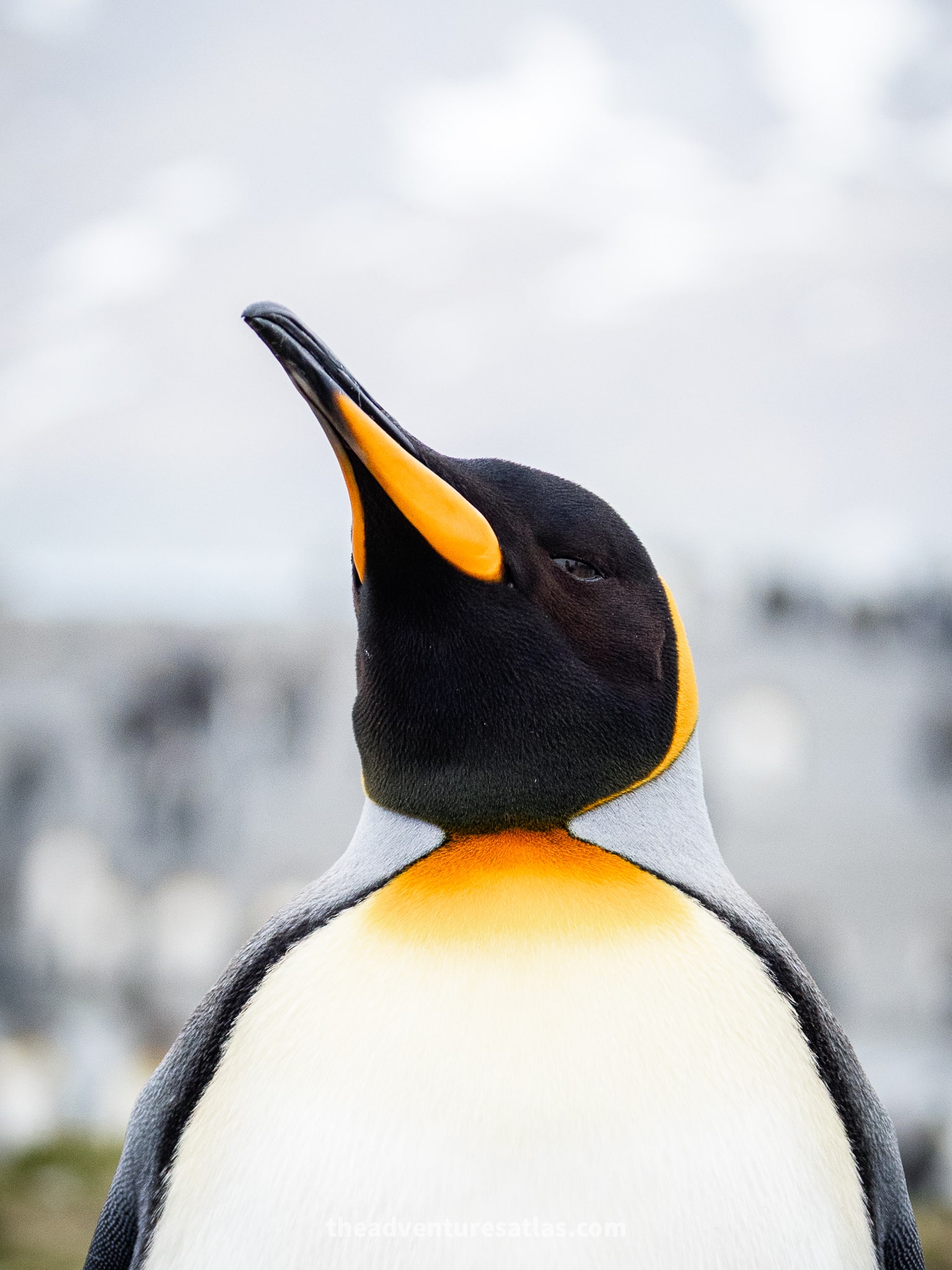
Penguins are AMAZING swimmers and can dive up to hundreds of metres underwater in search of food. On the surface, you’ll see them “porpoising” (leaping in and out of the water). This behavior is super energy efficient and allows them to breathe while maintaining high speeds, escape predators, and to survey their surroundings.
If you’re super quick, you might even be able to photograph one mid air! It takes skill (and a lot of luck) but you’ll have a lot of chances, trust me!


Pictures of What an Antarctic Landing Actually Looks Like
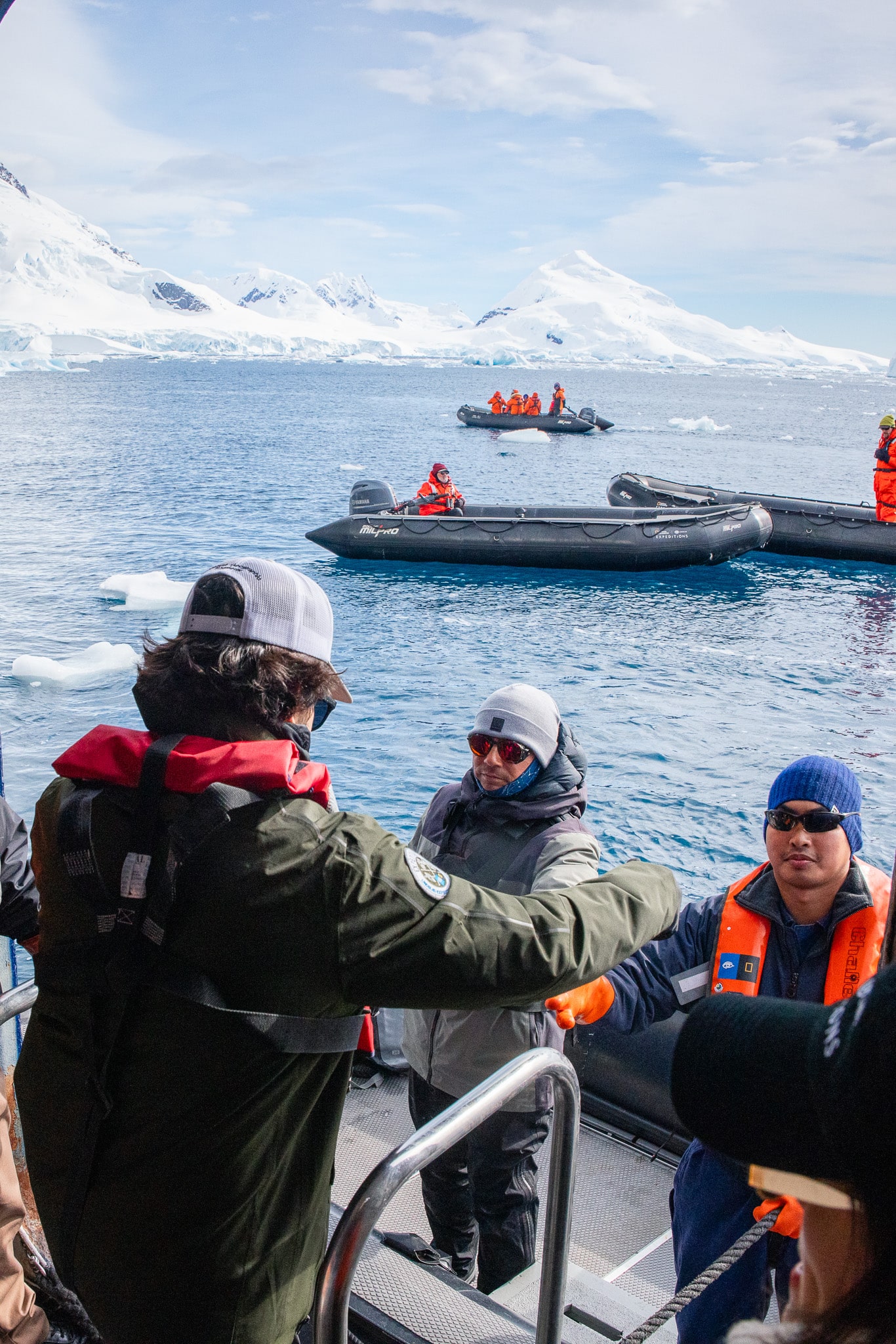
Every landing in Antarctica involves inflatable Zodiac boats, waterproof gear and strict biosecurity procedures.
Every landing follows a careful, deliberate process.
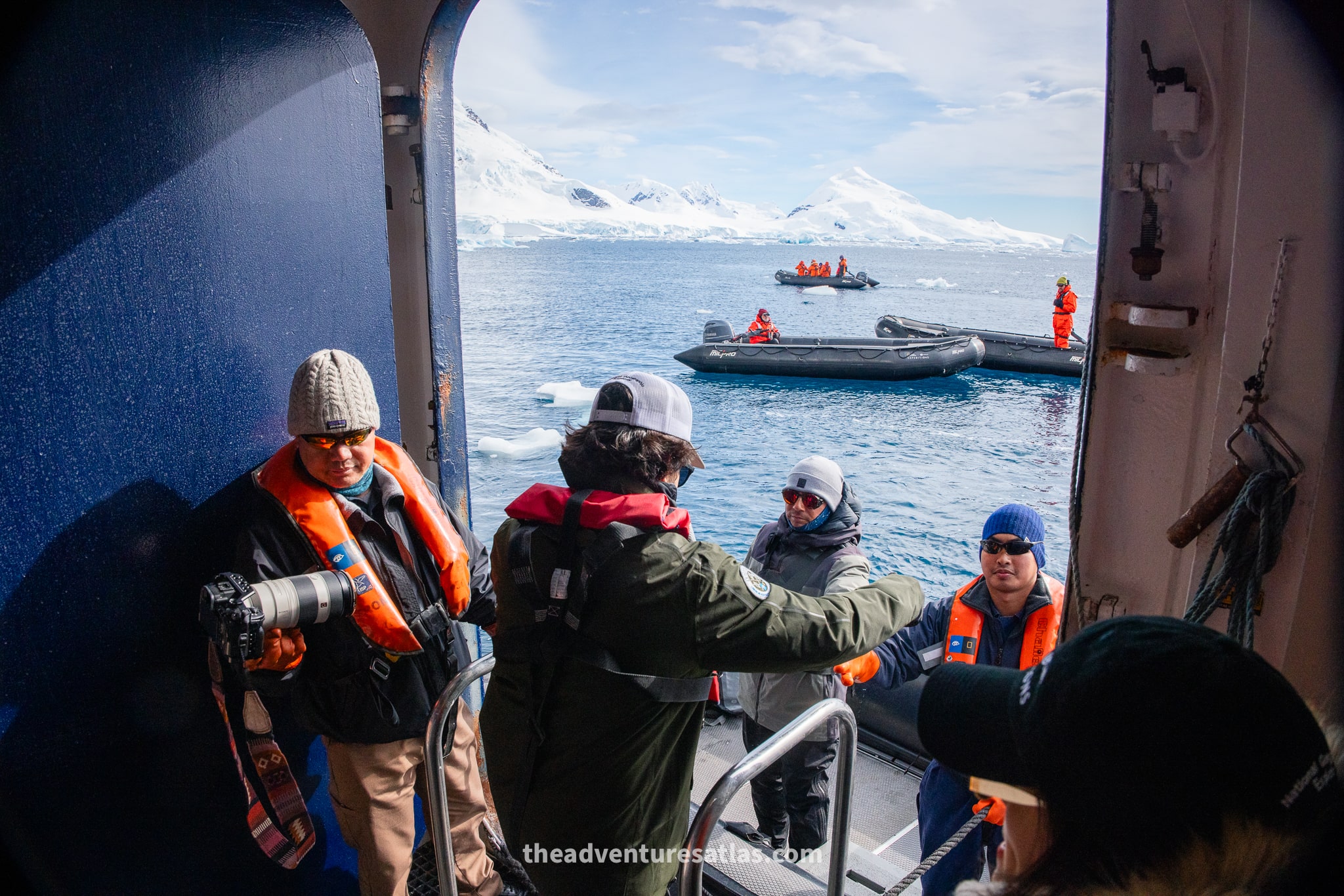
Before you can step ashore, all of your outerwear and bags need to be vacuumed out to prevent introducing foreign material into the ecosystem. When you get back onto the ship, you have to scrub and disinfect your boots. This happens twice a day almost every day.
You gear up in the ship’s mudroom, board Zodiacs, and step ashore through shallow water or snow.


Once on land, nothing is allowed to touch the ground except your clean boots. That means no camera tripods either, so you have to handhold all of your shots. You also can’t squat, sit or kneel, which makes photographing wildlife kind of tricky, especially with a long lens.

You’re have to maintain a distance of 5m (15 feet) from wildlife, but aside from that, landings are about quiet observation. Wildlife always has the right of way, and movement on shore is slow and controlled.
And if there are too many animals in the way of your landing site, then you don’t land and you just quietly observe from the zodiacs instead.
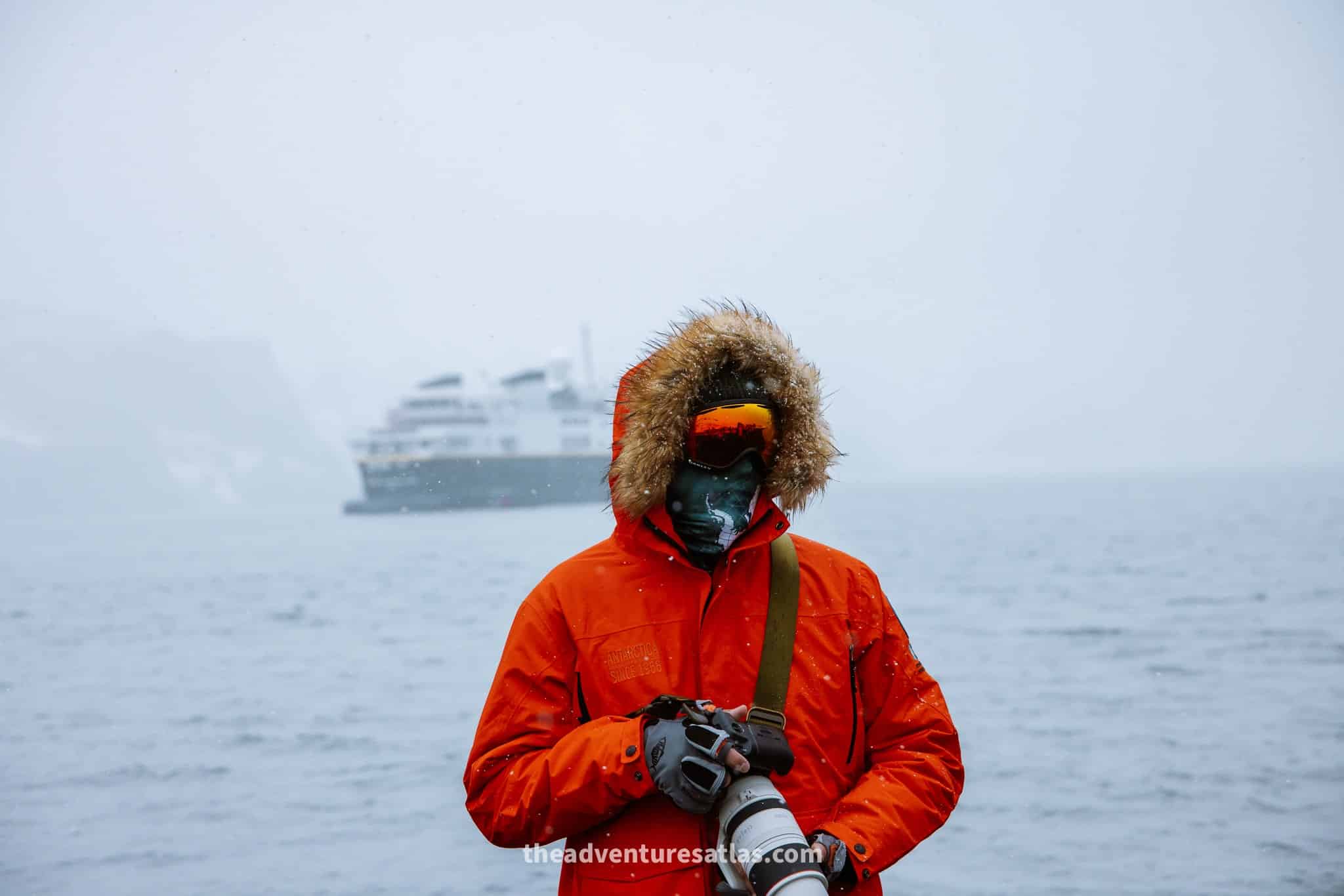

All of these processes becomes routine and the rules become the norm very quickly. And it all just reinforces how carefully Antarctica is protected.


Ice, Texture, and Detail You Don’t Expect
Antarctica isn’t just big, it’s detailed.


Beyond the sweeping landscapes, Antarctica is full of small details: layered ice, wind carved snow and deep blues hidden inside glaciers. These textures often go unnoticed at first but become some of the most visually interesting subjects once you slow down.

These details are especially visible during calm weather and sea days, when light reflects off the ice in subtle ways.


Icebergs and Glaciers from the Water
Some of Antarctica’s most dramatic scenery is seen from the Zodiacs.
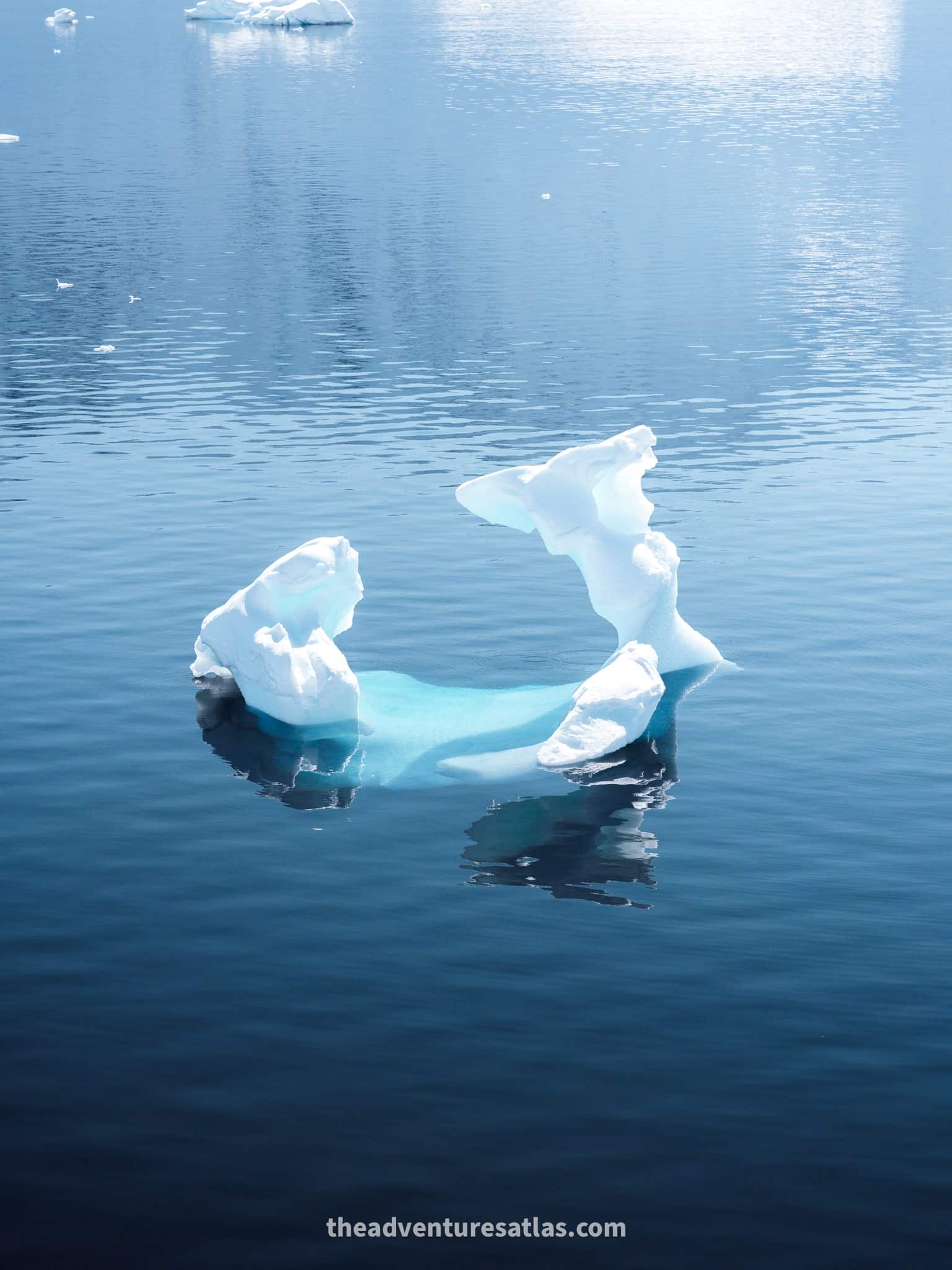
Icebergs in Antarctica come in every shape, color, and size imaginable. Many of them are freshly calved from glaciers and drift silently through the channels, while others have been sculpted by wind and water over many years. Seeing them from a small Zodiac emphasizes just how massive and dynamic they are.
Including people or Zodiacs in photos is often the only way to convey just how enormous everything really is.
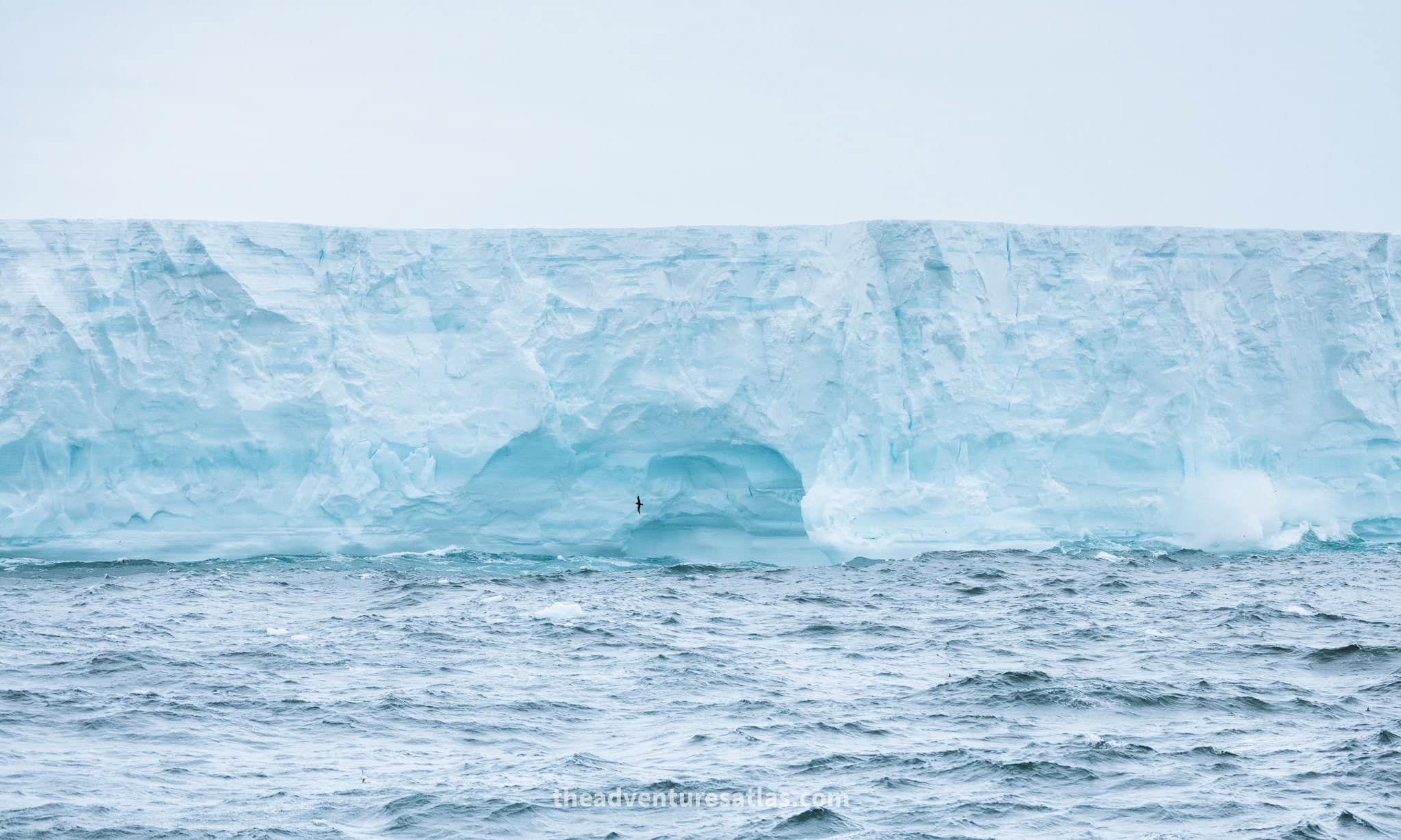
This is the massive A23a glacier, one of the world’s largest and oldest glaciers. It broke off the Filchner-Ronne Ice Shelf in 1986 and, at its peak, was larger than the state of Rhode Island. It was stuck on the bottom of the Weddell Sea for about 30 years before it detached and started floating north into the South Atlantic in 2020.
Scientists are keeping an eye on it as it melts because it’s so big that it could disrupt wildlife paths for penguins and seals on South Georgia Island.

Glaciers line much of the Antarctic Peninsula, and hearing ice crack or calve into the sea is a regular occurrence. These moments are brief and unpredictable. Icebergs also regularly appear stable but then rotate in the water without notice, so it’s important to maintain a safe distance from them while you’re cruising around in the Zodiacs.

Pictures of Antarctica: Life on an Antarctic Expedition Ship
Life onboard becomes an integral part of the experience, not something to endure.
Our home was the National Geographic Explorer, a true expedition ship built to navigate icy waters of the polar regions. Time on the ship was quiet, comfortable and focused on learning and observation.
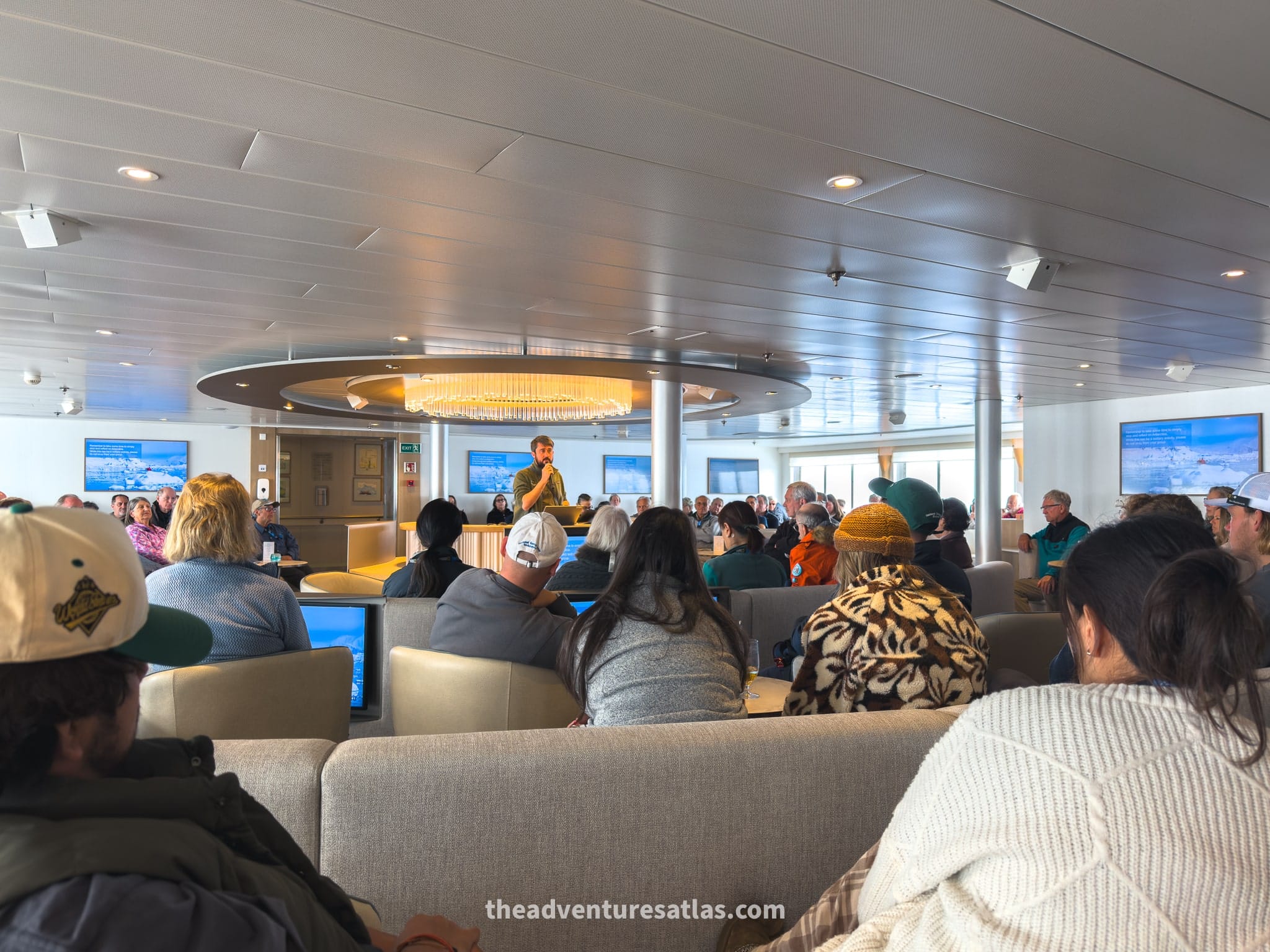
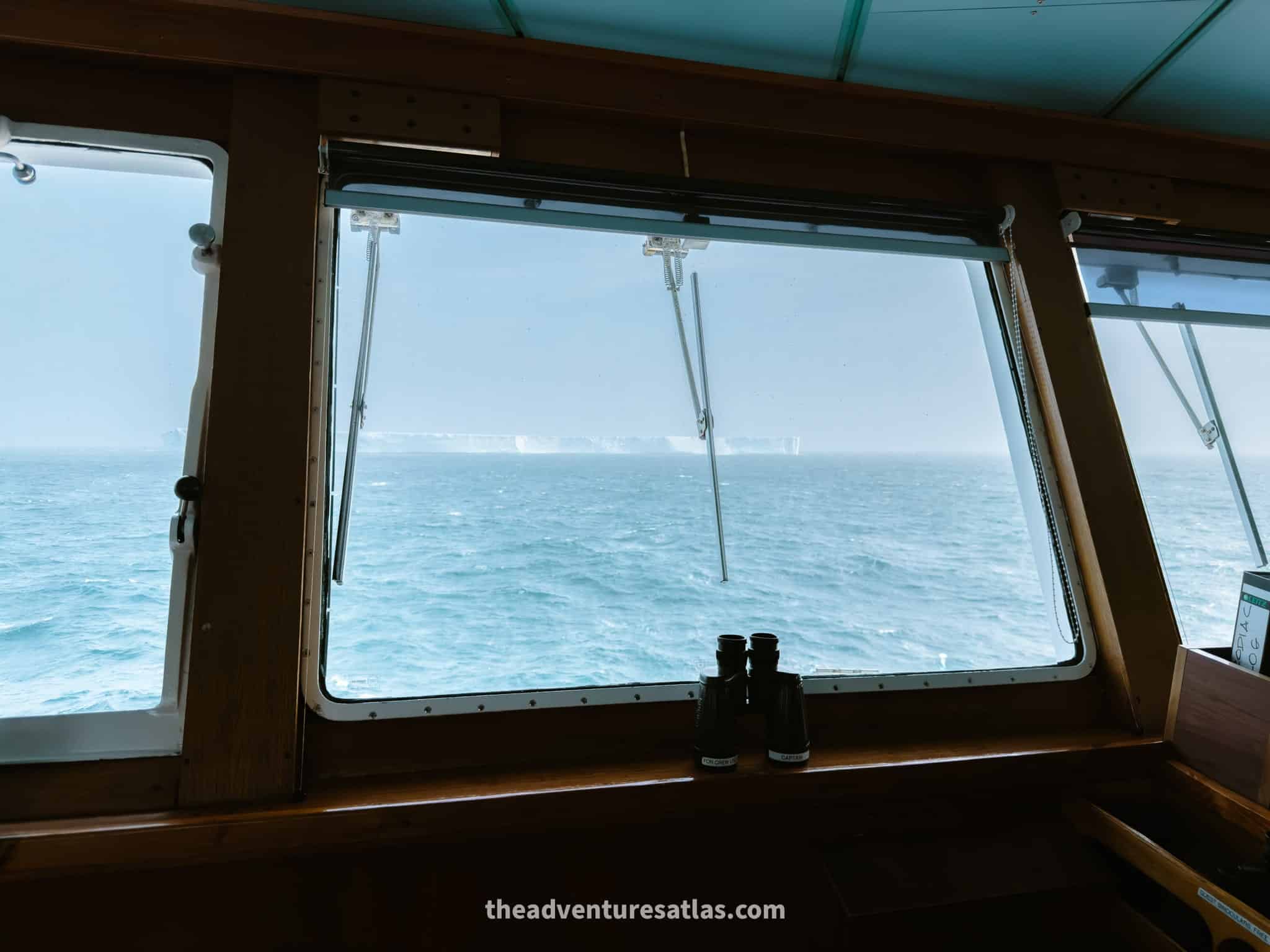

Days at sea include lectures on local ecology, geology led by the experts on board, wildlife spotting from the deck, photography workshops, and long hours watching the landscape pass by.
Rather than feeling like downtime, the sea days provide context for everything you see on land. They also offer some of the best light for photography, especially during long Antarctic sunsets.
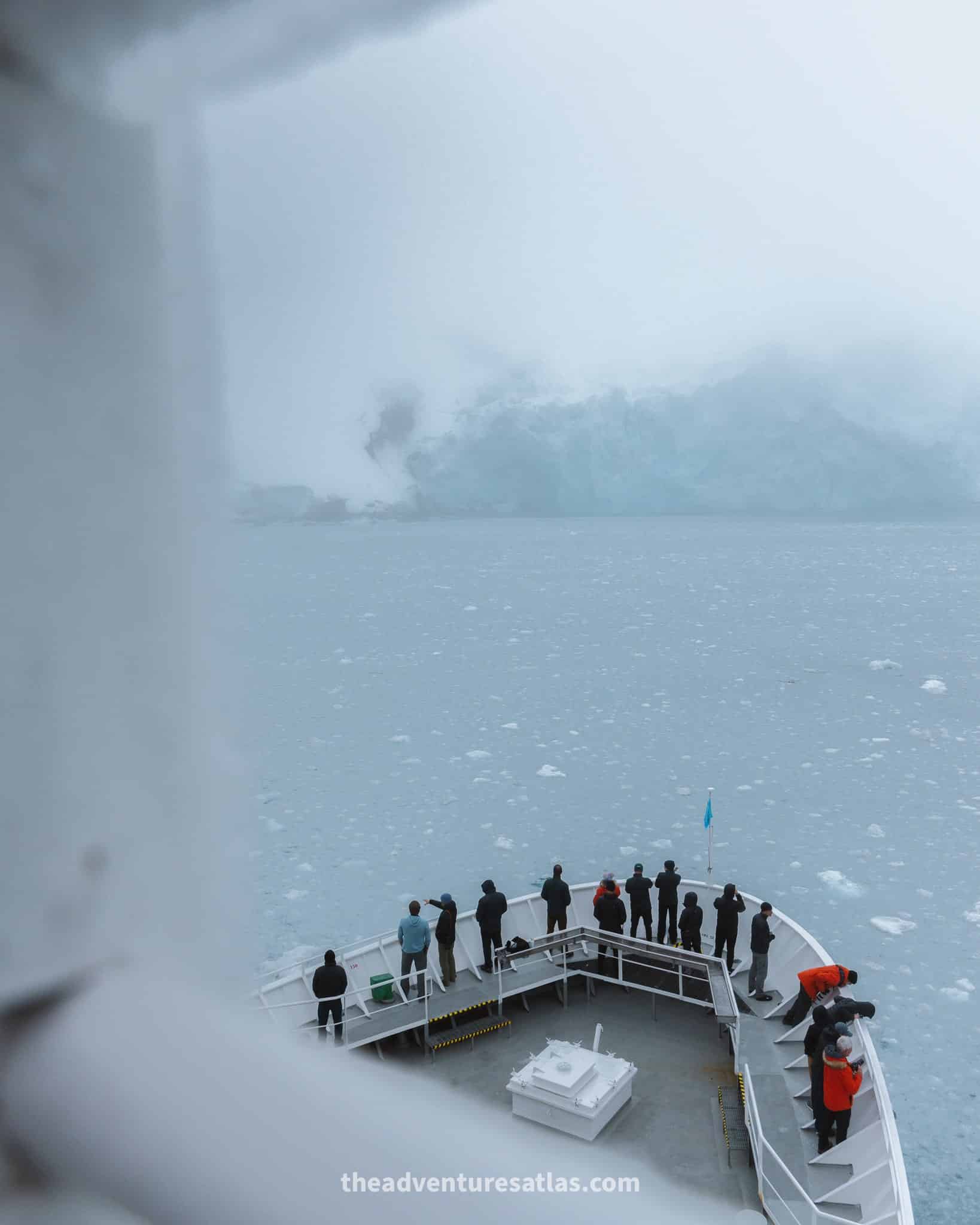
Evenings are quiet and cozy and you spend most of the time debriefing from the day, eating, napping, editing photos or standing on deck long after dinner as the light slowly changes.

The Human Element: Moments of Awe
Amidst all the epic landscapes and wildlife, it’s the personal moments that stick with you.
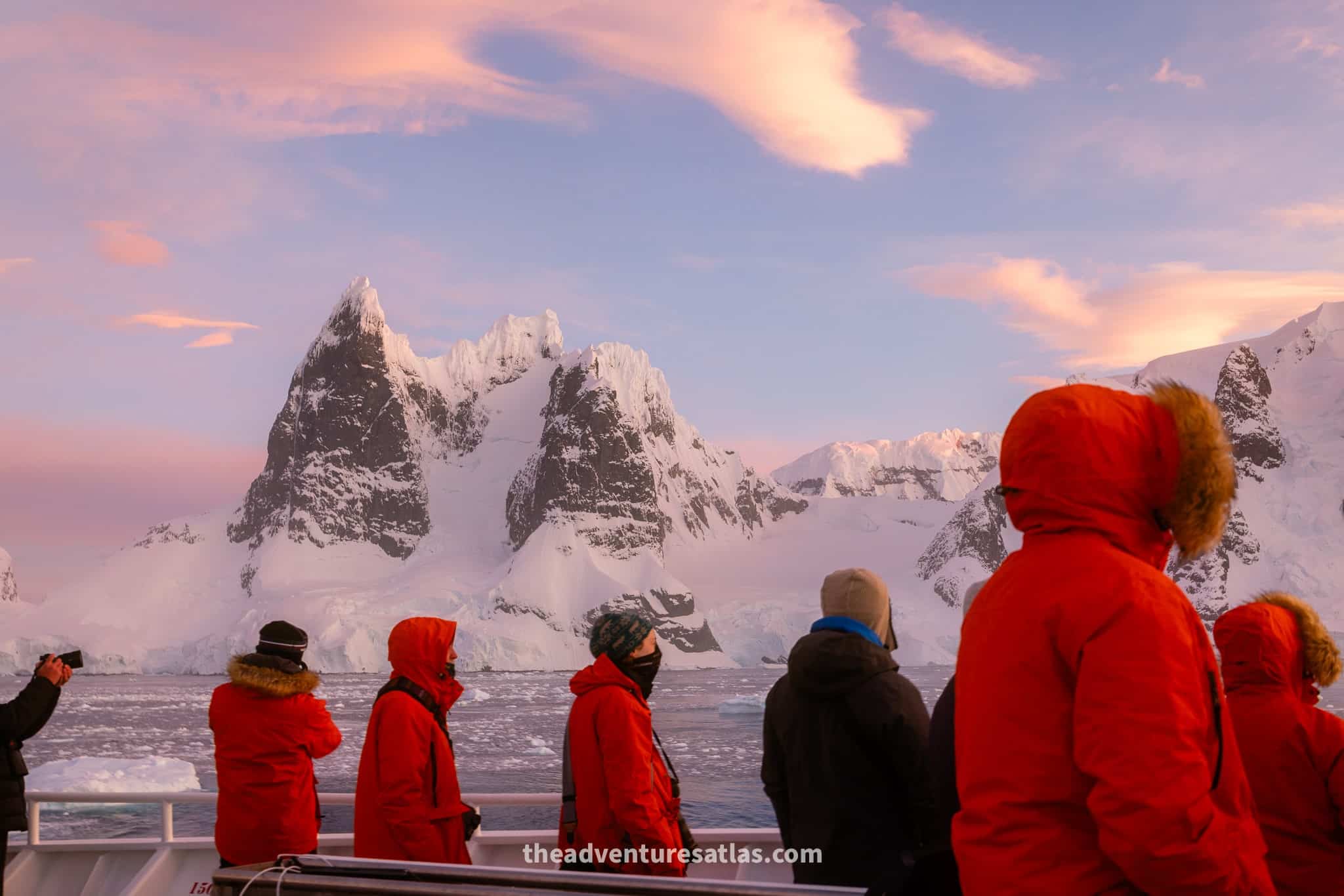
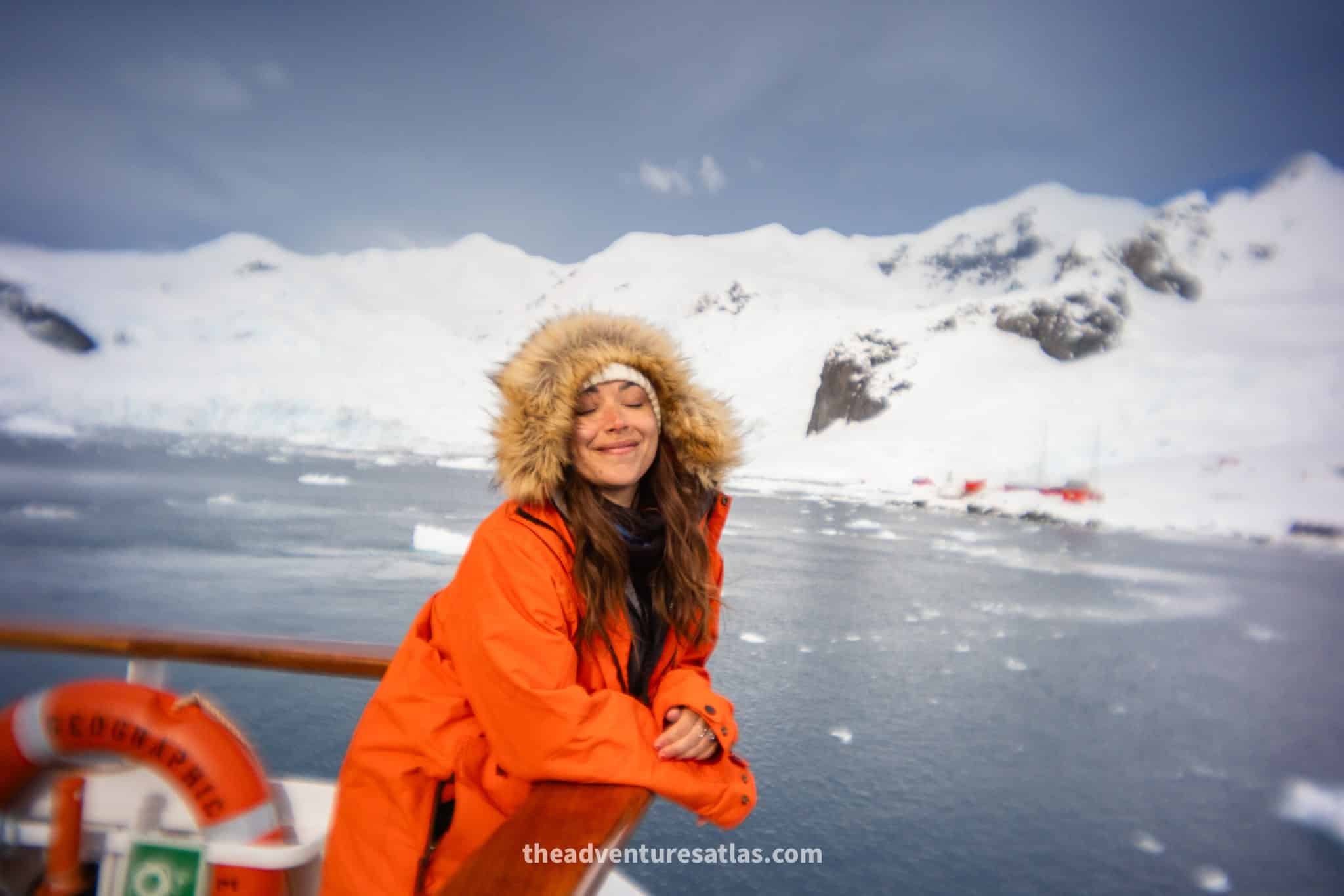
The breathtaking shock of the Polar Plunge into 28°F water. The grand scale of tiny humans on a vast landscape. The profound silence of kayaking on a glassy bay, with only the sound of your paddle and the crackling of ice.


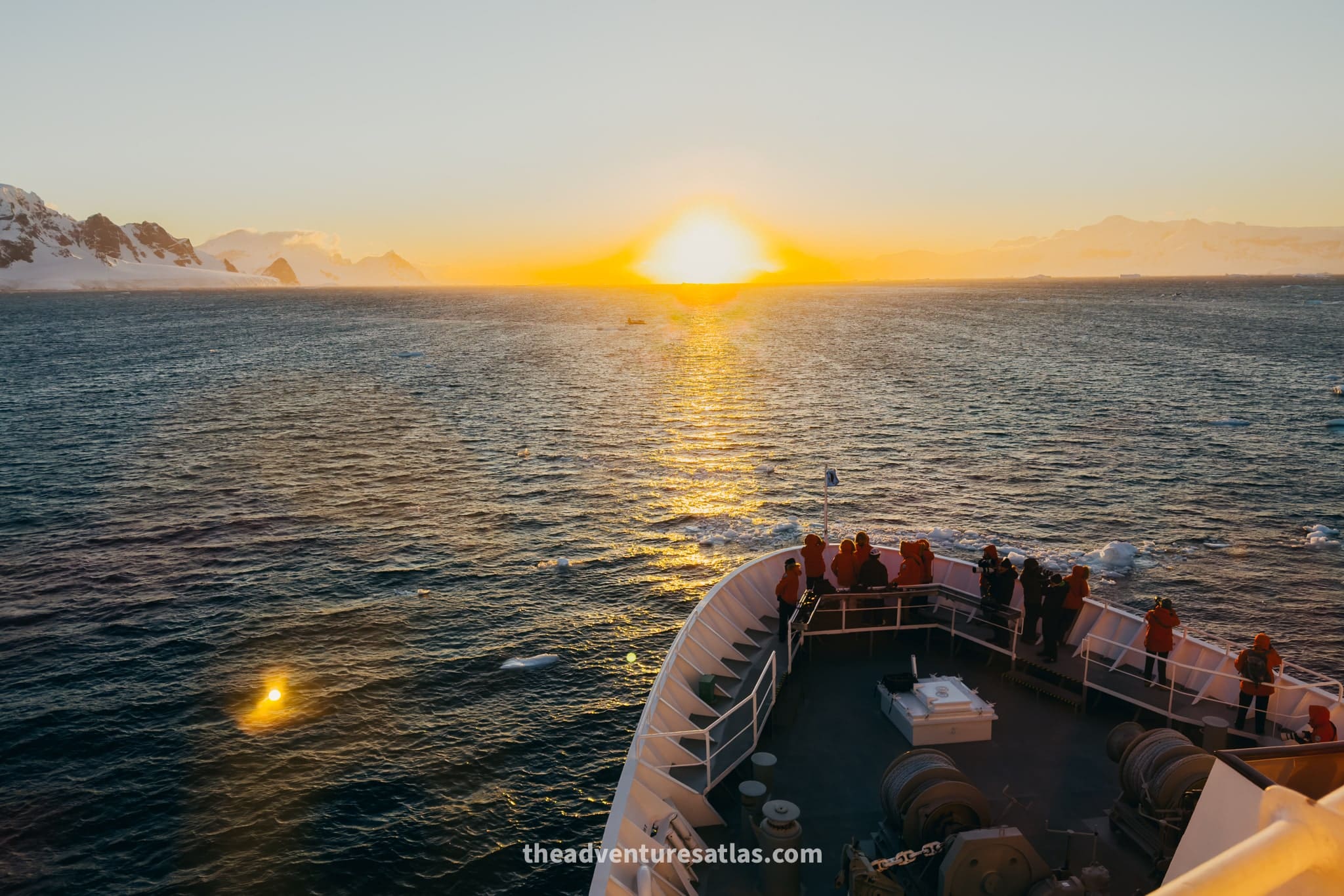
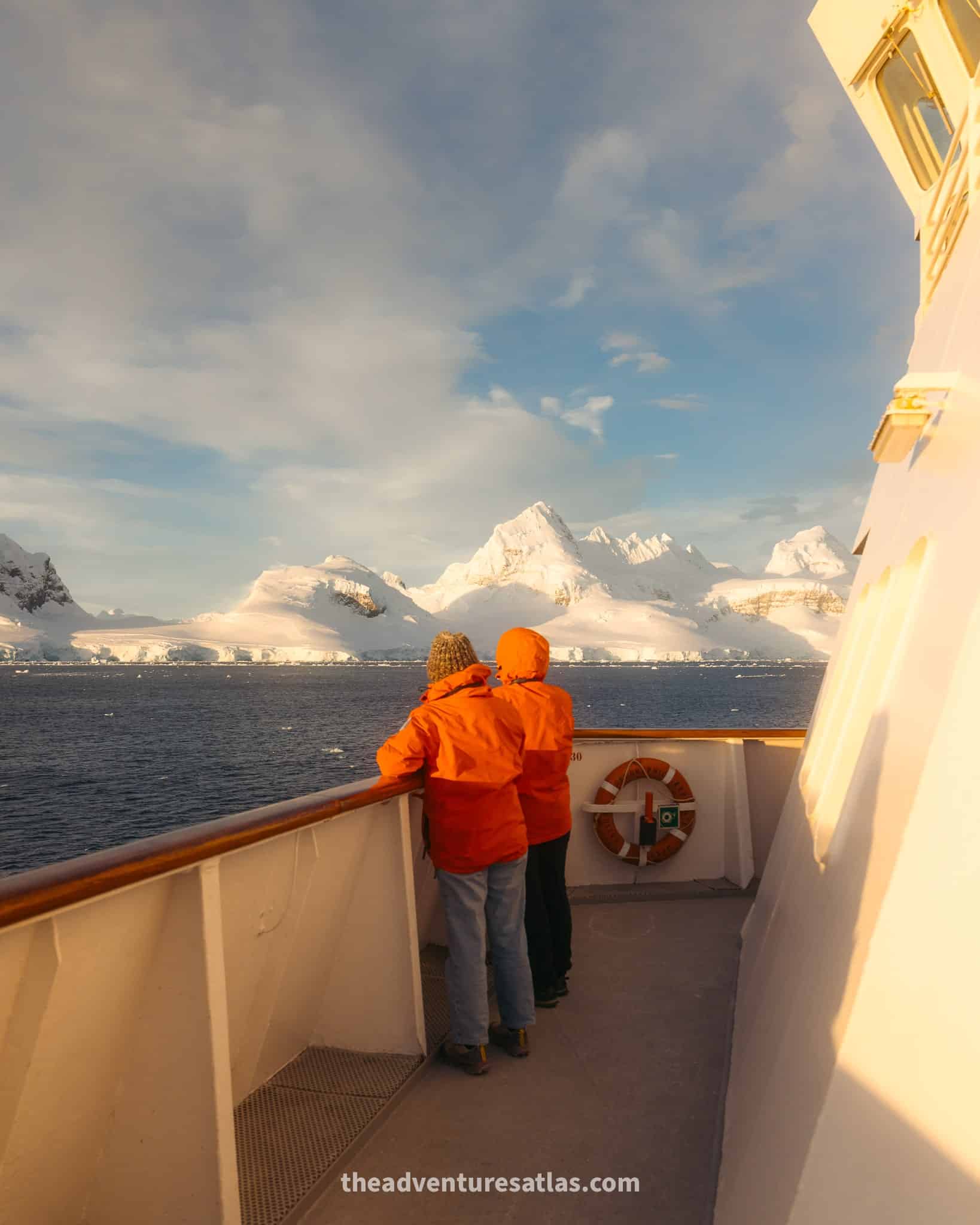
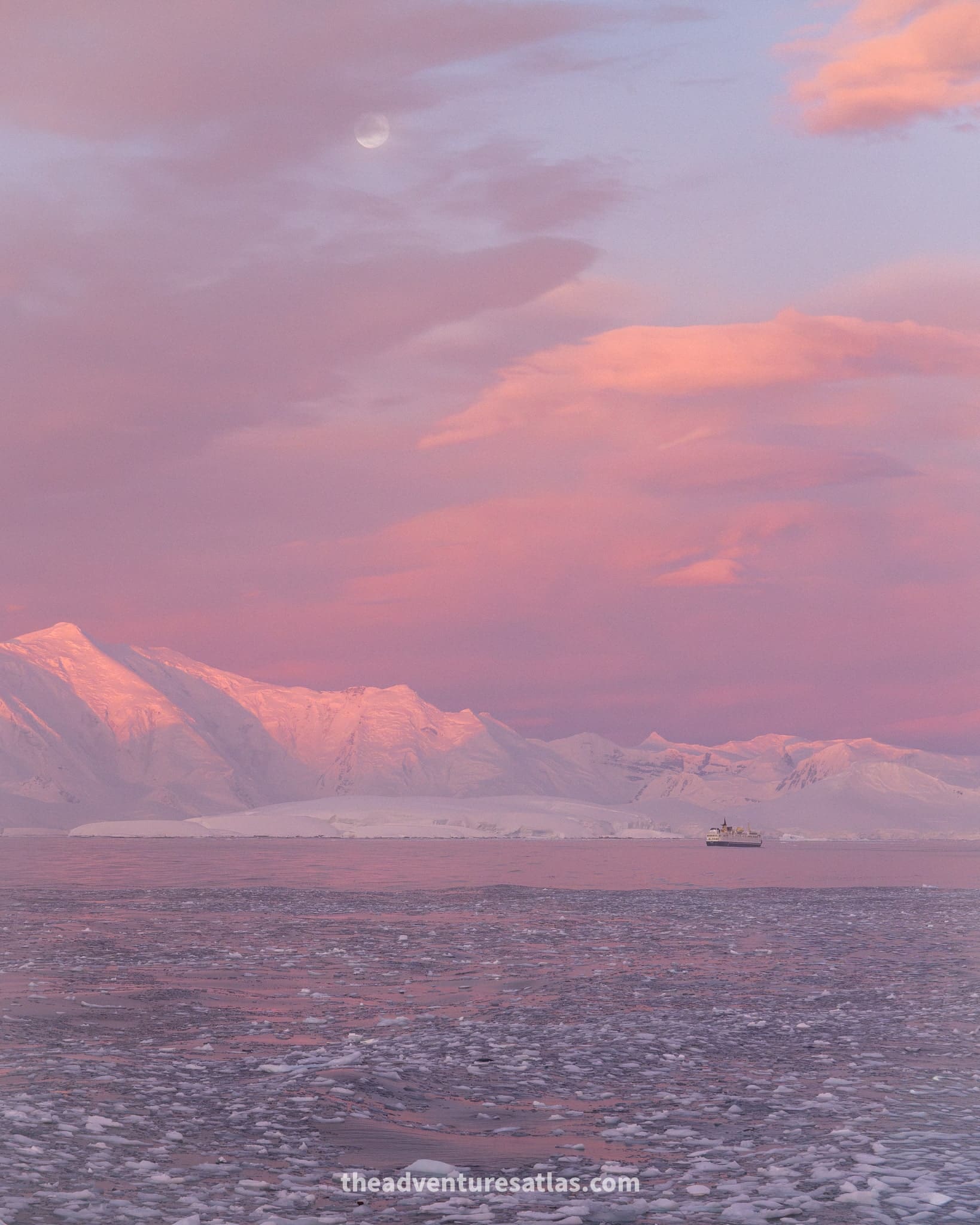
And the shared, silent awe of every single passenger standing on the bow, bundled up against the freezing wind, watching the sky explode in a sunset that lasted for over two hours as we sailed through the Lemaire Channel.

Why Antarctica Leaves Such a Lasting Impression
It’s hard to explain until you’ve been there, but Antarctica resets your baseline for what “epic” truly means. It’s a whole experience. It’s the raw, humbling power of nature in its purest form. Once you’ve been, “once-in-a-lifetime” takes on a very specific and powerful meaning.
These images capture pieces of that experience, but being there is what makes it unforgettable.


Planning Your Own Antarctica Trip?
If you need more planning tips, I’ve written a few in-depth guides to help you turn that dream into a reality.
Ultimate 22-Day Antarctica Expedition Guide – route, logistics, and what the full experience involves
Complete Antarctica Packing List – exactly what you need to bring (and what you don’t). Learn from my mistakes!
Antarctica Photography Guide – camera gear, settings, and pro shooting tips (coming soon)
Did this visual guide help you understand what Antarctica is actually like? Let me know in the comments!

Hi, I’m Jackie! I’m a travel photographer and content creator based near the Adirondack Mountains of Upstate New York. I’m also a millennial who works full-time, yet I still find ways to travel frequently without breaking the bank, because traveling is what makes me feel most alive. Now I help fellow travelers who also work 9-5 and are looking for ways to travel more with limited PTO.
Related Posts


WANT TO SAVE MONEY TRAVELING?
Check out my list of reliable budget-friendly travel resources that are guaranteed to save you the most money, without compromising your experience.