How Fit Do You Really Need to Be for Antarctica? (Honest Answer)
How fit do you need to be for a regular Antarctica expedition cruise? A realistic look at the physical and mental demands
How hard is an Antarctica expedition, really?
This is the question people hesitate to ask out loud.
Antarctica looks incredible, but once you move past the photos and the price tag, a lot of people start to wonder whether they can physically and mentally handle the day to day (I know I did).
But I saw people from their late 20s to their early 80s on my trip – all having the time of their lives.
👉 After spending 22 days on an expedition ship through the Falklands, South Georgia, and Antarctica with National Geographic-Lindblad, here’s my honest answer.

Is an Antarctica Expedition Physically Difficult?
A trip to Antarctica is demanding, but not in the way you’d probably expect.
The challenge isn’t strength or endurance. You won’t be doing long, strenuous hikes that test your cardio endurance.
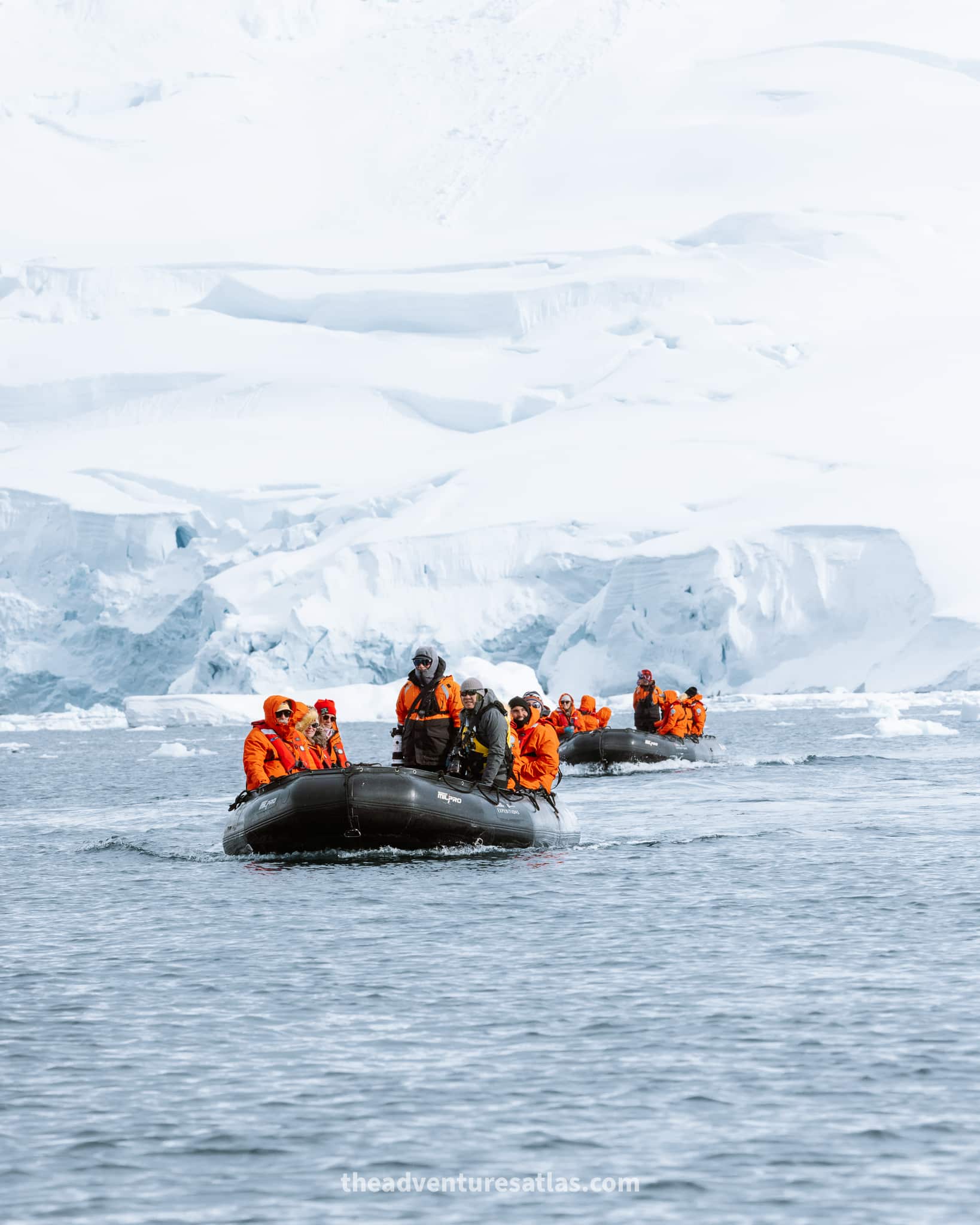
The hard part comes from the combination of long days, constant transitions, cold weather, wind, and sustained focus…especially once you reach the Antarctic Peninsula. You’ll be walking on a moving ship, stepping into bobbing Zodiac boats, and walking on uneven, snowy, or rocky ground. These things requires more balance and core strength than hiking stamina.
You don’t need to be a marathon runner, but you do need a baseline of mobility and a good sense of adventure.
So if you’re wondering ‘am I fit enough to do this? Is an Antarctica expedition physically difficult?’, keep reading because this guide breaks down exactly
- what the physical demands are
- who this trip is perfect for
- who might want to reconsider going
Ultimately, the trip is far more accessible than most people imagine. It’s less about your fitness level and more about your sense of adventure and ability to stay steady on your feet.
Having the right layers makes a huge difference in how hard your trip will be. I break down exactly what to wear (and what you don’t need) in my complete Antarctica packing guide.
The Short Answer: Your Fitness Baseline
There are a lot of specialty expeditions out there that involve a high level of physical fitness, but for a standard expedition cruise, you do not need to be an athlete.
If you can comfortably handle a full day of sightseeing, walking a few miles, climbing a few flights of stairs, and keeping your balance on a moving subway, then you likely have the physical fitness required for a regular Antarctica expedition cruise.
You don’t need hiking experience because the “hikes” in Antarctica are mostly just guided walks over varied terrain. Your main focus is on experiencing the environment, not conquering the tallest peaks.
Honestly if you’ve done trips like Iceland road trips, wildlife safaris, or guided national park tours, then Antarctica will feel familiar – just a lot colder.

The Real-World Physical Demands of an Antarctica Expedition
So, what does a day actually look like and what will your body need to do?
I broke down the physical challenges into three main parts:
1. Getting Around the Ship (Stairs & Balance)
Your expedition ship is your home base and you’ll be moving around it A LOT, especially to get from your cabin to the dining room and around the outer decks.
Most modern ships have elevators, but you should at least be comfortable climbing several flights of stairs a day.
Our ship didn’t have an elevator and I found that it required a lot of balance to safely walk up and down the stairs while the boat was rocking on the open ocean.
Some ships have stabilizers to reduce motion, but you still feel the rocking when things get rough, especially when you cross the Drake Passage. You need to be able to walk around while the ship is swaying and hold onto handrails. However, when things get really bad, the crew installs ropes in the hallways for extra support which helps a lot.
2. The Zodiac Transfer: The Trickiest Part of Your Day
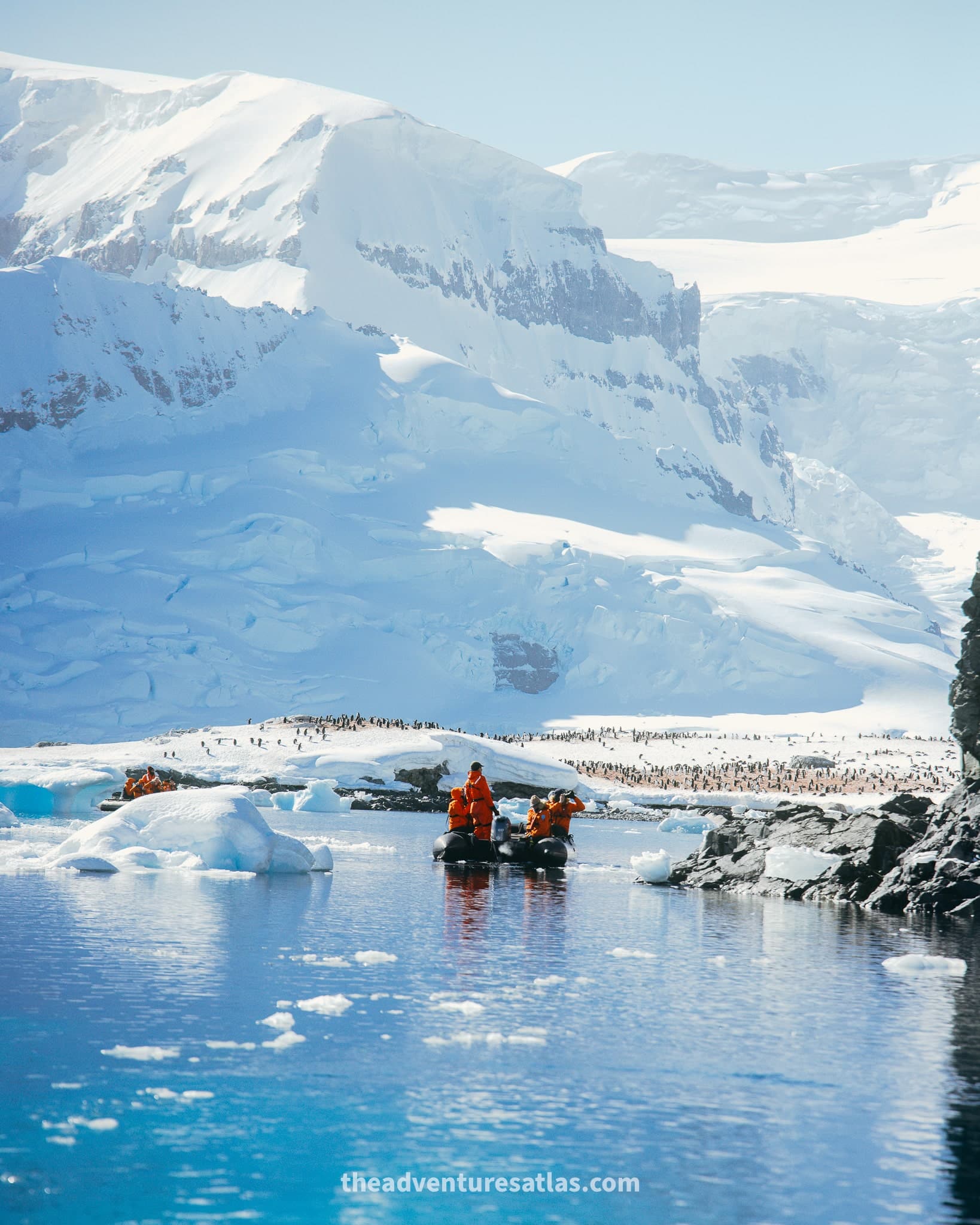
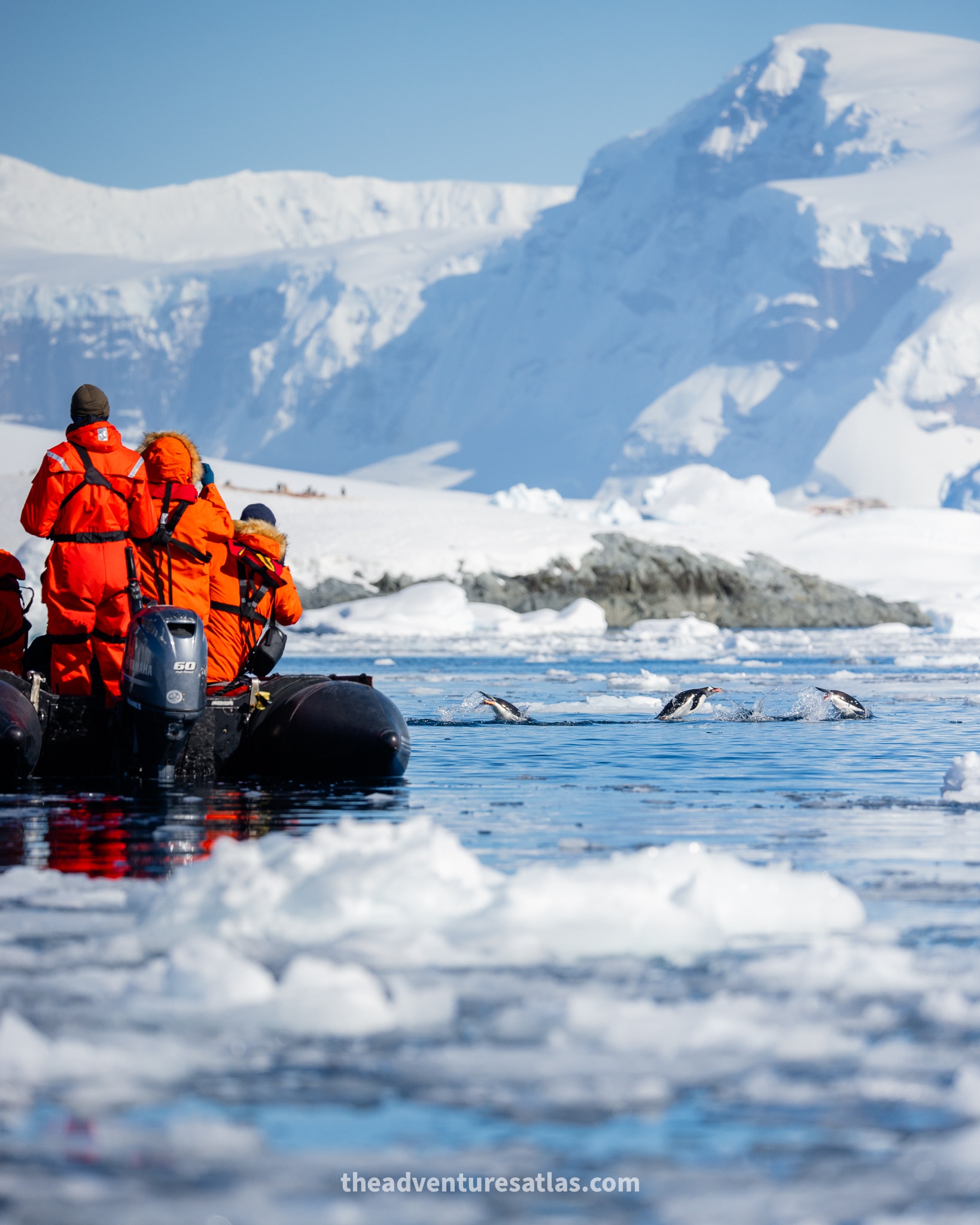
To get from the ship to shore, you’ll use a fleet of sturdy, inflatable boats called Zodiacs. Getting in and out of the Zodiacs is definitely the most physically tricky part of the excursions.
Here’s the process:
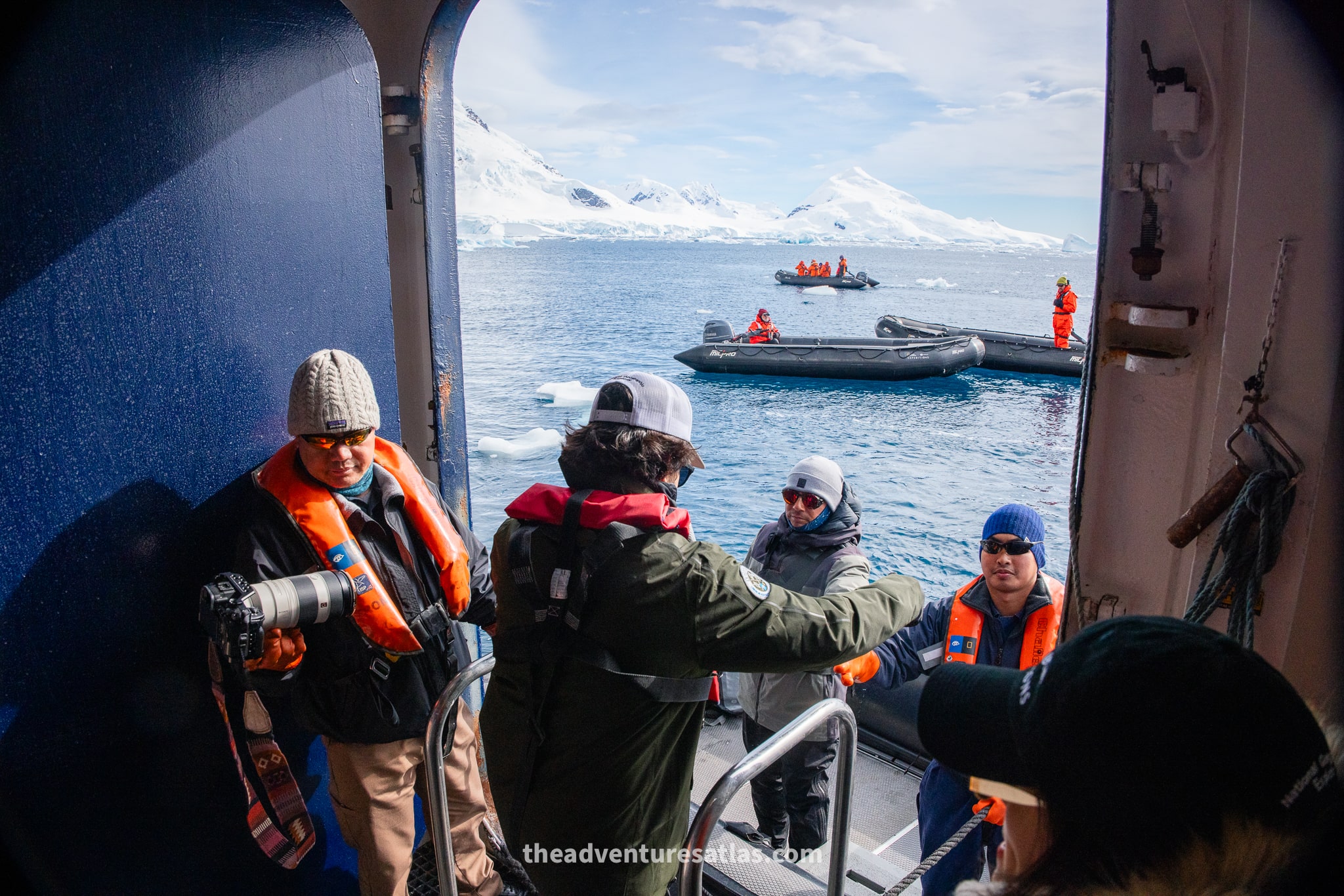
- You’ll walk down a short, steep set of stairs to a loading platform at sea level.
- The Zodiac will be bobbing up and down with the waves next to the platform.
- You’ll hand any gear (like your backpack) to a crew member in the boat.
- Following clear instructions, you’ll wait for the guide’s signal, grab their hands in a “sailor’s grip,” and step from the platform down into the the moving boat.
- Once you sit down, you’re good to go
- On land, you’ll have to swing your legs up and around the side of the boat to disembark, sometimes into shallow water.
It sounds intimidating, but after the first time it truly does become second nature. Plus, the expedition crew are absolute pros at this. They have a super safe system and they physically assist every single person. They won’t let you fall.
However, boarding a Zodiac does require a degree of flexibility, balance, and the ability to follow instructions quickly while the boats are moving.
3. Shore Landings: What the “Hikes” are Really Like
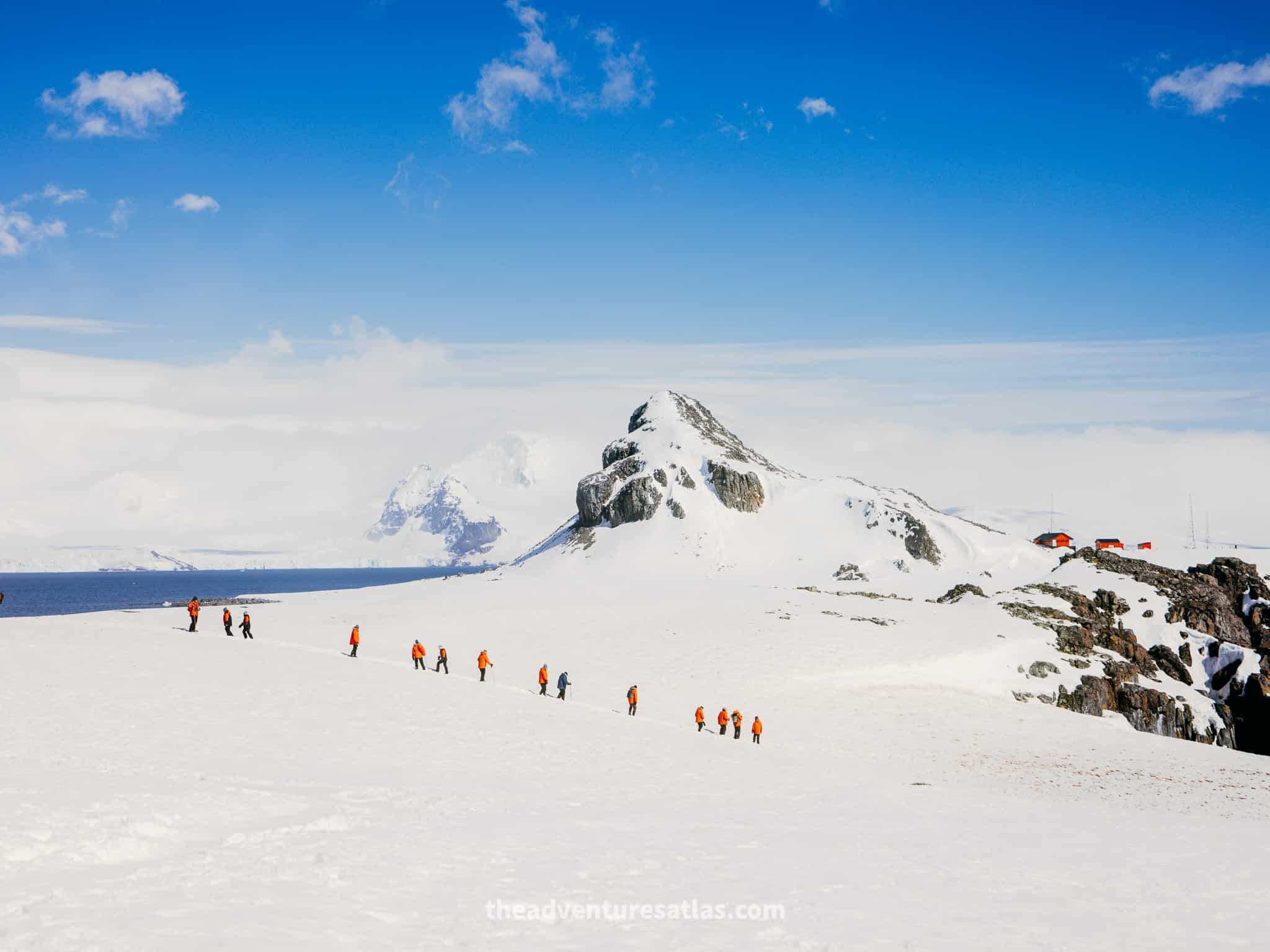
Once you’re on shore, activities are surprisingly not that strenuous. Most landings last for two to three hours and you almost always have options.
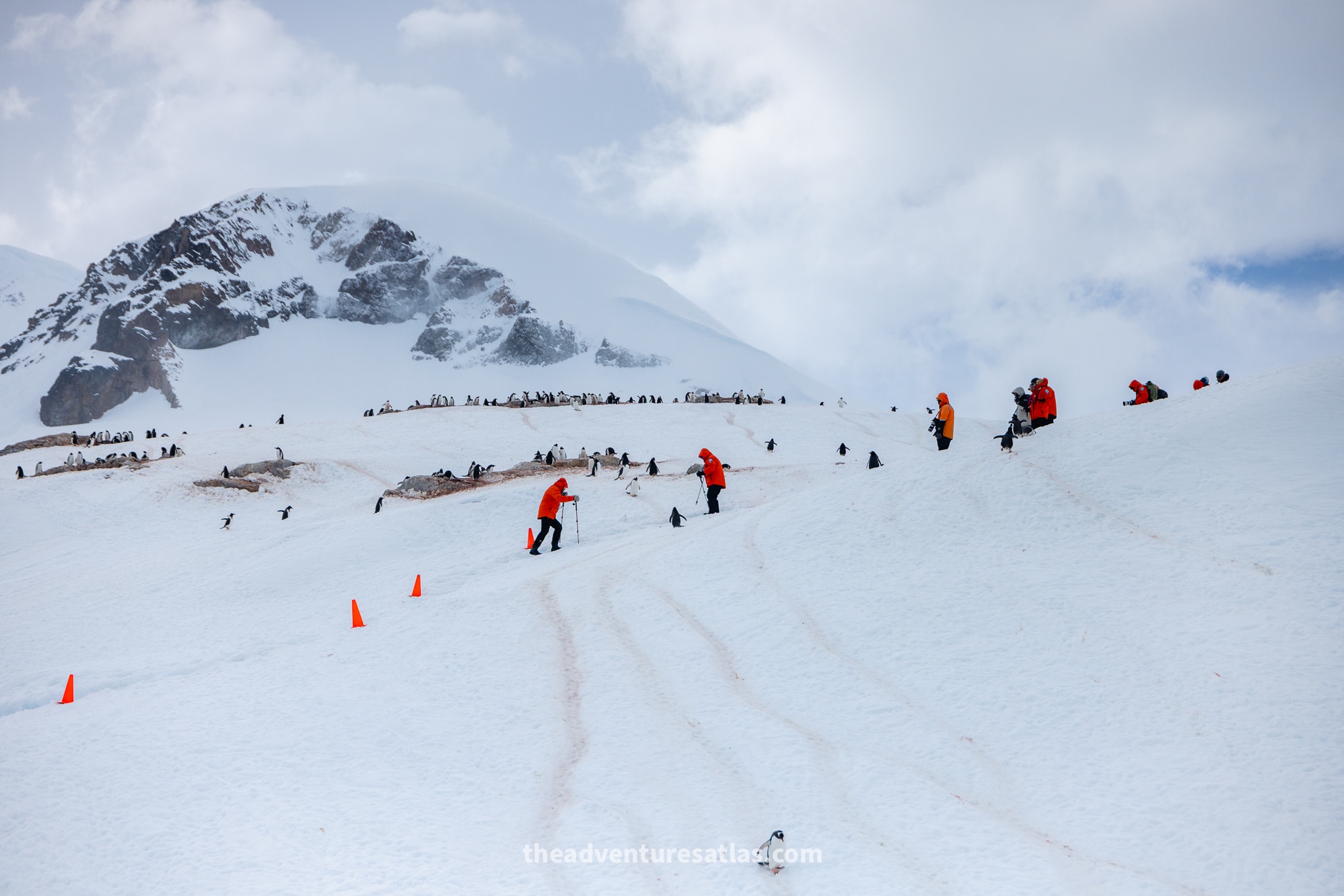
- The terrain: You’ll be walking on pebble beaches, packed snow, and sometimes, up steep, loose scree slopes. The muck boots you wear have great grip, but you do need to be mindful of where you step. There were a few times we had to be mindful of ice and loose rocks.
. - The walks: Most walks/hikes are less than a mile long with gradual elevation gain. The goal is to see a penguin colony or get to a viewpoint, not to get a workout. On our trip, there were always different groups and several options for how far we wanted to go. Some groups went for longer, faster paced walks, while other groups kind of just wandered along the shoreline. Some people who choose to just sit near the landing site and watch the penguins.
. - Assistance: We had a few landings with steep banks to climb right off the beach, but the crew was always there to give us a hand. Some people brought walking sticks for extra stability.
If you’re ever unsure, just remember that participation in any walk is never mandatory! If a landing feels like too much, you’re free to stay near shore or take the next Zodiac back to the ship.
Life on the ship, Zodiac rides, and shore landings make up the rhythm of your daily life on an Antarctica expedition. I break down what these days look like in much more detail in my Ultimate 22-Day Antarctica Expedition Guide.
You’ll Feel More Tired Than Expected
To be honest, a lot of people don’t find Antarctica physically hard because of distance or intensity. It’s most tiring because of long days, exposure, repetition and constant transitions over time.
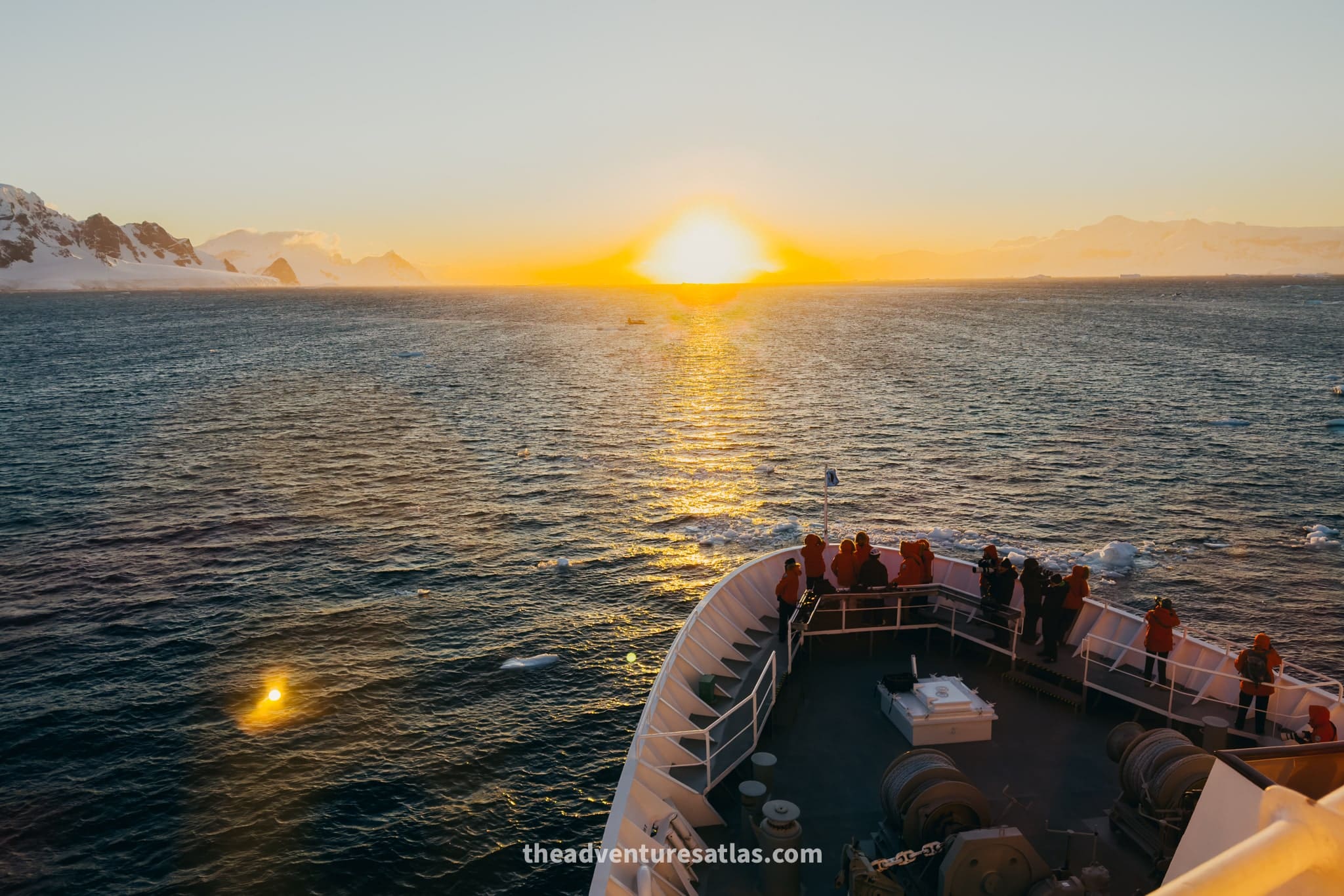
Your day starts early (around 7-8AM) and dinner ends around 9PM. And then you’ll probably want to watch the sunset.
Between outings, you have to get dressed and undressed in a lot of layers and bulky gear multiple times a day, boarding and disembarking boats and adapting to shifting conditions.
A surprising amount of time is spent waiting. Waiting to board Zodiacs. Waiting for conditions to improve. Waiting your turn. Standing still in the cold and wind. This is the part that I personally found the most tiring.
There’s also a mental component that I personally underestimated. Constantly being aware of where you step, how you board the boat, where you place gear, how close you are to wildlife. Then there’s the constant rocking of the ship that is always threatening to lull you to sleep.
We took no less than 2 naps per day. And by evening, we were still a lot more tired than we expected, even though we didn’t “do” much in the traditional sense.
A lot of this falls into the category of things you don’t really understand until you’re there. I put together a full list of the things I wish someone had explained to me before my Antarctica expedition.

Sea Days vs. Landing Days
The good thing is that not every day on an Antarctica expedition is physically demanding.
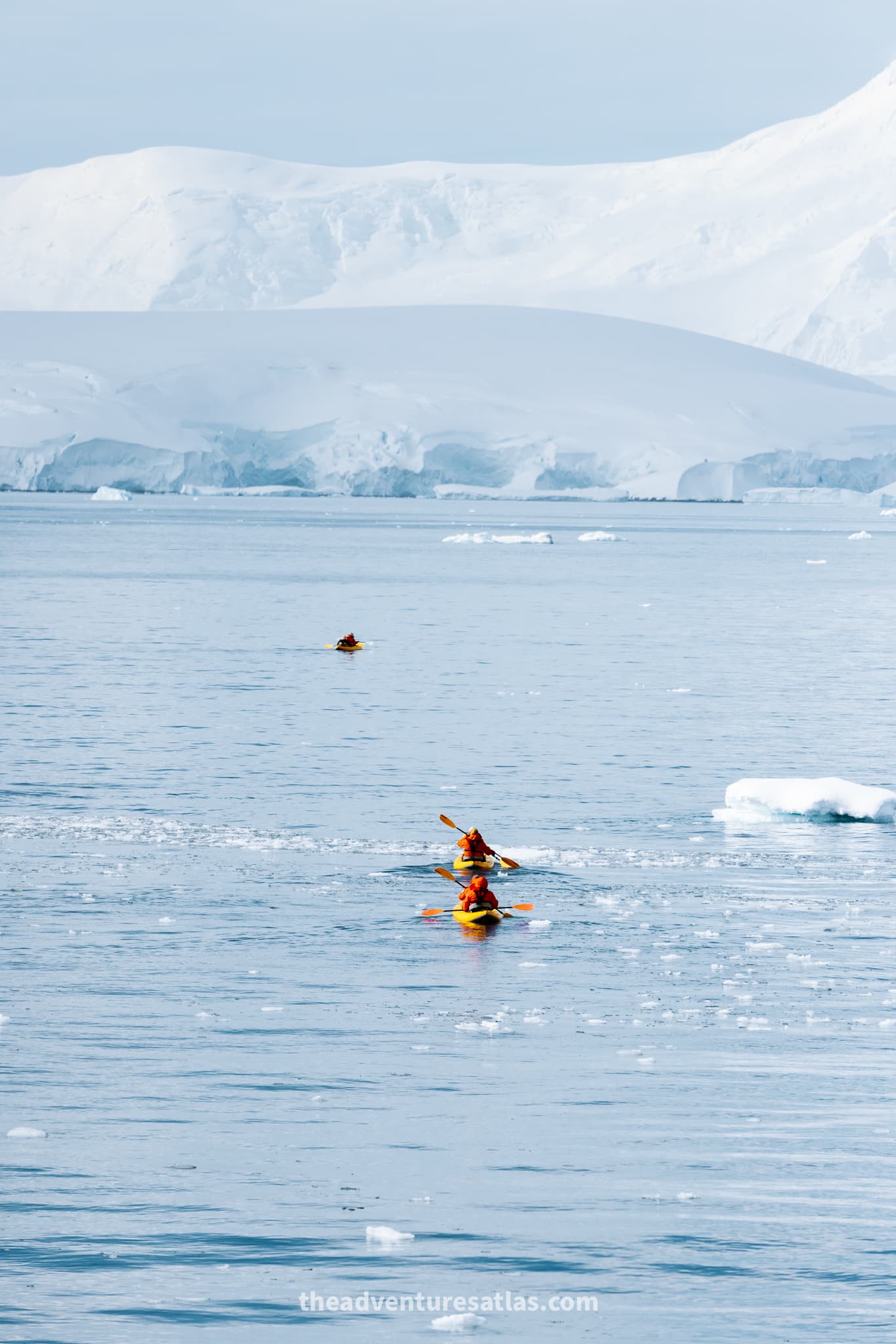
Sea days are your ‘recovery’ time and rest days. You won’t be getting off the ship, but you’ll still be moving around, attending lectures, and spending time on deck watching for wildlife. We found that sea days were still mentally engaging but physically easier.
Landing days are more active, but only in short bursts. You’ll usually have one or two excursions per day, each lasting a few hours. For us, mornings started with breakfast around 8AM, a landing around 9AM, lunch back on board, and a second outing in the early afternoon.
Who Should Reconsider an Antarctica Trip?
Because Antarctica is so remote, expedition companies have to be conservative about risk. That means some physical limitations matter more here than they would on a typical vacation. This isn’t about gatekeeping – it’s about making sure that everyone has a safe and enjoyable experience.
National-Geographic Lindblad had every passenger pass a medical screening prior to the trip.
You might want to have a serious conversation with your doctor and the expedition company if you have:
- Balance or Mobility Issues: If you’re not able to walk unassisted on uneven ground or have a condition that severely impacts your balance, you might have a hard time getting in/out of the Zodiacs or walking around on land.
. - Difficulty Following Instructions Quickly: The Zodiac transfers, in particular, require you to listen to the crew and act when they tell you to.
. - Significant Heart or Respiratory Conditions: While the activities aren’t strenuous, the environment is remote and cold. There’s a doctor on board for minor things, but you’ll need medical clearance for serious conditions because you won’t have immediate access to advanced medical care in Antarctica.
Who Finds Antarctica “Hard” and Who Doesn’t
Interestingly, our trip Antarctica seemed to be less about physical fitness and more about managing expectations.
Antarctica will feel harder for you if you:
- Struggle with uncertainty or last-minute plan changes
- Get cold easily and dislike standing outside for extended periods
- Expect the trip to feel physically “easy” simply because it’s a cruise
You’ll have an easy time if you:
- Are comfortable being mildly uncomfortable for short periods
- Can move carefully and deliberately
- Don’t need constant outfit changes, variety or a rigid routine
If you approach this experience with patience, flexibility and realistic expectations, then Antarctica is far more accessible than you probably think (and far more rewarding than most people ever imagine).
Frequently Asked Questions
Do I need any special hiking or mountaineering experience?
You definitely don’t need any special experience to take an Antarctica cruise! The shore excursions are more like guided walks, not technical hikes. If you enjoy walking, you’ll be perfectly fine. No ice picks or special gear are required.
Are there age limits for an Antarctica trip?
I don’t think there’s such a thing as too old for Antarctica! Most expedition operators don’t have an upper age limit because it’s mostly about mobility. We saw a lot of people in their 80s on board, participating in everything from the hikes to the Polar Plunge!
However, there is usually a minimum age (typically around 8 years old) for safety reasons.
Can I opt out of landings if I’m tired or the weather is bad?
Yes, always you can always opt out of any activity! Participation in any off ship activity is 100% optional.
If you’re feeling tired or just want to enjoy the view from the ship’s lounge, you are always welcome to stay on board. The expedition team will clearly describe the conditions and difficulty of each landing before you leave the ship, so you can make an informed decision every time.
Is Antarctica harder than a safari or Galápagos cruise?
Yes, I would say it is. While you’re not necessarily walking long distances, an Antarctica trip is more physically demanding than a typical warm weather wildlife trip. It involves colder temperatures, a LOT of wind exposure, the process of getting in and out of Zodiacs, and more time spent standing on moving platforms (the ship, the boats). It’s still very accessible, but you should expect it to require a bit more from you physically than a safari or Galápagos cruise.
***
Ultimately, an expedition to Antarctica is far more accessible than most people think. If you’re comfortable with slow movement, changing plans and being outside in the cold and wind for hours at a time, then you’ll have a GREAT adventure.
If you’re dreaming of going, don’t let a fear of extreme physical demands hold you back.
Ready to plan the rest of your trip? For a full breakdown of the route, costs, and daily life, read my Ultimate 22-Day Antarctica Expedition Guide
Want to see what a trip realistically looks like? Here are 51 Photos of an Antarctica Expedition Cruise

Hi, I’m Jackie! I’m a travel photographer and content creator based near the Adirondack Mountains of Upstate New York. I’m also a millennial who works full-time, yet I still find ways to travel frequently without breaking the bank, because traveling is what makes me feel most alive. Now I help fellow travelers who also work 9-5 and are looking for ways to travel more with limited PTO.
Related Posts


WANT TO SAVE MONEY TRAVELING?
Check out my list of reliable budget-friendly travel resources that are guaranteed to save you the most money, without compromising your experience.