A Day in the Life on an Antarctica Expedition Ship (What It’s Really Like)
What do you actually do all day on an Antarctica expedition cruise ship?
We already know that photos don’t show the whole picture: the waiting, the briefings, the constant layering up, the “we’re changing plans again” announcements, the times you sprint to the deck because someone spotted whales… and the oddly specific fatigue that hits by dinner even though you didn’t do anything “hard.”
I spent 22 days aboard the National Geographic Explorer (Falklands → South Georgia → Antarctic Peninsula) and here’s what the real day-to-day life looked like.
This post is for you if you’re wondering what a landing day actually feels like, what sea days are really for, how much time you spend off the ship, what happens when weather cancels plans, and who tends to thrive on this kind of trip.
Let’s dive in!

Quick reality check: this isn’t a cruise with Antarctica views
Life on an Antarctica expedition ship revolves around briefings, layers, Zodiacs, wildlife sightings, constant weather pivots, and early nights – all set against some of the most unreal scenery you’ll ever casually glance at from a lounge window.
If you go in expecting a traditional cruise, you’ll probably be caught off guard.
If you go in expecting a floating basecamp with a full, sometimes unpredictable daily schedule, you’ll feel right at home.
The biggest misconception is thinking you’re booking a “cruise” and Antarctica is just the backdrop.
On an Antarctica expedition, the ship exists for one main reason: to get you off the ship safely and as often as conditions allow. You head out on landings and Zodiac cruises, then come back onboard to warm up, eat, learn from the expedition team, and reset before doing it all again.
Your “schedule” (and I use that word loosely) is entirely dictated by things like:
-
wind and sea state (Zodiacs don’t run if it’s not safe)
-
ice movement
-
wildlife activity (if a beach is packed with penguins or seals, you’re not landing there that day)
-
daylight
-
real-time decisions from the captain and expedition leader
Plans change constantly, sometimes hour by hour, and that flexibility is built into the experience.
All of this is to say: if you need a rigid itinerary to relax, an Antarctica expedition cruise may not be the right fit. But if you’re okay with adapting to conditions and trusting the process, this style of travel is incredibly rewarding.
Here’s a visual guide to what an Antarctica expedition looks like!

The two types of days on an Antarctica expedition ship: landing days vs. sea days
Every Antarctica expedition has two kinds of days: landing days and sea days.
- Landing days are the days you actually get off the ship. Between layering up, Zodiac transfers, cold exposure, and constant stimulation, these days take a lot out of you.
. - Sea days are spent crossing open ocean between destinations. They move at a slower pace and feel more restful, but you’ll spend a lot of time in lectures and briefings (it really does feel a bit like a floating classroom), and your body is constantly adjusting to the motion of the ship.
The specifics vary by operator and ship, but across small, expedition-style voyages, this basic structure is pretty consistent and defines what day-to-day life on an Antarctica expedition ship actually feels like.
What a landing day is actually like
Landing days are the heart of the trip and the entire reason you’re even there!
This is what a typical landing day looked like for me after nearly three weeks onboard:
7:30AM: Wake up call, morning briefing and breakfast
Most mornings start with a wake up call and quick briefing from your expedition leader once the team has assessed conditions for the day. You’ll hear some version of where you are, what the plan is and what might change.
Breakfast on our ship started at 8:00 AM and was a full buffet: scrambled eggs and bacon, chia seed pudding, charcuterie, fresh fruit – the works.
Our ship had about 200 passengers and we were divided into four groups so everyone wasn’t crowding the basecamp locker room at once. After breakfast, we listened for our group to be called, then headed down to gear up.


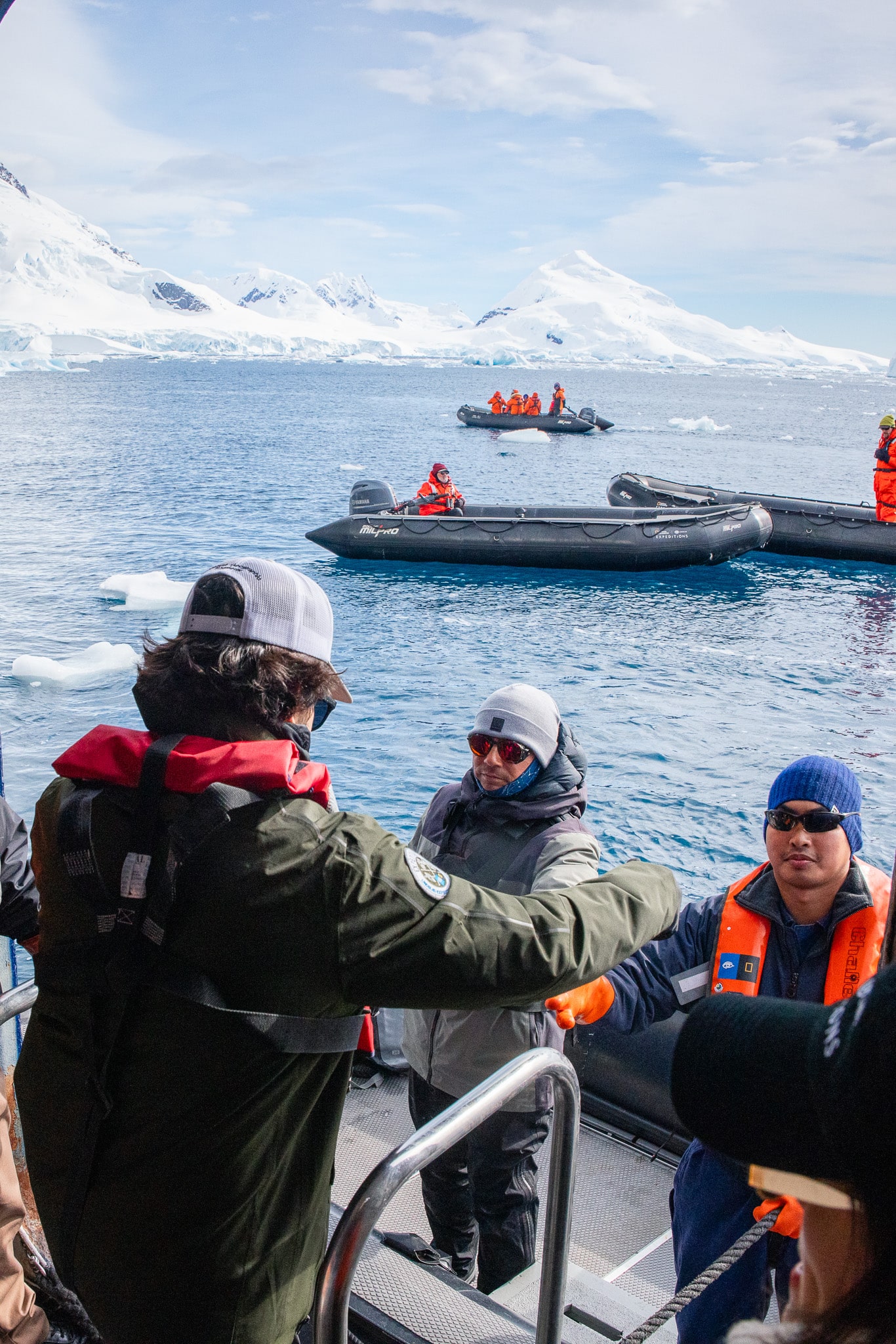
This part quickly becomes second nature – layering up in base layers, fleece, waterproof pants, the big orange parka. Then down to the lockers for muck boots, grab your life jacket, and head for the Zodiacs.
Packing for your own trip? Here’s a guide to exactly what you should pack for Antarctica!
9:00AM: First Excursion
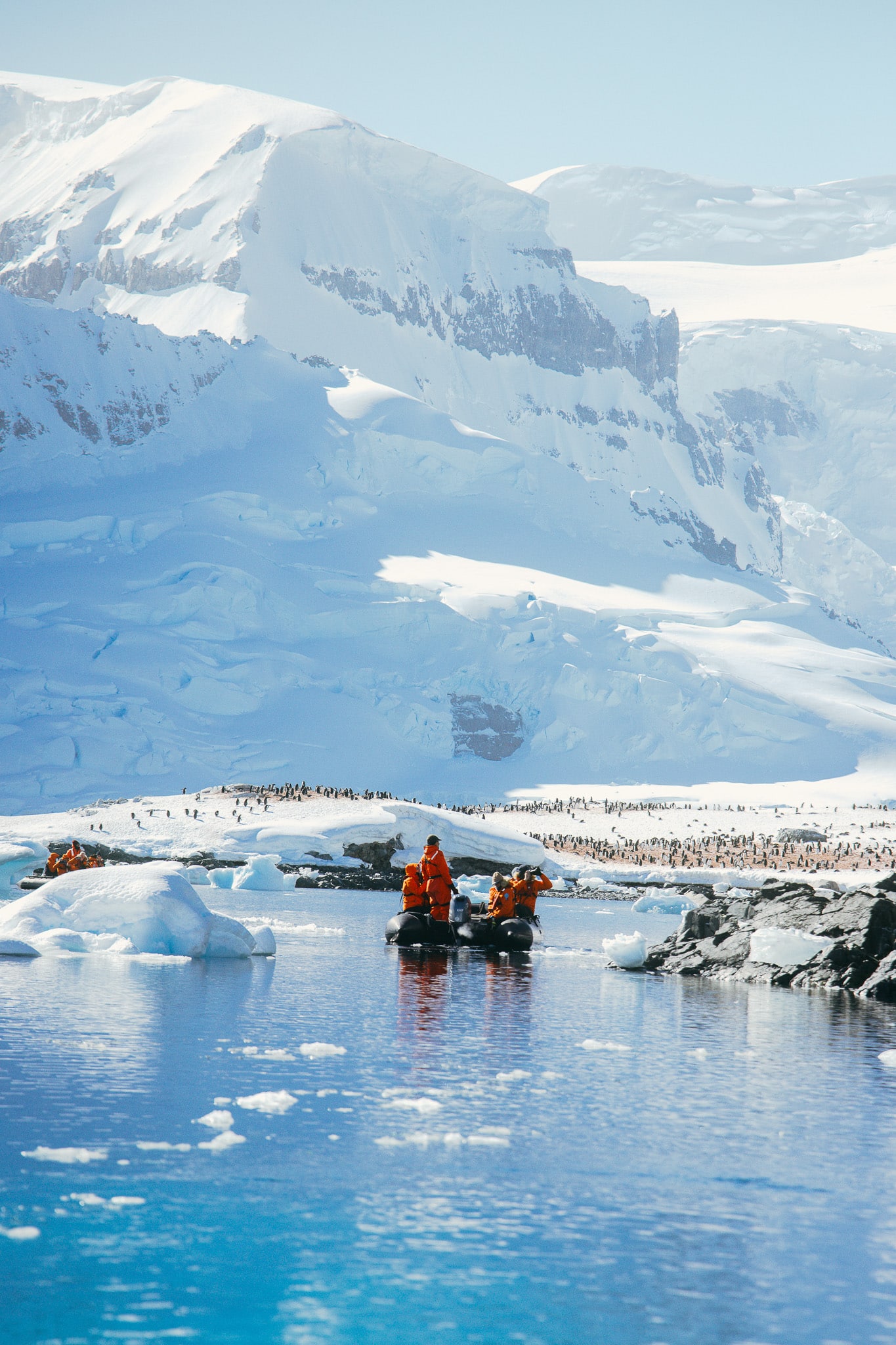
Once called, you board the Zodiac and either head to shore or set off on a Zodiac cruise.
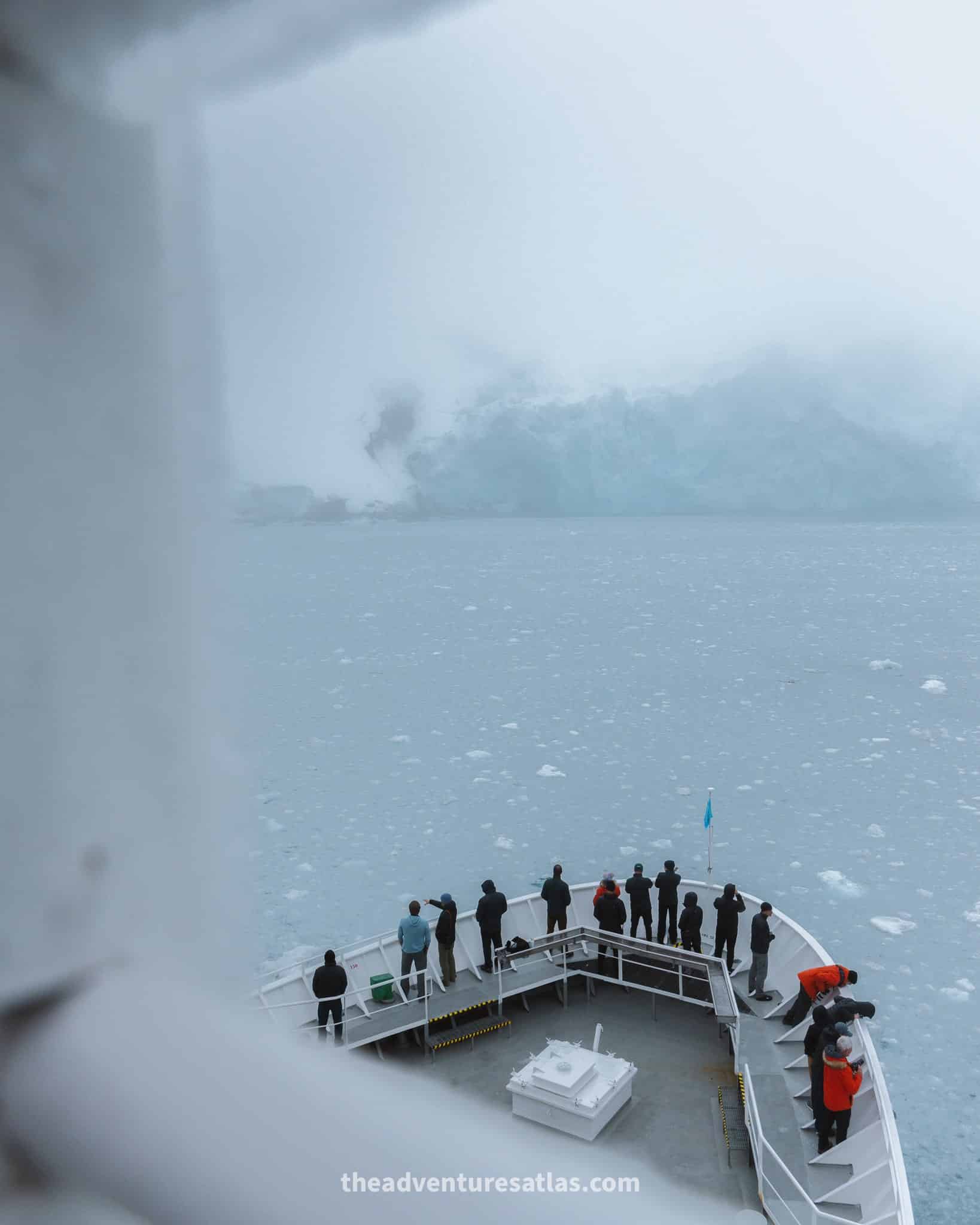
On most landings we had the option to join a guided walk to a viewpoint, take an easy stroll along the shore or just find a spot to stand and watch penguins go about their very loud, very chaotic lives.
The first excursion usually lasted two to three hours, depending on conditions.


12:00PM: Lunch & Repositioning the Ship
Lunch on our ship was at noon. As much as we loved being off the ship, I will say that it was always so satisfying coming back to peel off the gear and warm up over lunch.
Meals were usually buffet style or à la carte. I personally loved the a la carte option because the National Geographic–Lindblad crew knows how to do a solid bolognese. I think I had it every day.
While you’re eating, the ship is often already repositioning to the next excursion site for the afternoon.
This window between excursions was prime nap time for us. Even though you’re not doing anything particularly strenuous, the cold, wind, and sensory overload make you so tired.


2:00PM: Gearing Up (Again) and Afternoon Excursion
This is one of the biggest “things I wish I knew about Antarctica” pieces: you spend a lot of time changing clothes!
Most days in the Antarctic Peninsula aim for two off-ship outings (when conditions allow). That means repeating the whole process of layering up, pulling on your boots and getting back on the Zodiacs.
The afternoon excursion might be another landing, a Zodiac cruise, or something extra like kayaking or the polar plunge.

5:00PM: Cocktail Hour and Daily Debrief
This is where everything from the day gets stitched together.
You’ll hear a recap of what you saw and why it mattered, short talks from the naturalists, and a preview of tomorrow’s plan…with a very large “weather dependent” disclaimer.
7:00PM: Dinner
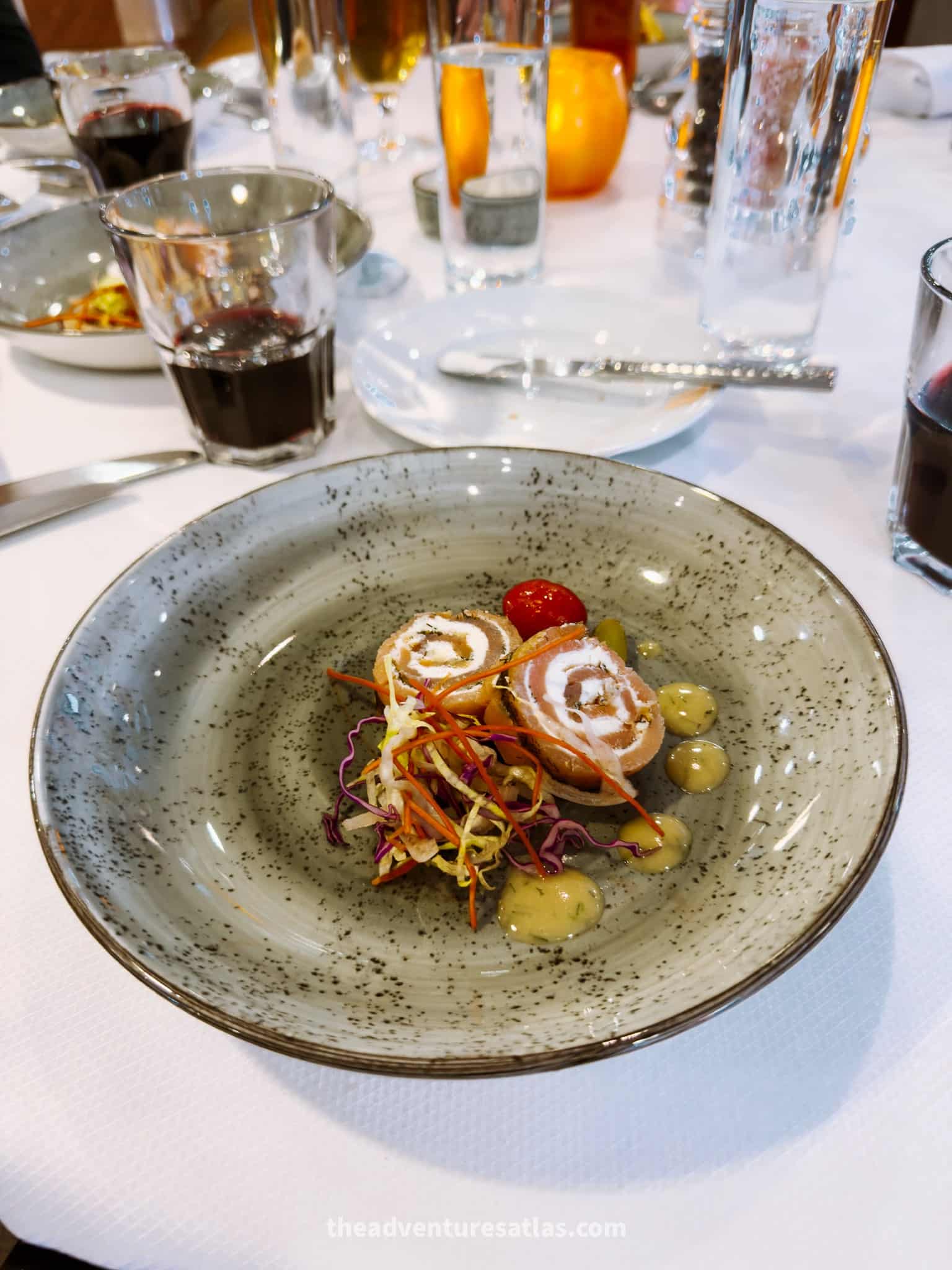
Most nights dinner was a 3 course meal, ordered right the menu. A few nights, they switched it up with specialty buffets like a Swedish and Filipino buffet.
We were so impressed with the crew who navigated a swaying ship while refilling wine glasses and delivering cups of steaming hot soup to the table!


Some nights we stayed up late for sunset, like when the captain decided to cruise through the Lemair Channel (which was still one of the most beautiful sunsets of my life).
By the time you’re done with dinner, you’ll feel a unique kind of exhaustion. It’s not from a lack of sleep, but from the cold, constant stimulation, and constantly taking in more than your brain knows what to do with.
It’s a good kind of tired, and you’ll find most people head to bed early, ready to do it all again the next day.
To see what a full landing day actually looks, check out my “day in the life” videofrom our Antarctica expedition:
What a sea day on an Antarctica expedition ship looks like
Compared to landing days (which are filled with layering up, Zodiac transfers, cold exposure, constant stimulation), sea days are a lot calmer and more flexible.
There’s no early wake up calls, no rushing to gear up and no tight windows to get off the ship.
You can pretty much do whatever you want for the day, but you’ll still be surprised at how many things there are to keep busy!
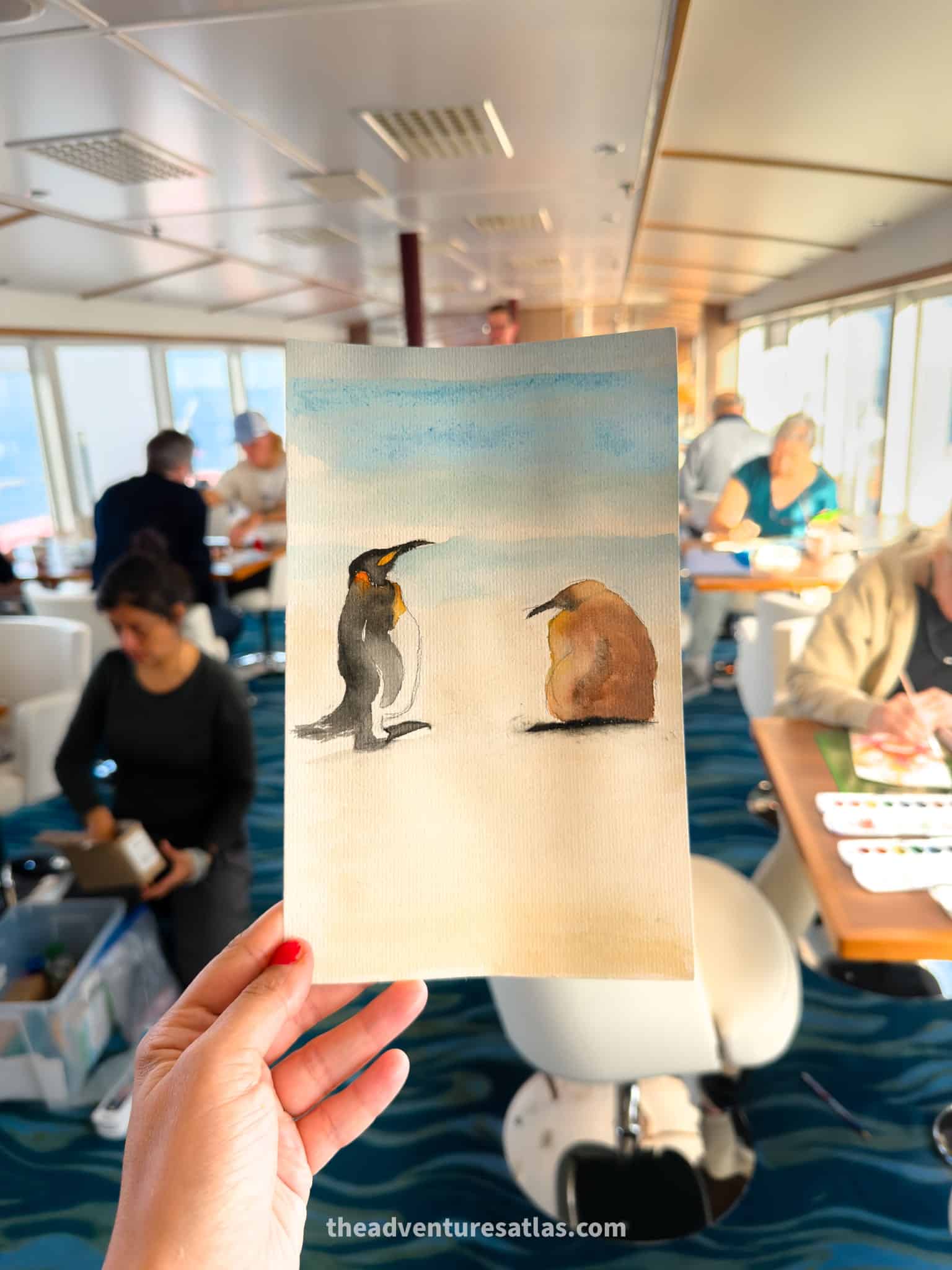
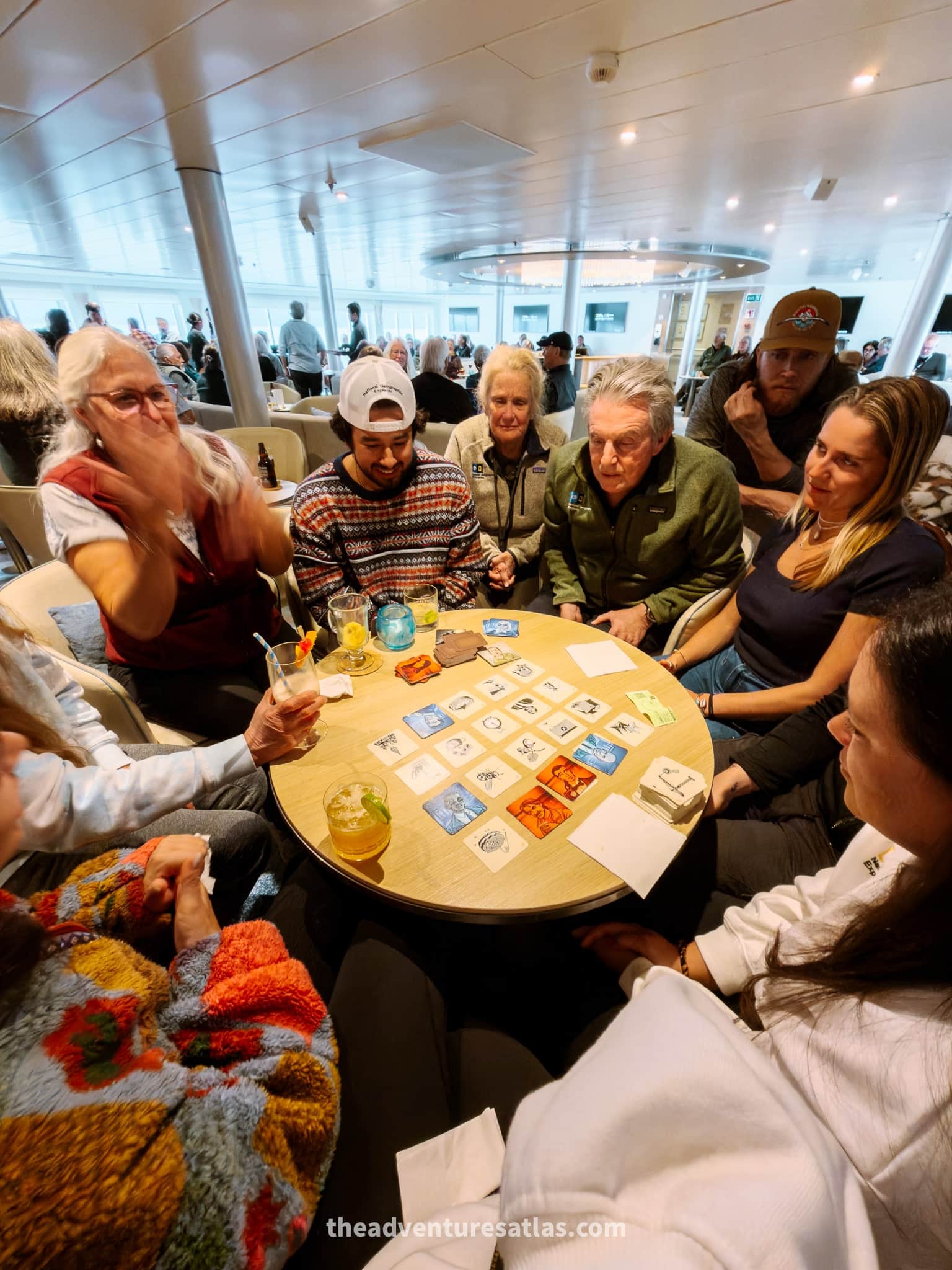
Our sea days were filled with all kinds of talks and lectures, wildlife spotting from the deck, photography workshops, tea parties, photo editing and long hours watching the landscape pass by.


Things to do on the ship
Something that (pleasantly) surprised me was that we never felt stir crazy or “stuck on the ship”.
We spent 22 days aboard the National Geographic Explorer, but the time flew by because there are always so many things to keep busy.
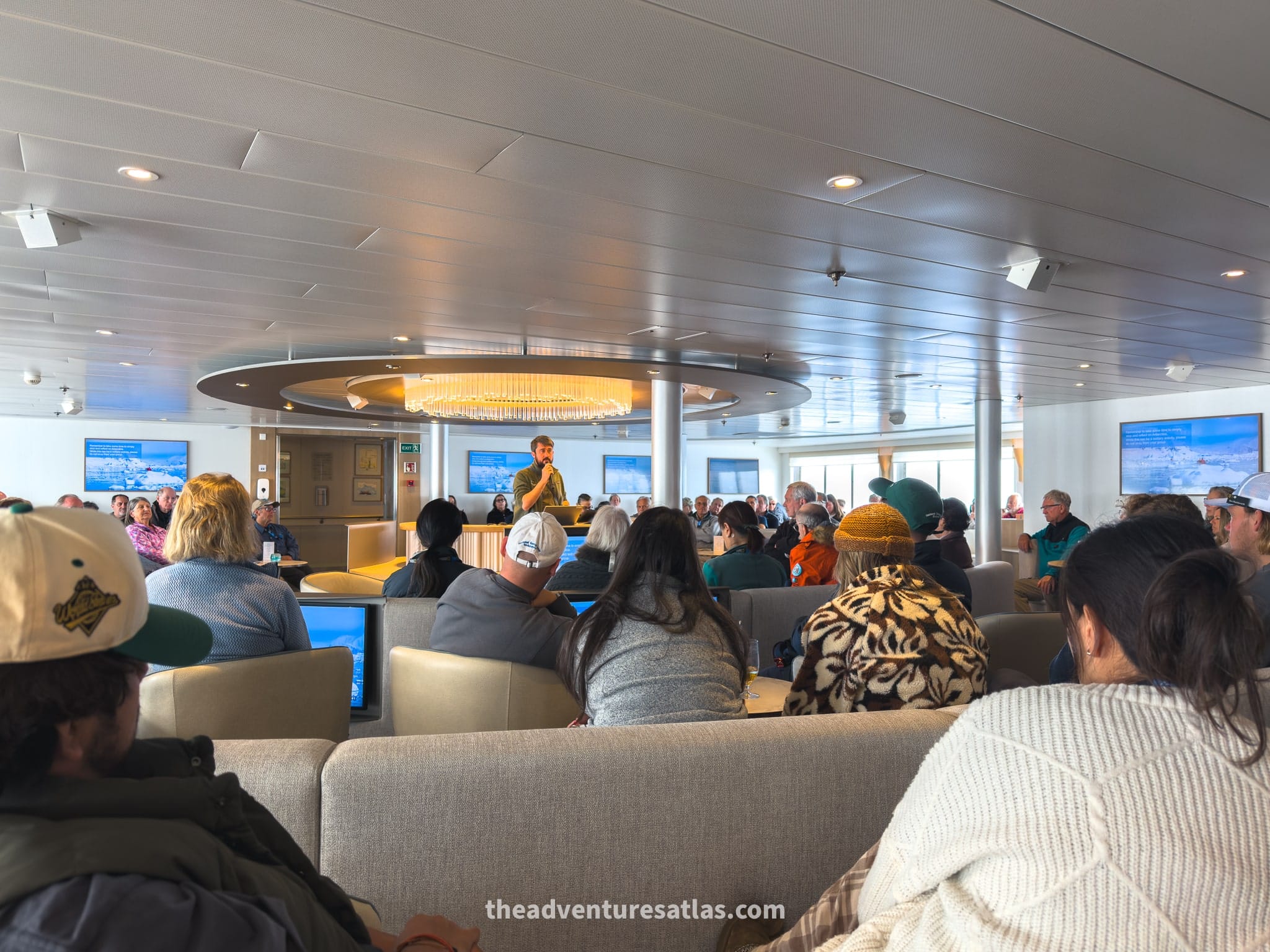
- Lectures and learning: National Geographic-Lindblad trips are very science focused and the trip often felt like a floating classroom with how many opportunities there were for learning! We had talks on everything from the geology of our landing sites, to the history of Ernest Shackleton’s Antarctic exploration and seabird behavior.
. - Gym, sauna, and wellness spaces: While our ship definitely wasn’t the fanciest one out there, we still had a gym, sauna and spa room that were open every day.

- Wildlife watching: Sea days were especially prime time for wildlife sightings. We very often heard announcements over the intercom – “Humpback whales off the bow!” – and everyone (staff included) would drop what they’re doing and run outside. We saw tons of humpbacks, minke whales and Commerson’s dolphins!
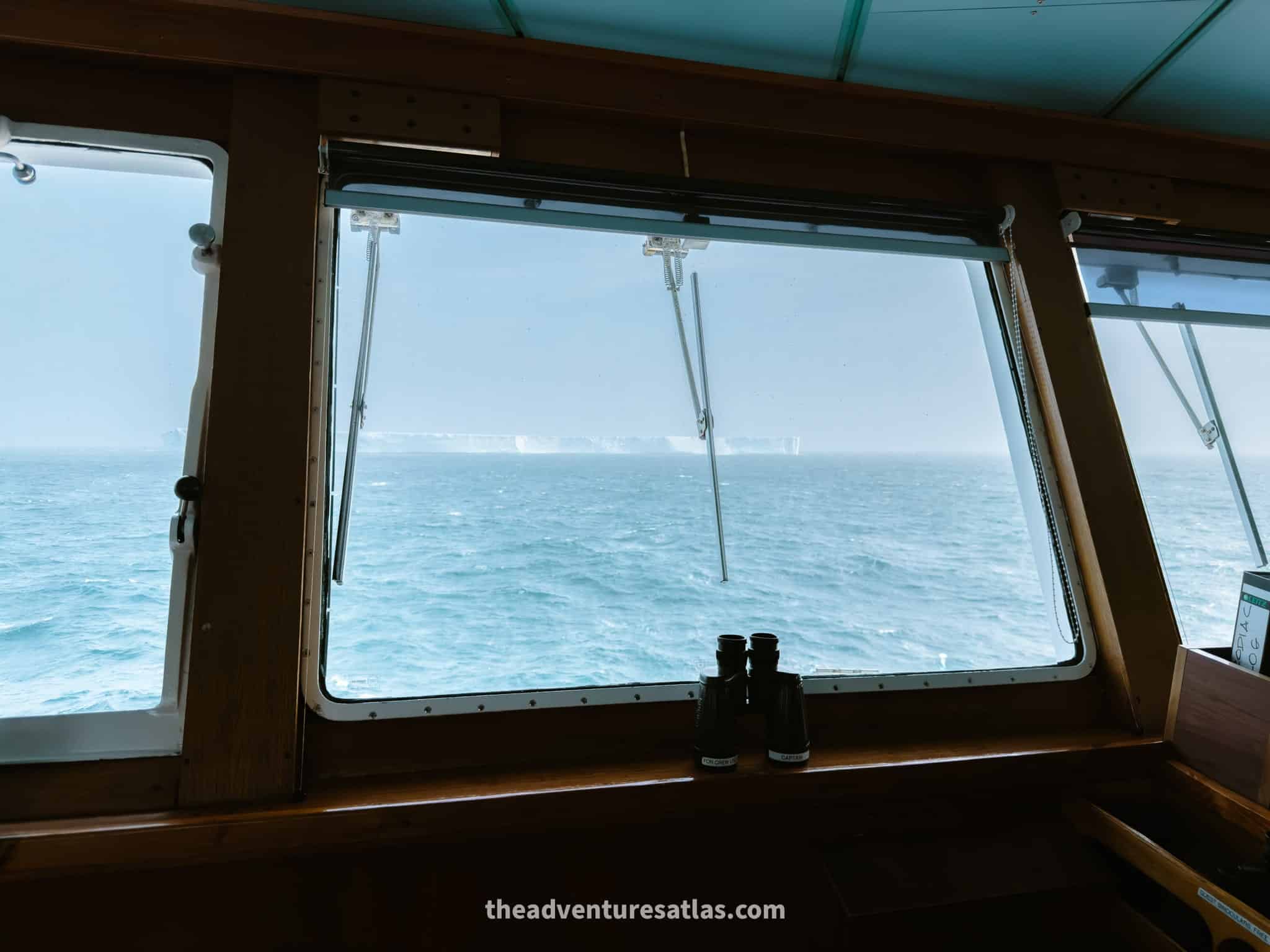
. - The Open Bridge (where the captain steers the ship): Our National Geographic ship had an open bridge policy, so you could always head up there to watch the officers navigate the ice and chat with the naturalists who were on the lookout for wildlife. It definitely made us feel like part of the crew.
How much time are you actually off the ship?
This depends on your itinerary and conditions, but on an active landing day in the Antarctic Peninsula, a common pattern is two excursions off the ship that last a few hours each, plus transition time on both ends.
In total, it comes out to about 4-6 hours off the ship on landing days. So yes, you do spend a fair amount of time onboard. But it never feels like you’re “stuck on a ship.” The ship feels like a warm, moving basecamp between outings.
On my 22-day Antarctica trip with South Georgia and the Falklands, we had about seven full days at sea where we didn’t leave the ship at all as we crossed open sea.
If you’re just heading to Antarctica and back, it takes about 2-3 days to sail from Ushuaia, Argentina to reach the Peninsula.

What our stateroom was like on the National Geographic-Lindblad Explorer
If you’re wondering if cabin comfort matters on an Antarctica expedition, I definitely think it does. You’re not in your room all day, but having a comfortable place to reset makes a big difference on a long trip.
We stayed in Room 216 on the National Geographic-Lindblad Explorer for 22 days.
The room was compact but very functional! We had a full ensuite bathroom with a nice shower that included shampoo, conditioner, etc.
There was a small closet for storage and multiple drawers for layers, boots and camera gear. Once we settled in, everything had a logical place, which made daily routines easy (especially with how often you’re getting dressed during the day). There was also a small desk, though we rarely used it since the common areas were usually a nicer place to work.


What surprised us most was how open the room felt. We had a large window and sliding glass doors leading to a balcony and being able to step outside and watch the ice pass by helped avoid that “sealed-in” feeling people sometimes worry about on ships.
The bed was very comfy and noise from other cabins was never an issue.
Overall, our cabin worked exactly as it needed to: a warm, quiet base to rest, reset and get ready to do it all again the next day.

If you want to see what our stateroom actually looked like, I shared a full room tour on Instagram! Or you can watch it here:
Frequently Asked Questions
Is it cold on the ship?
No, not at all. The ship is a very comfortable indoor temperature, around 70°F (21°C). You’ll be perfectly comfortable in a long sleeve shirt or a light fleece. You only need your heavy layers for when you go out on the open decks or for landings.
Do you get downtime?
You do get downtime between excursions, sea days, naps, and quiet time in the lounge. It’s definitely not a resort style “do nothing” trip.
Is it all lectures?
No, and that’s the point. Lectures support the experience rather than replace it. The best lectures are the ones that make you notice more once you get outside.
Does ship size matter?
Yes, mostly because the size of your ship affects logistics. The basic structure (briefing → gear up → Zodiac → landing/cruise → recap) stays similar, but we personally loved the fact that our National Geographic-Lindblad expedition was only about 200 people (including the crew).
A small ship made everything feel less like a floating hotel and more like an intimate, personalized expedition.

Can you skip an excursion if you’re tired?
Totally! Everything off the ship is optional so if you want a slow morning or you’re feeling extra tired, you can stay on board and no one will think its weird.
What happens if weather cancels landings?
This is one of the most common fears people have and it’s normal to lose a landing or two to wind or conditions. Zodiacs don’t run if it’s not safe.
What’s far less common is a trip where you don’t get off the ship at all. When plans change, your expedition team might pivot by:
-
swapping morning and afternoon plans
-
choosing more protected bays
-
adding Zodiac cruises instead of landings (this happened to us a few times!)
-
filling the time with talks, wildlife watching and repositioning
***
Life on an Antarctica expedition ship is immersive, flexible and constantly evolving.
If you want to see what these days look like visually, check out my Visual Guide to Antarctica
And for full itinerary planning and logistics, you’ll find everything you need to know in my Ultimate Expedition Guide!

Hi, I’m Jackie! I’m a travel photographer and content creator based near the Adirondack Mountains of Upstate New York. I’m also a millennial who works full-time, yet I still find ways to travel frequently without breaking the bank, because traveling is what makes me feel most alive. Now I help fellow travelers who also work 9-5 and are looking for ways to travel more with limited PTO.
Related Posts

WANT TO SAVE MONEY TRAVELING?
Check out my list of reliable budget-friendly travel resources that are guaranteed to save you the most money, without compromising your experience.