The Ultimate Antarctica Expedition Guide [Falklands & South Georgia]
After a 22-day expedition with National Geographic-Lindblad Expeditions to the Falkland Islands, South Georgia, and the Antarctic Peninsula, I came home with a whole notebook full of lessons and maaaany SD cards full of memories (seriously I have like 20,000 photos, but here are 51 of my favorites).
There’s a LOT to know before you go, so I made a complete, no fluff guide I wish I had before we left.
It’s a resource to help you plan your trip, answering the questions you actually have like:
- How much does this Antarctica cruise cost?
- How do the National Geographic-Lindblad parkas actually fit?
- Is choosing the longer route to the Falklands and South Georgia worth it?
- How do you choose an expedition company?
- A review of our cruise with National Geographic-Lindblad
My goal is to save you hours of diving down internet rabbit holes, so let’s dive in.
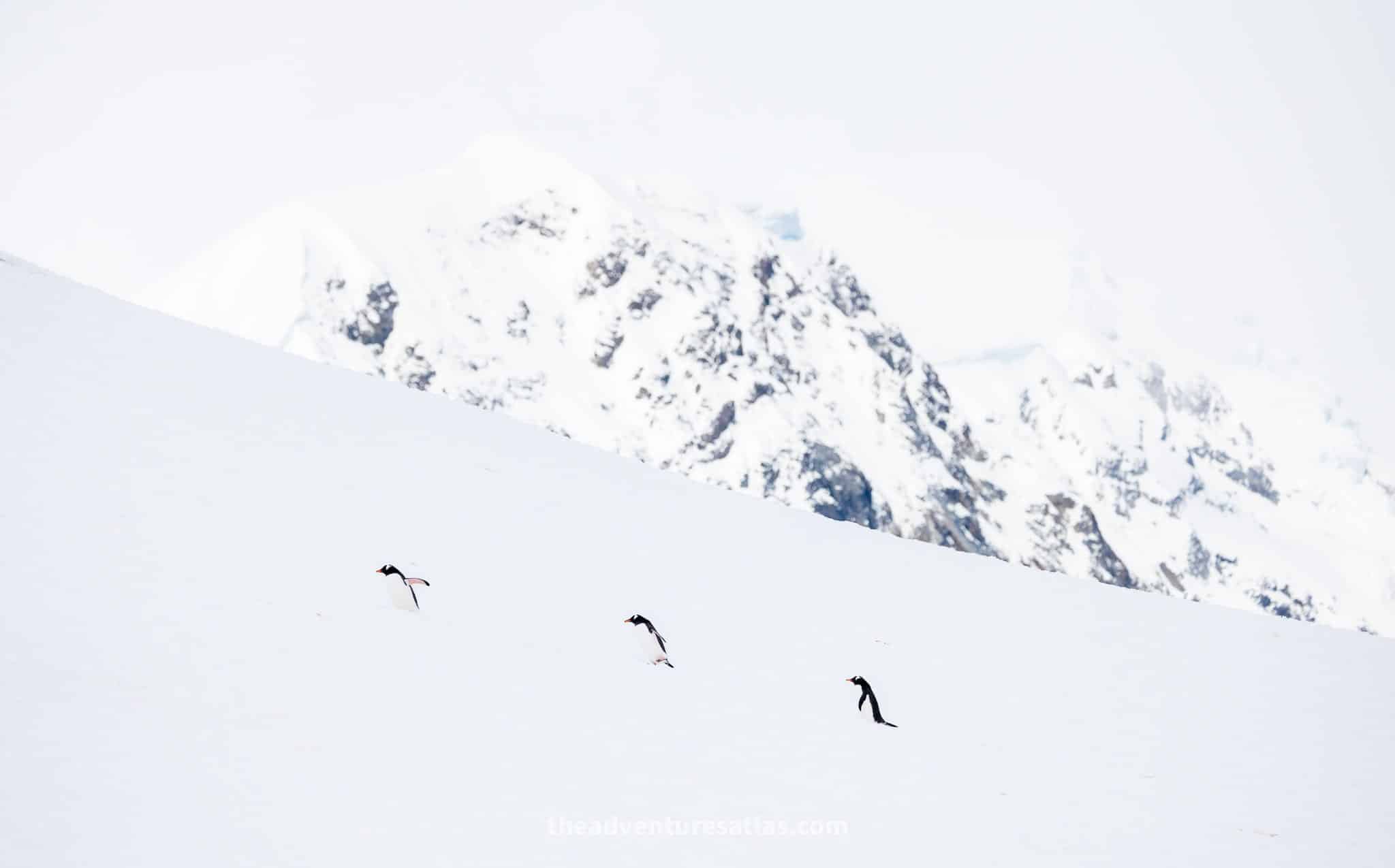
My 22-Day Antarctica Expedition: The Ultimate Guide to the Falklands, South Georgia & The Peninsula
To start our journey, we flew from the United States to Buenos Aires, Argentina, where we met up with the Nat Geo-Lindblad team.
From there, we all took a charter flight south to Ushuaia. This is where the real adventure starts, as the ships sail round trip from the port here.
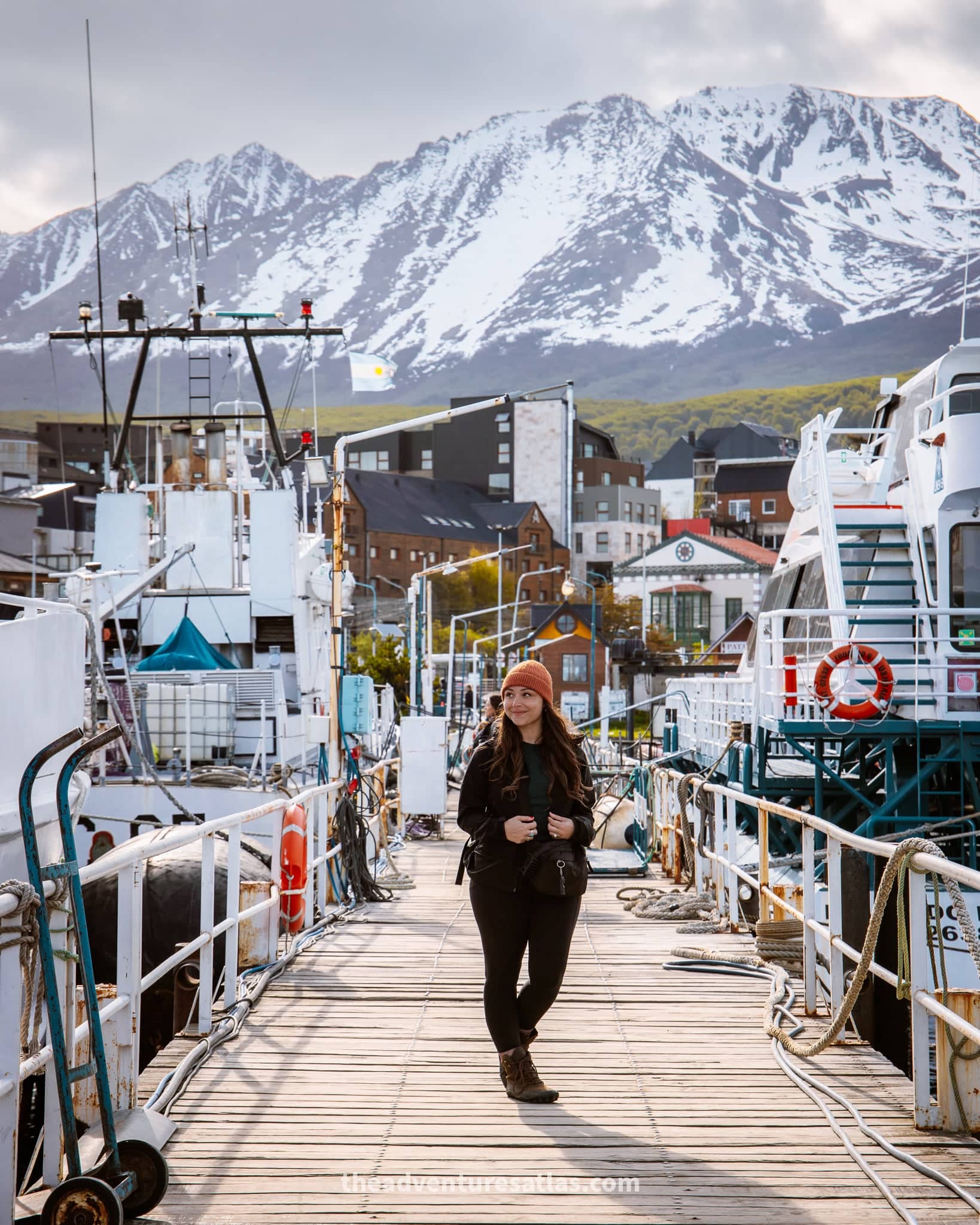
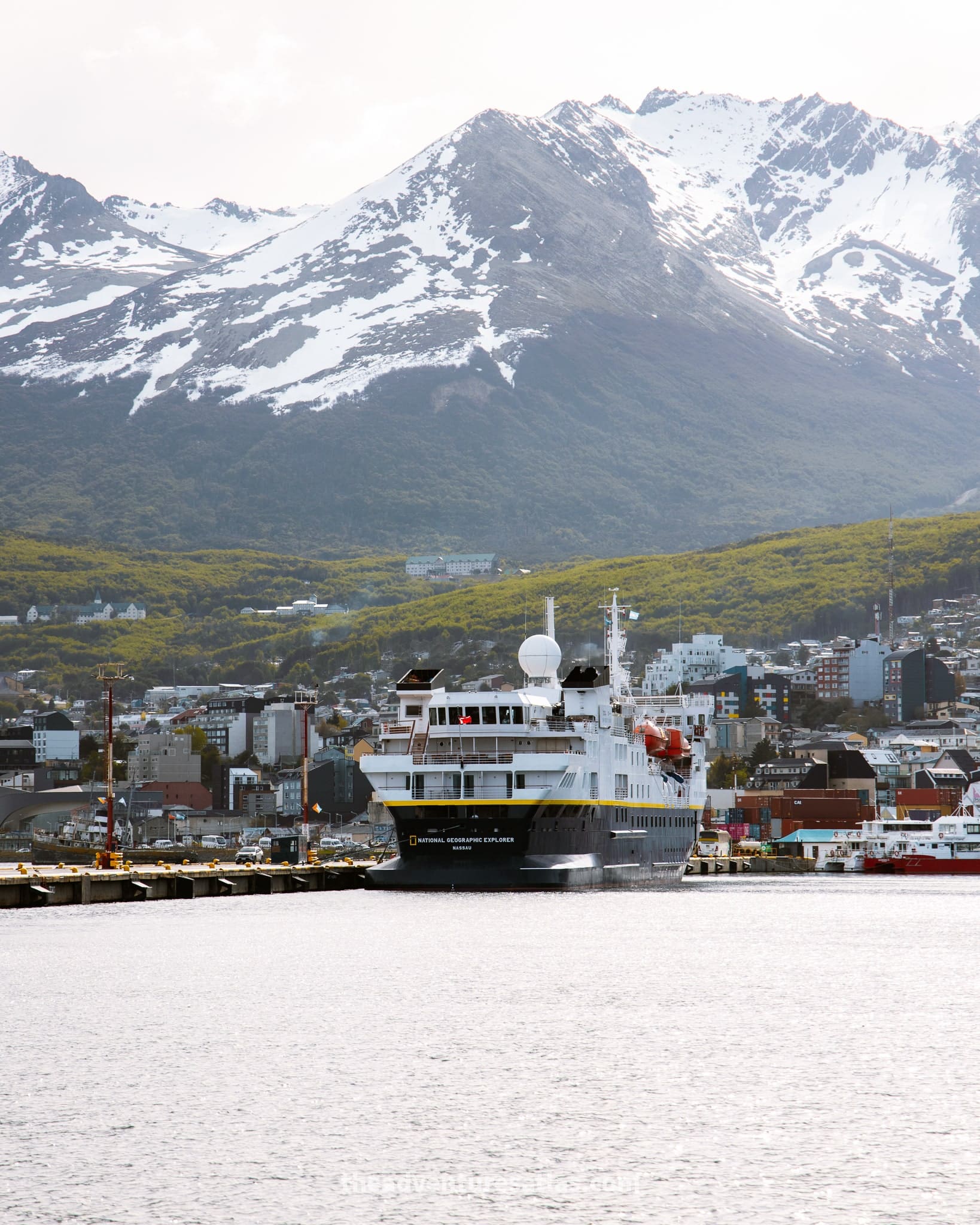
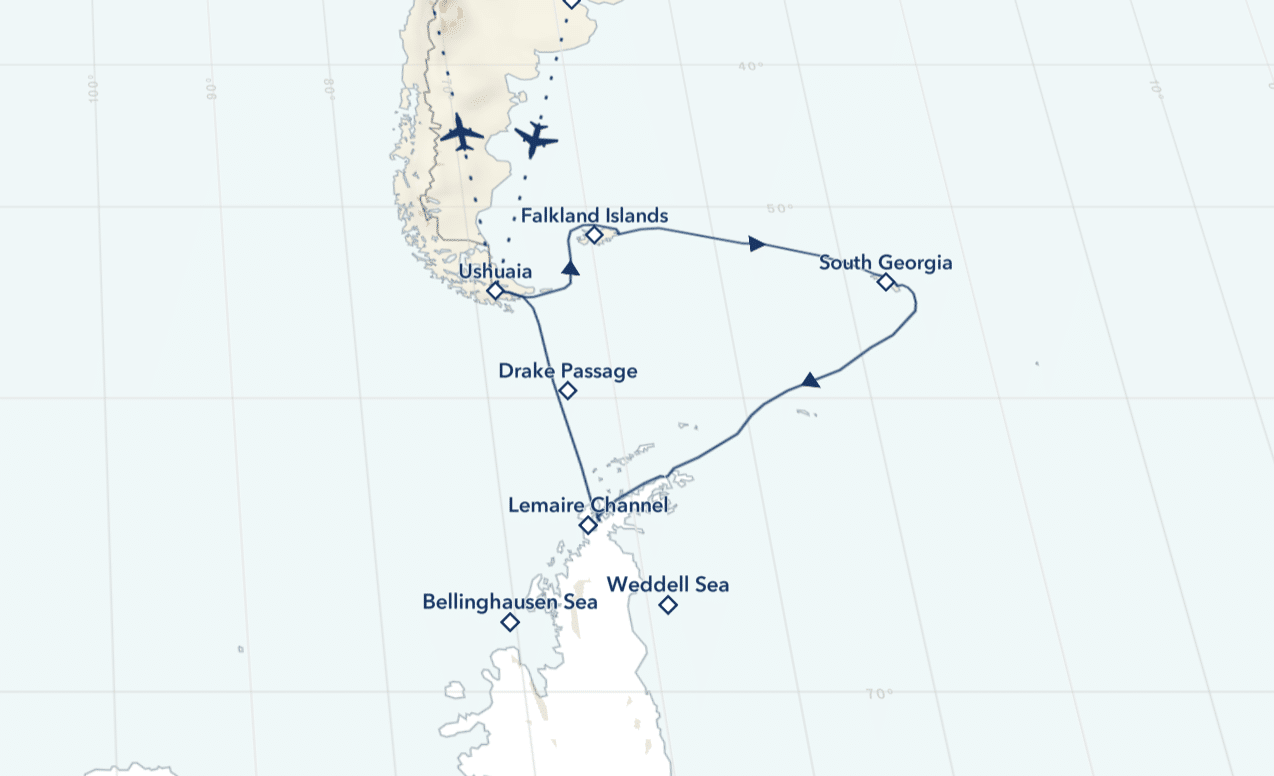
This was our 22-day Southbound route through the Southern Ocean to the Falklands, South Georgia Island, and Antarctica with National Geographic-Lindblad Expeditions.
One of the biggest questions people have at this stage is whether Antarctica is actually physically doable. If you’re wondering how hard this trip really is, I break it all down in my guide on how fit you need to be to visit Antarctica, including what’s required and who this trip is (and isn’t) a good fit for.
Planning Your Ultimate Antarctic Trip
Should You Do the Longer Trip with the Falklands & South Georgia? (Spoiler: Yes!)
Most people take a 15 day trip to Antarctica that just hits the Peninsula. And while that’s obviously incredible, you’re missing a HUGE part of the story.
If you have the time (and can stretch the budget), booking the longer 20+ day itinerary that includes the Falklands and South Georgia is a decision you will NEVER regret.
I recommend the Southbound route that starts with the Falklands. While you’ll be so excited to reach the White Continent, I promise you its worth the wait.
I was so mind blown at what we saw in the Falklands – the huge colonies of nesting albatross, the penguins on the beach – without even realizing that the best was truly yet to come.
The trip builds on itself and gets better every single day for 22 days straight.
- The Falkland Islands offer a unique blend of rugged landscapes and quirky civilization.
. - South Georgia is, and I’m not exaggerating, the Serengeti of the Southern Ocean. The sheer density of wildlife is unbelievable. This is where you’ll find the world’s largest population of southern elephant seals, 10s of MILLIONS of seabirds, and those massive king penguin colonies you’ve seen on Planet Earth.
. - Antarctica is the grand finale. The perfect, otherworldly cherry on top.
If you’re going to Antarctica, I created this free Antarctica packing list based on my own expedition – including layers, boots, camera gear, and cold weather essentials that you actually need to bring. I promise it will save you SO much time! 👇
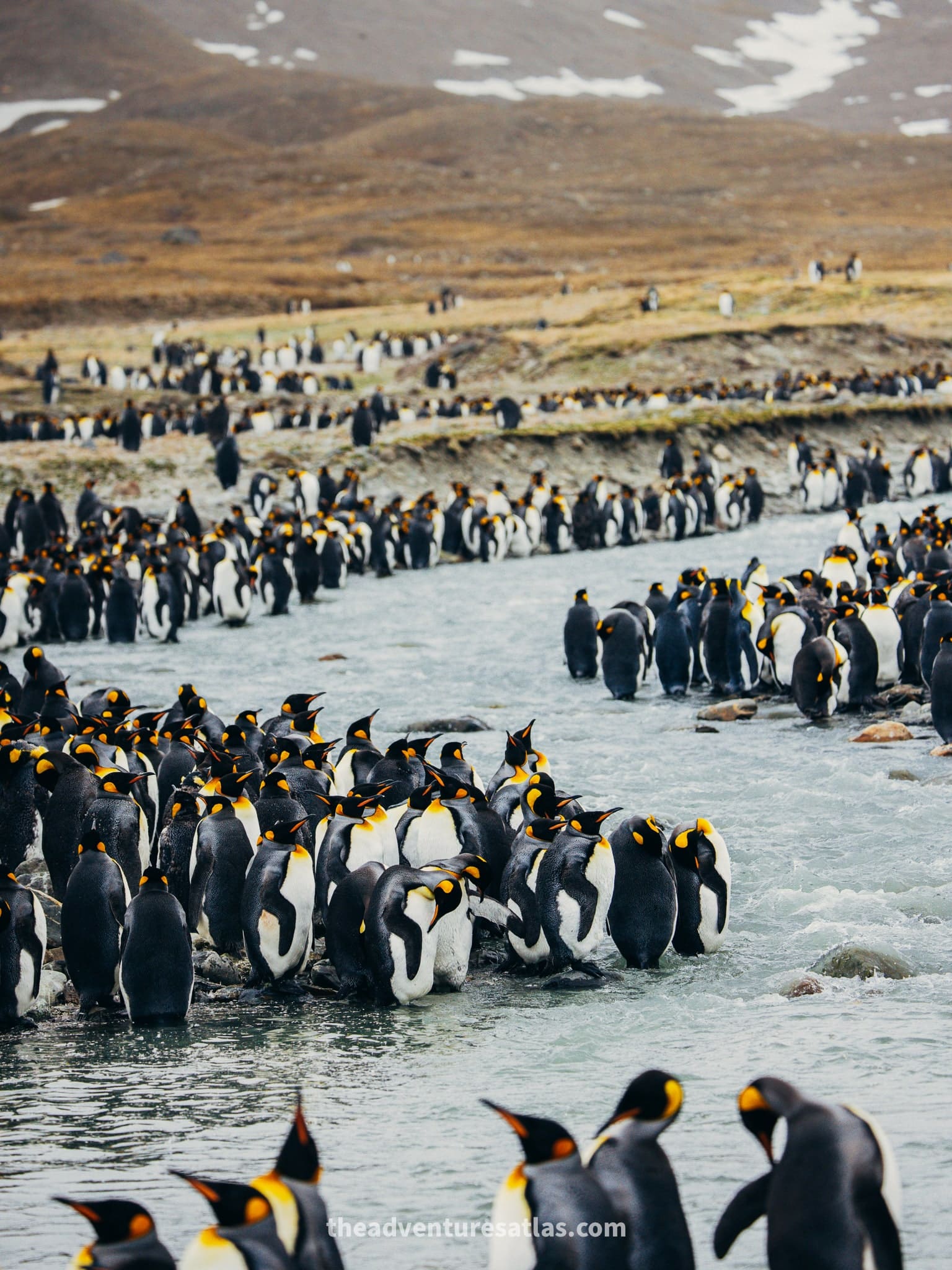
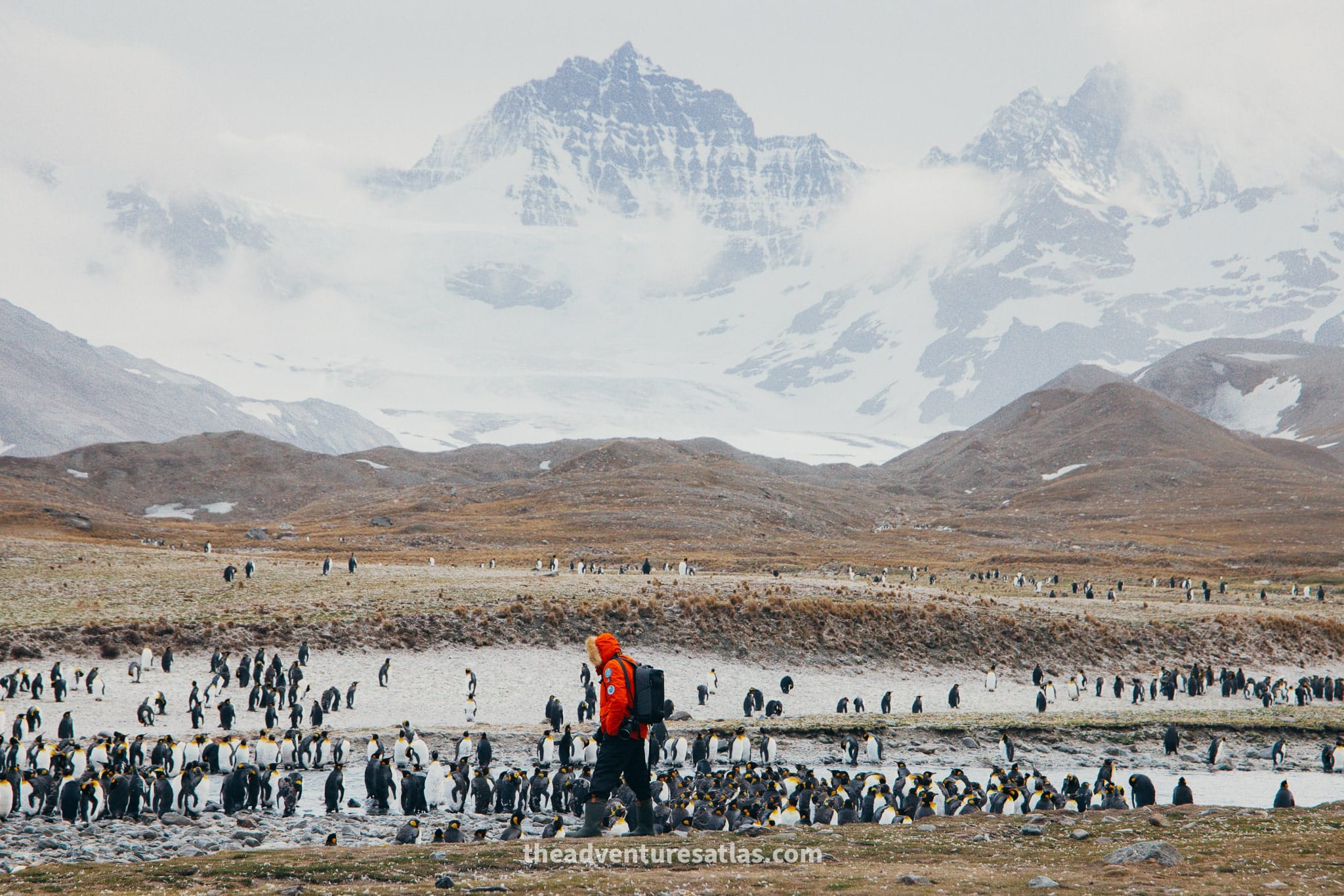 Walking along the river in St. Andrew’s Bay, South Georgia
When’s the Best Time to Go to Antarctica?
The season runs from October to March, but each month offers something different.
- October & November (Spring): The continent is pristine, draped in fresh snow. You might be the first ship of the season at some landing sites. It’s the time for penguin courtship and seeing giant elephant seals battling on the beaches of South Georgia.
. - December & January (Summer): This is peak season. You get the warmest weather and almost 24 hour daylight. Penguin chicks are hatching, and whale sightings ramp up.
. - February & March (Late Summer): This is the time for whale encounters. You’ll also see maturing penguin chicks and seal pups.
All of the photos here are from October and November. Our National Geographic-Lindblad expedition was the first of the season, so we were the first ship of the year to land at some sites.
We weren’t sure what to expect traveling so early in the season, but it was perfect for seeing the massive penguin colonies at their peak and the beautiful yellow gorse in the Falklands. We also saw a lot more whales that originally expected.
Budget tip: Antarctica expeditions vary a lot by the season. October and November are typically the cheapest months to go.
How to Choose an Expedition Company
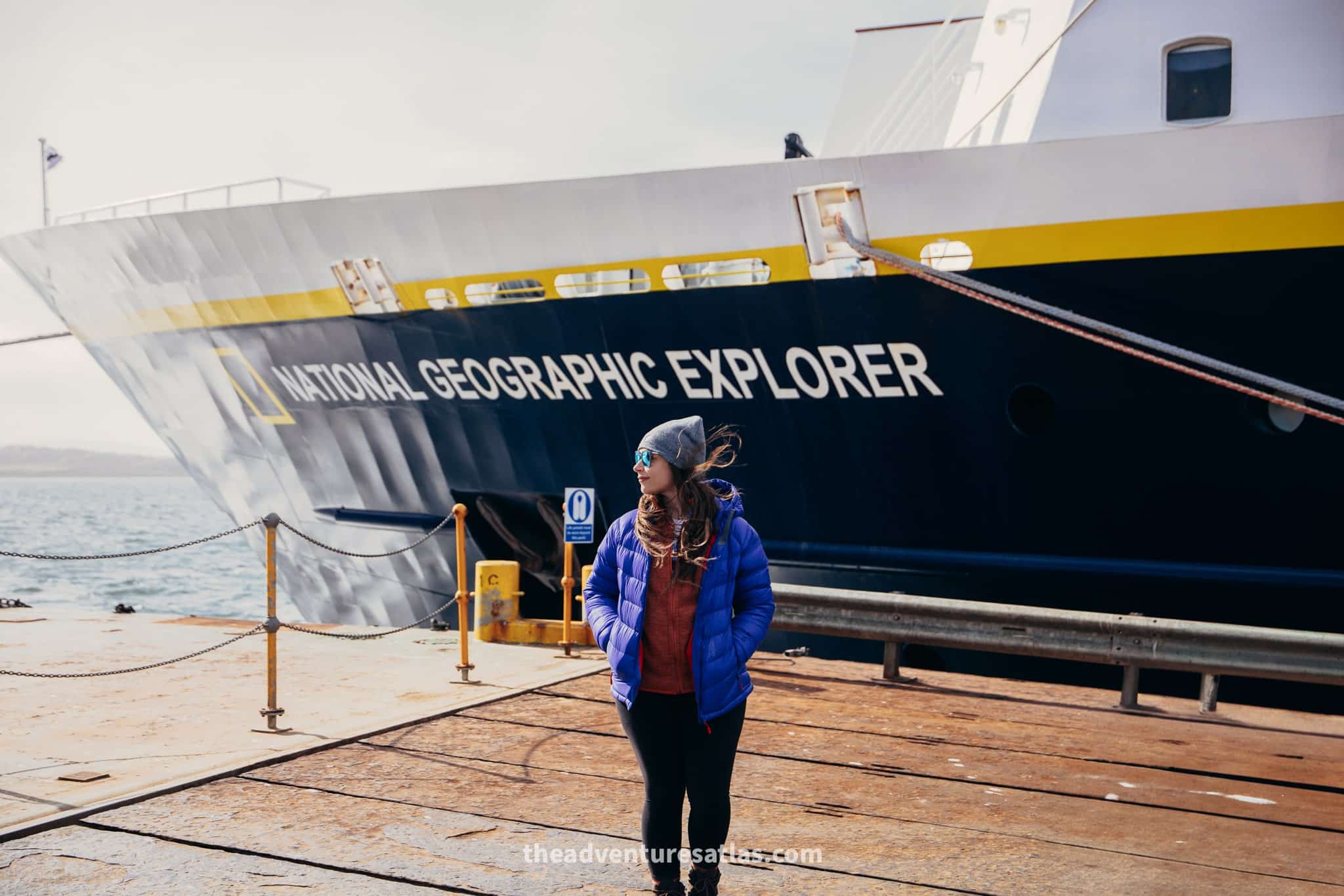
We traveled with National Geographic-Lindblad Expeditions and LOVED it, but there are a lot of Antarctica expedition companies out there.
Here’s what to look for when choosing your cruise company:
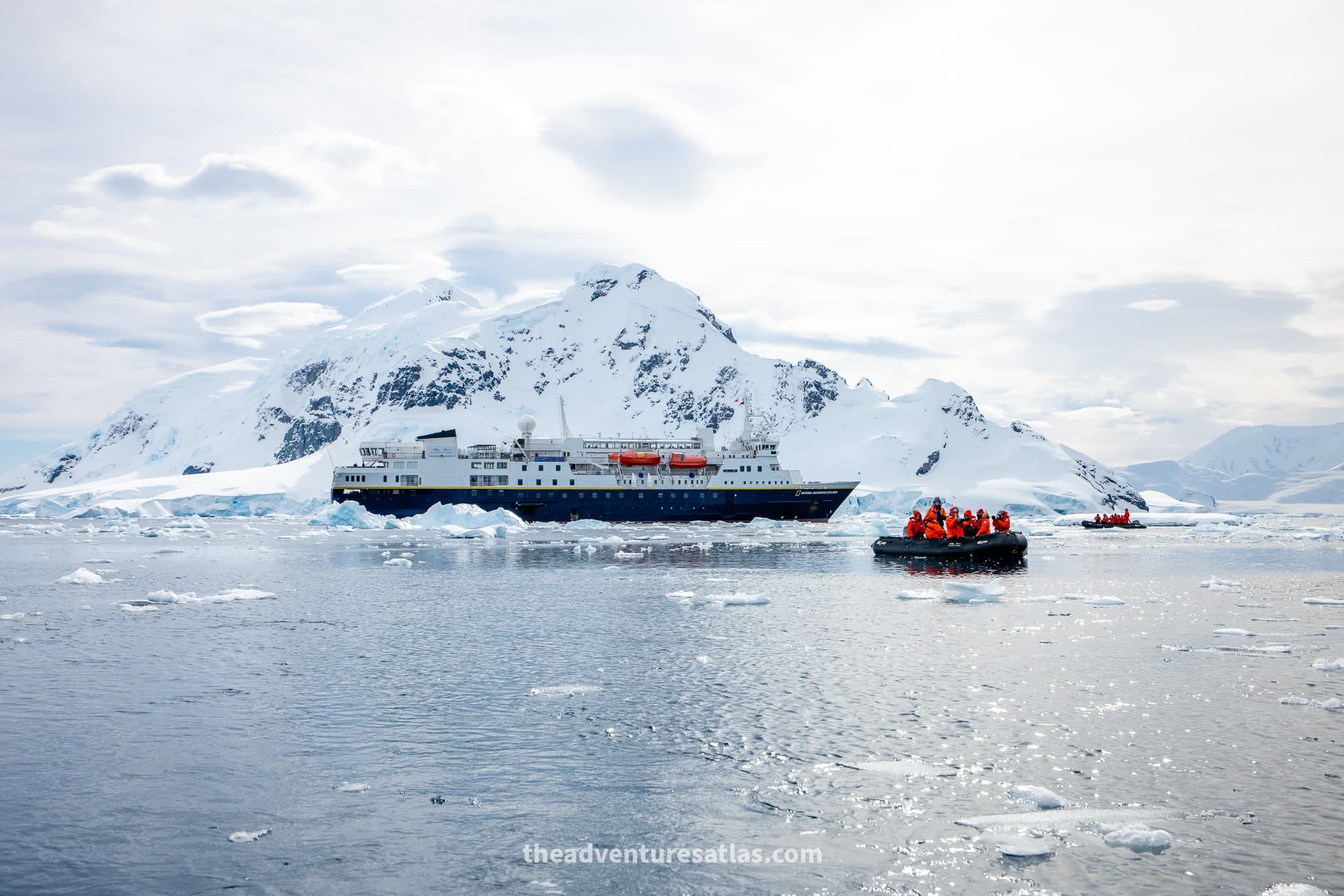
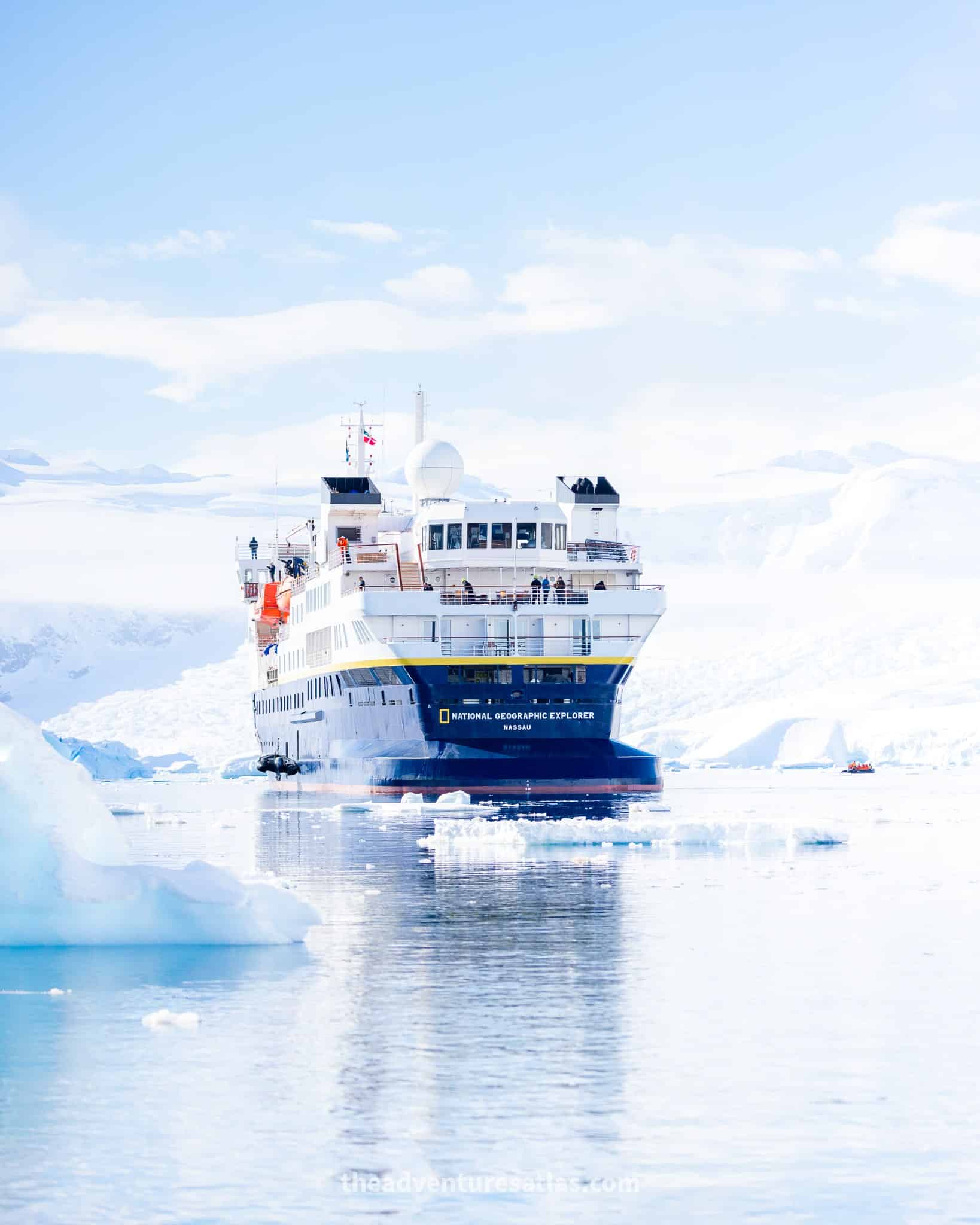
- Ship Size: Smaller is always better! A ship with under 200 passengers (like the Nat Geo Explorer) means more time on shore, access to more landing sites, and a much more intimate vibe.
. - The Experts on Board: A great expedition is all about the team. Our ship had renowned geologists, marine biologists, and historians giving daily talks that made the whole experience richer.
. - Environmental Considerations: Only travel with an operator that is a member of IAATO (International Association of Antarctica Tourism Operators) and takes sustainability seriously. Our ship planned routes to save fuel and vetted their food suppliers. Everything was done with environmental conservation and sustainability in mind.
How Much Does it Cost to Visit The Falklands, South Georgia and Antarctica?
Okay, real talk. There’s no sugarcoating that a trip of this magnitude is a serious investment.
Here’s a super transparent look at what you should actually budget for this 22-day trip.
- Expedition Fare: This is by far your biggest expense, usually $20,000 – $35,000+ per person. It sounds like a lot, but it’s all-inclusive: your cabin, all meals, all excursions, lectures, and even the charter flights to Ushuaia. So when you break it down, it’s actually pretty reasonable for what you get.
. - International Flights: Budget $1,000 – $2,500 to get to your starting point (likely Buenos Aires). Of course, this will vary a lot based on your location and flight points. We flew from Boston to Buenos Aires for about $500 per person after flight points.
. - Gear & Clothing: If you’re starting from scratch, plan on $500 – $1,500 for good merino wool layers and waterproof pants. However, you’ll actually need a lot less gear than you think. I packed a whole suitcase and wore the same 3 shirts and 2 pants almost the entire time.
. - Travel Insurance: Absolutely non-negotiable. For a trip this expensive, you need comprehensive coverage with medical evacuation. Expect to pay $500-$1000 or so. If you think you don’t need it – think again. We saw someone hit their head on a rock in the Falklands and have to be heli-vaced out on day 3. Our first thought was ” I hope he has travel insurance”.
. - Onboard Extras & Tips: Budget for special drinks, laundry, and gratuities. If you travel with National Geographic-Lindblad, tips are generally baked into your expedition fare.
The Bottom Line: A realistic all-in budget is somewhere between $22,500 and $40,000+ per person for the route that includes the Falklands, South Georgia and Antarctica, depending on the season. A cheaper alternative would be to just visit Antarctica, which you can do for roughly $10,000 per person.
Life at Sea: What It’s Really Like on an Expedition Ship
We had roughly 7 days at sea during our 22 day trip and I was a little worried those days would be boring.
I mean, how much can you do when you’re surrounded by nothing but ocean for 48 hours straight?
But I couldn’t have been more wrong. Life on the National Geographic Explorer settles into this amazing rhythm where you’re actually part of the expedition, not just a passenger.
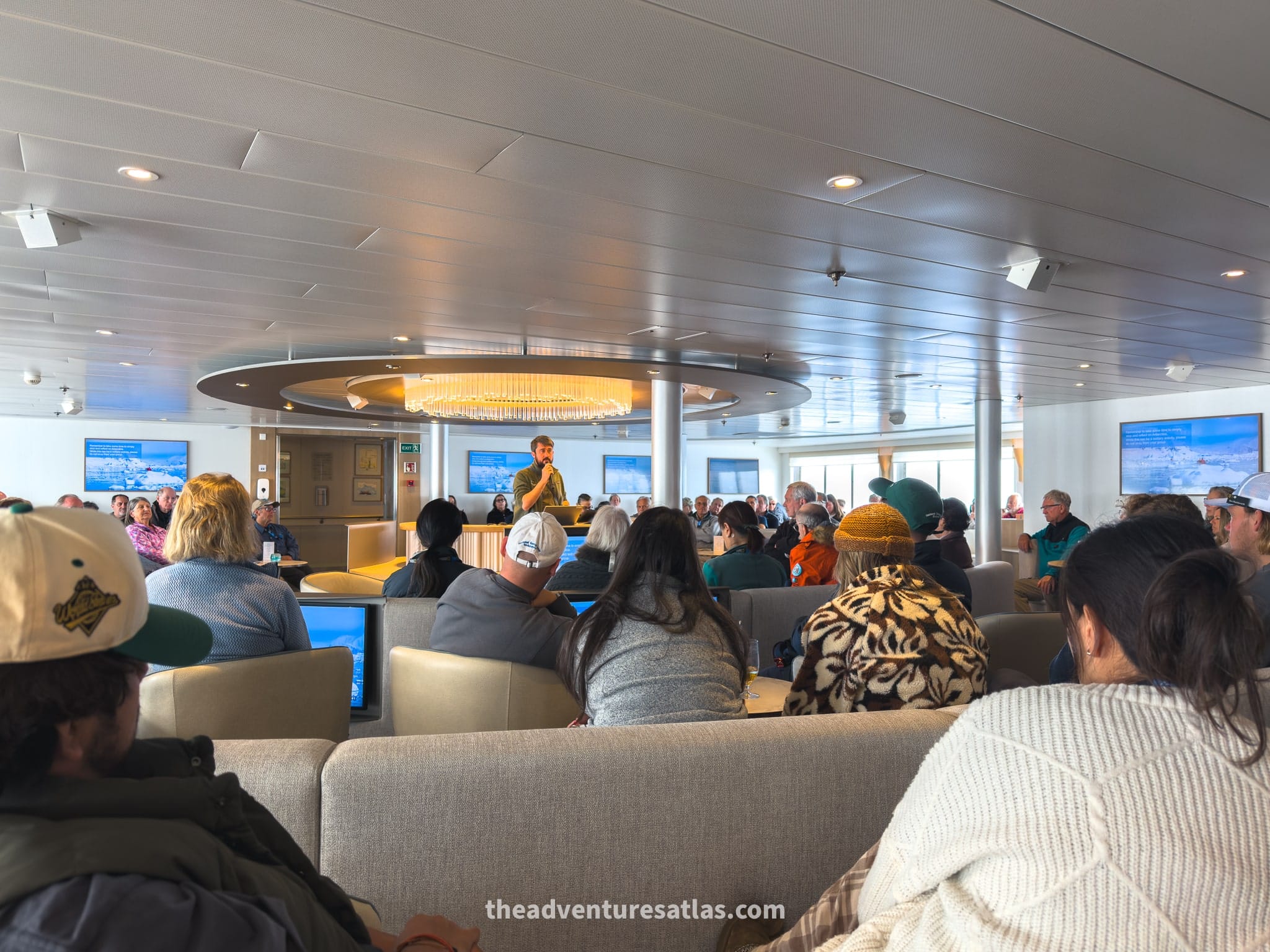
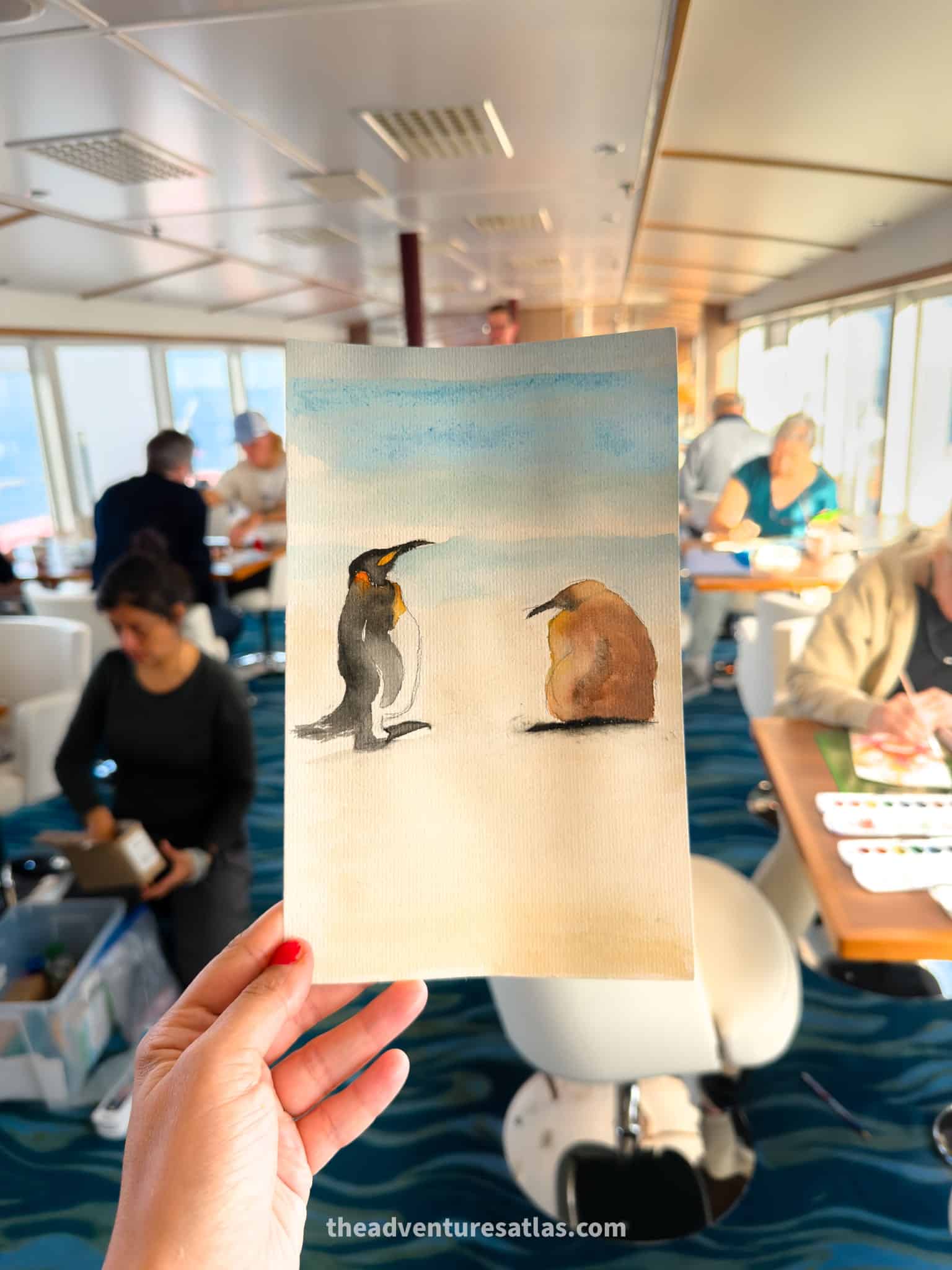
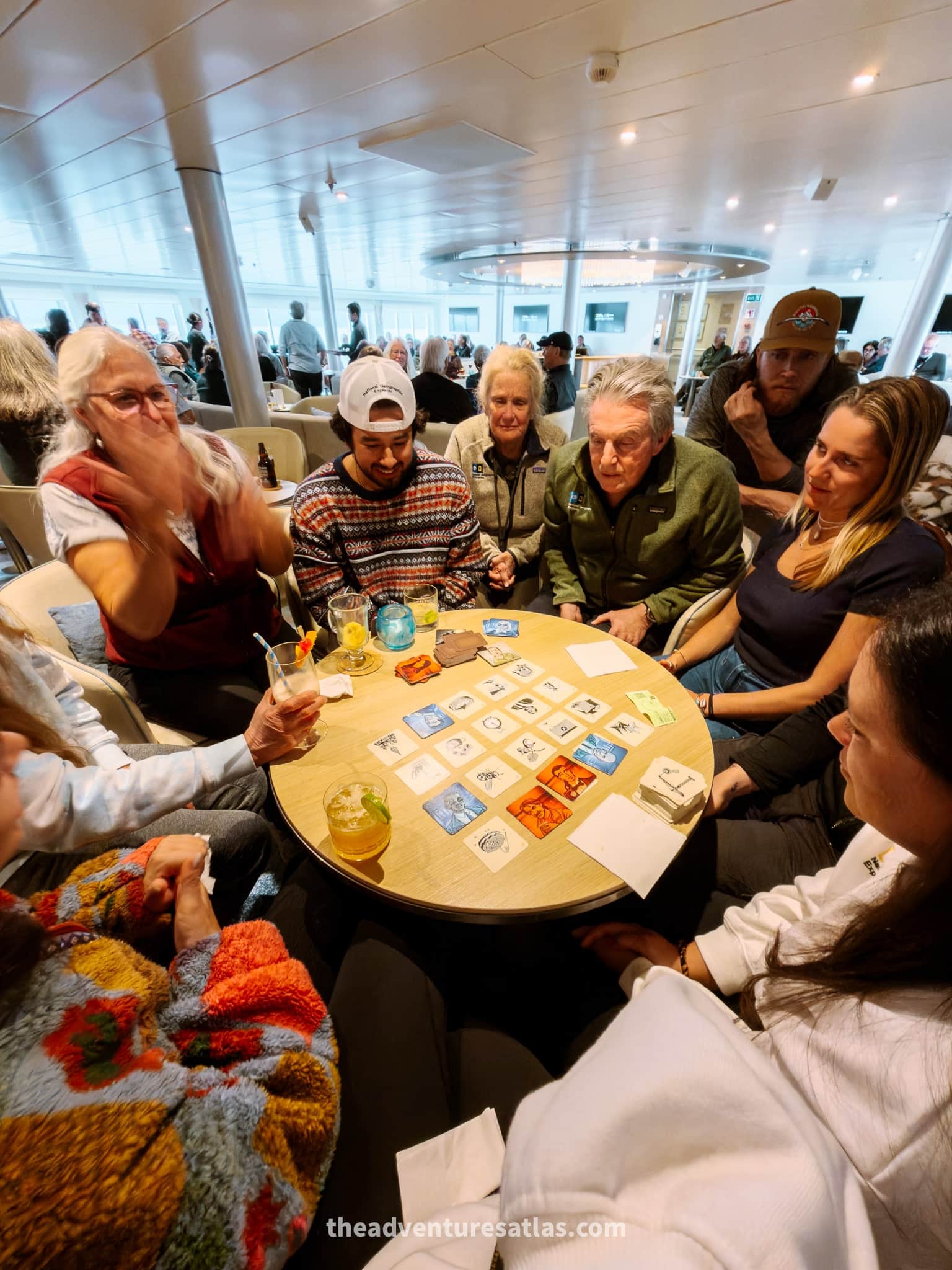
A typical day might start with a lecture on the secret lives of seabirds, followed by an iPhone photography workshop with a Nat Geo pro.
Afternoons were for “tea time,” watercolor painting, or my personal favorite: hanging out on the bridge, watching the officers navigate through the ice.
The ship has an open bridge policy so you can go up there whenever you want! It makes you feel like you were part of the crew, not just along for the ride.
The best moments were the spontaneous ones, when an announcement would crackle over the intercom – “Humpback whales off the bow!” – and the entire ship would empty onto the decks.
I break down exactly what it’s like to be on an Antarctica expedition ship in this post about A Day in the Life on an Antarctica Expedition Ship
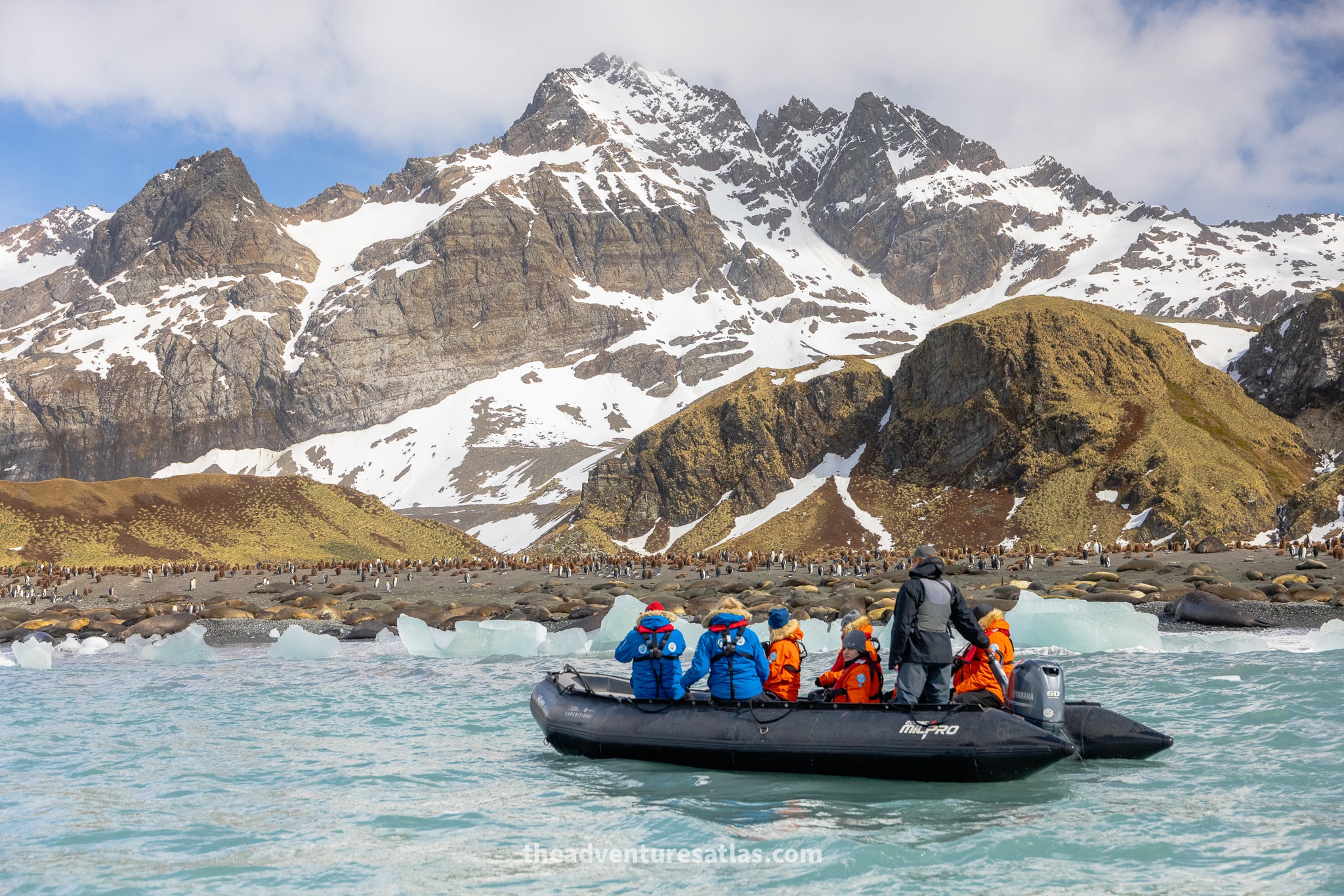
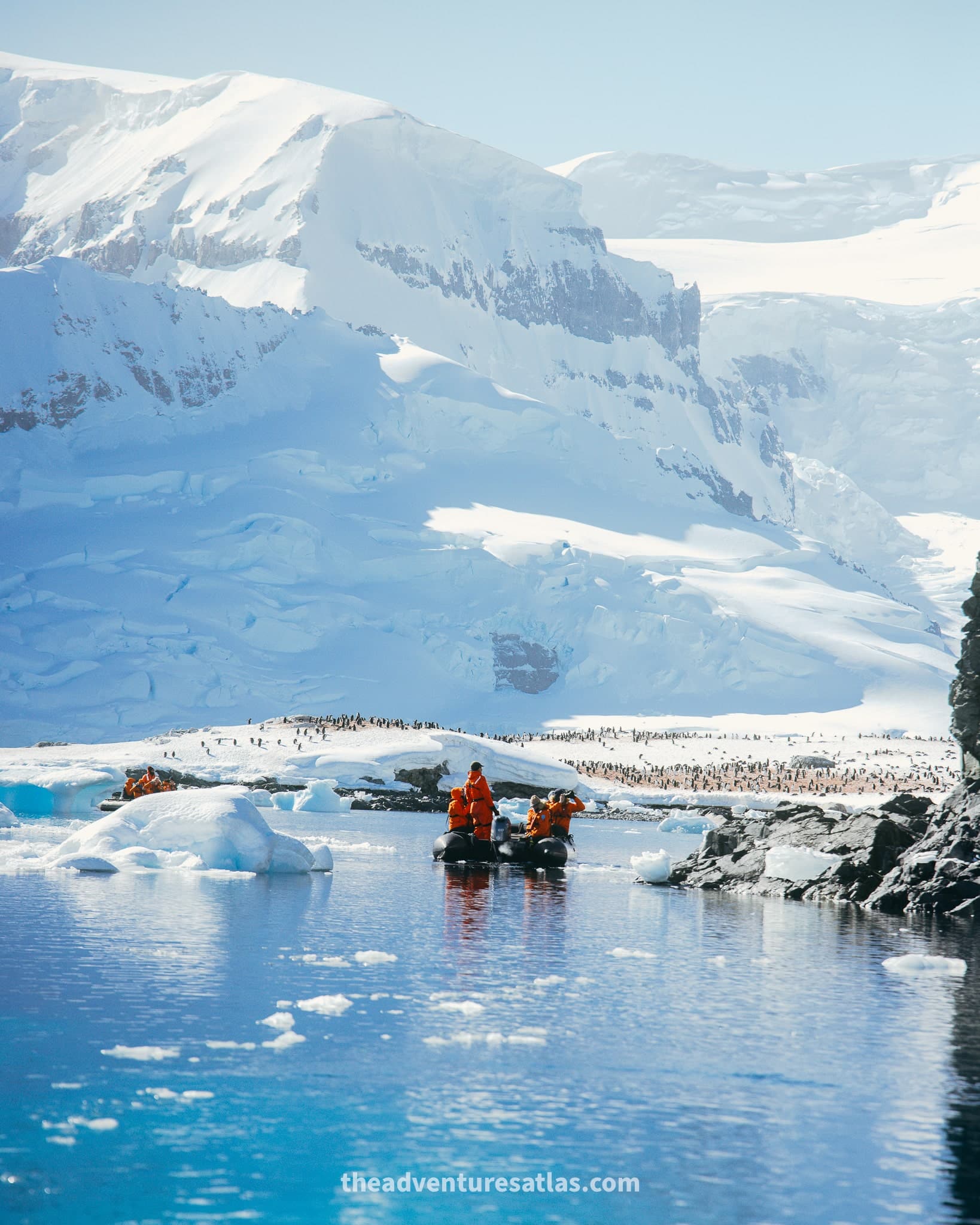 A zodiac full of passengers observing colonies of gentoo penguins in Antarctica
The Highlights: My Favorite Moments from the End of the World
The Falkland Islands: A Rugged Outpost of Civilization & Wildlife
Once our ship left Ushuaia, we headed straight for the Falklands, which was a place that felt both strangely familiar with its British charm and utterly wild.
New Island, Carcass Island & Saunders Island
Our first landings were full immersion into a world that seemed untouched by time.
In mid-October, the shores of New Island were lined with gorse. It’s an invasive plant, but blooms in vibrant yellow flowers during spring that smell unbelievably like coconut sunscreen.
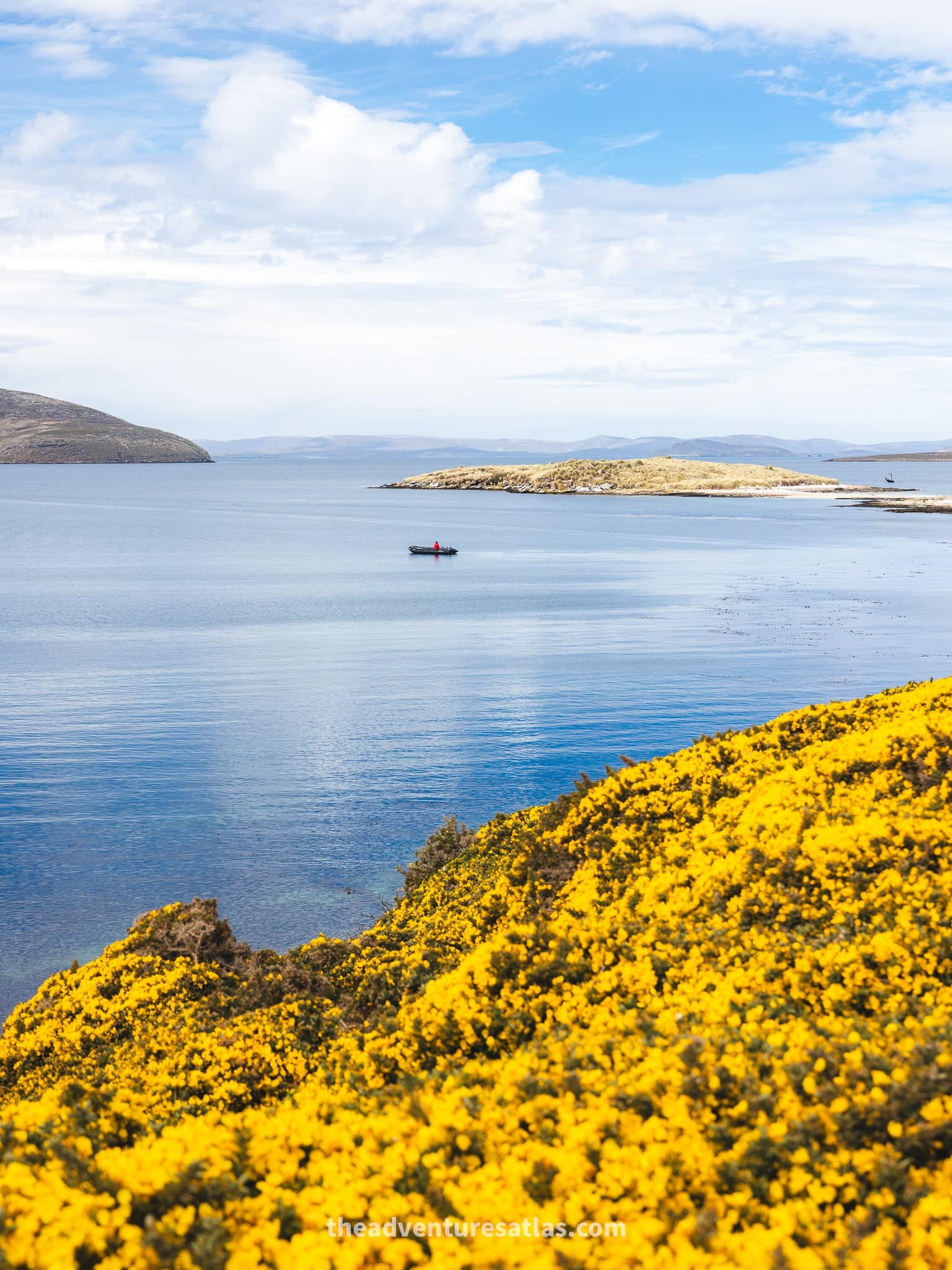
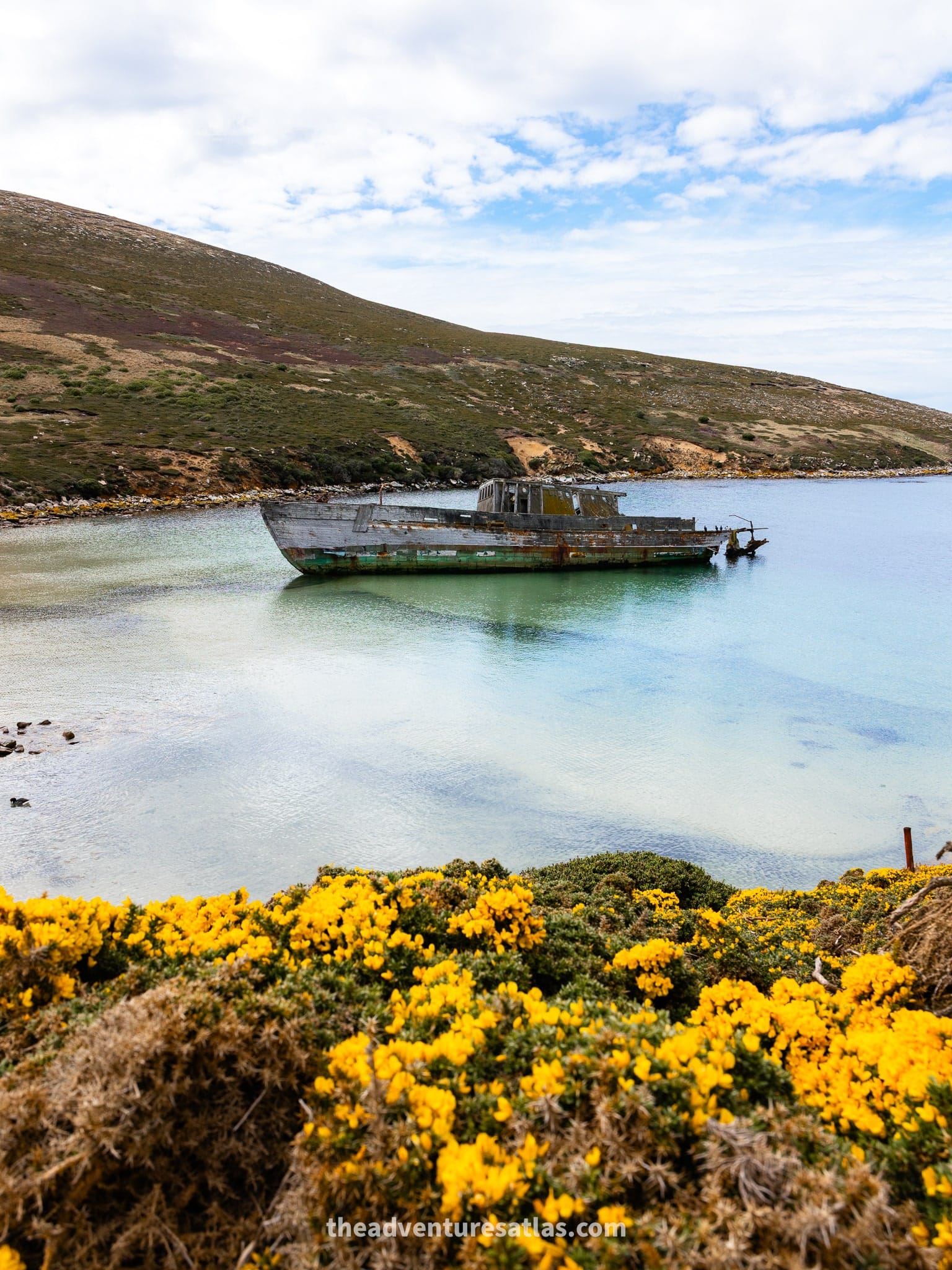
Yellow gorse in full bloom in October in the Falklands
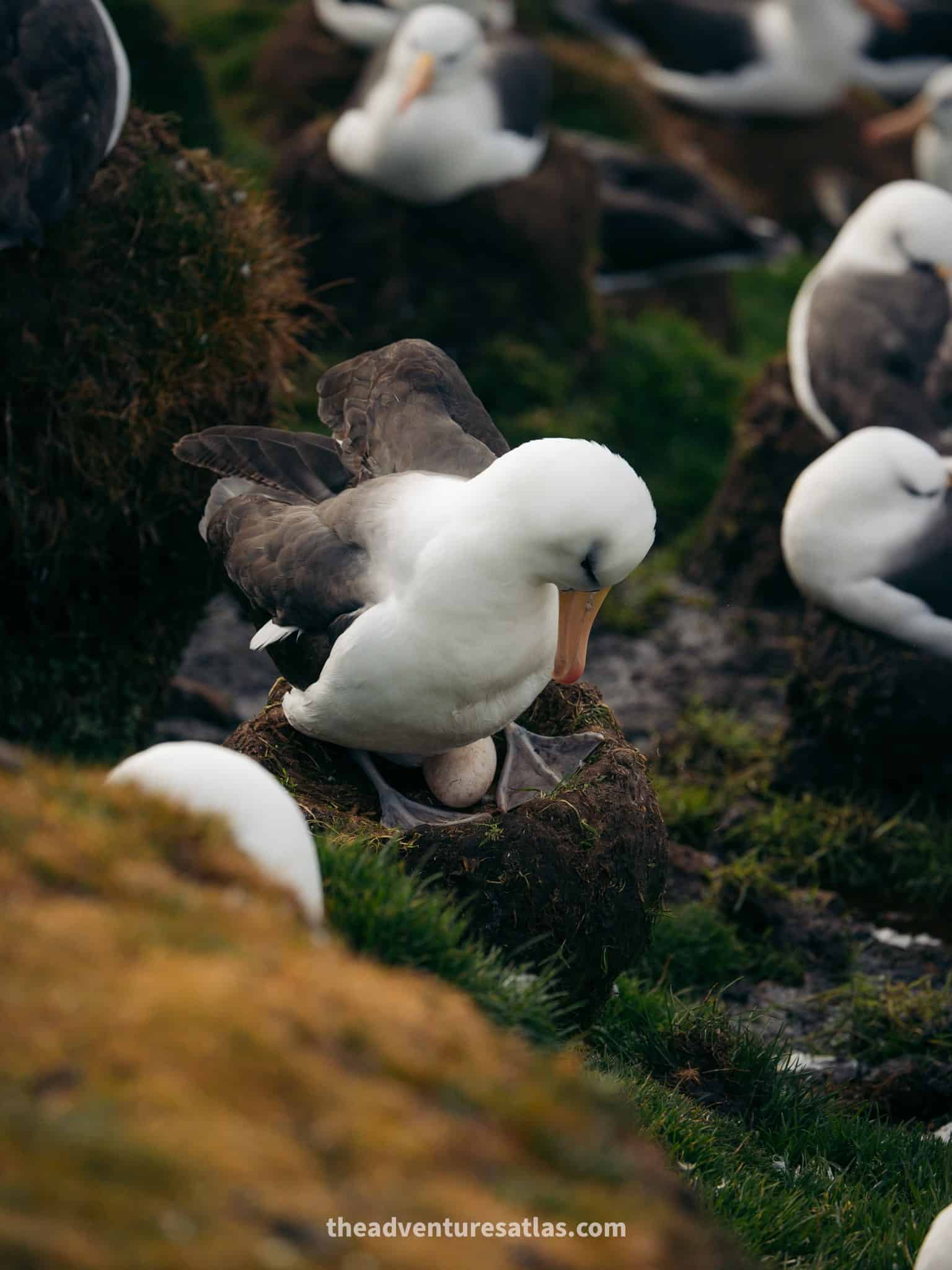
The wildlife density was staggering. We were immediately surrounded by huge colonies of rockhopper penguins and albatross nesting along windswept cliffs.
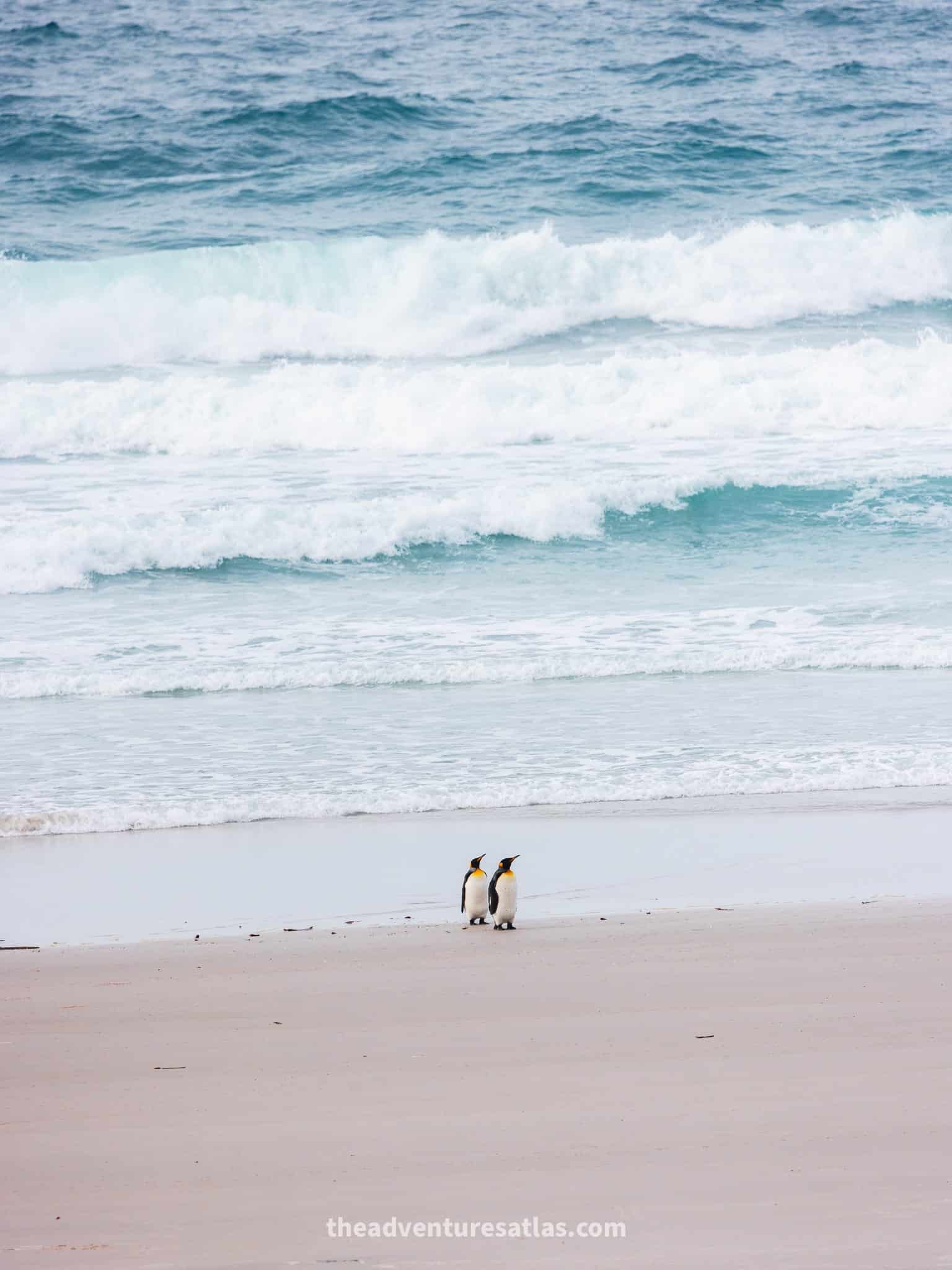
Saunders Island, in particular, felt like stepping back in time. If you’ve ever wondered what a place looks like without significant human impact, this is it. The king penguins, standing so sentinel and regal with their fluffy brown chicks, quickly became my favorite. I could have watched them all day.
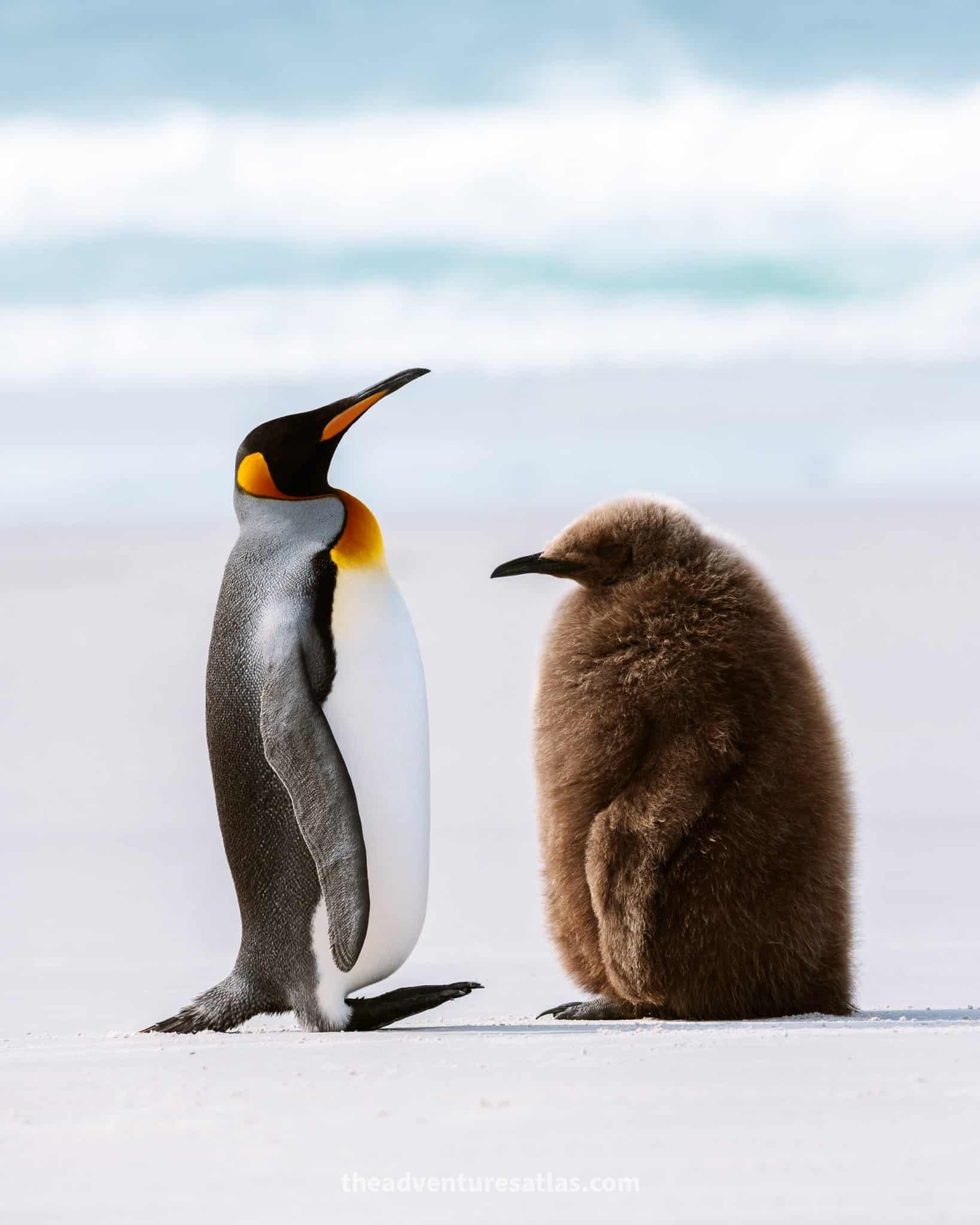 A mama king penguin with her fluffy brown baby on the white sand beach of Saunders Island, Falklands
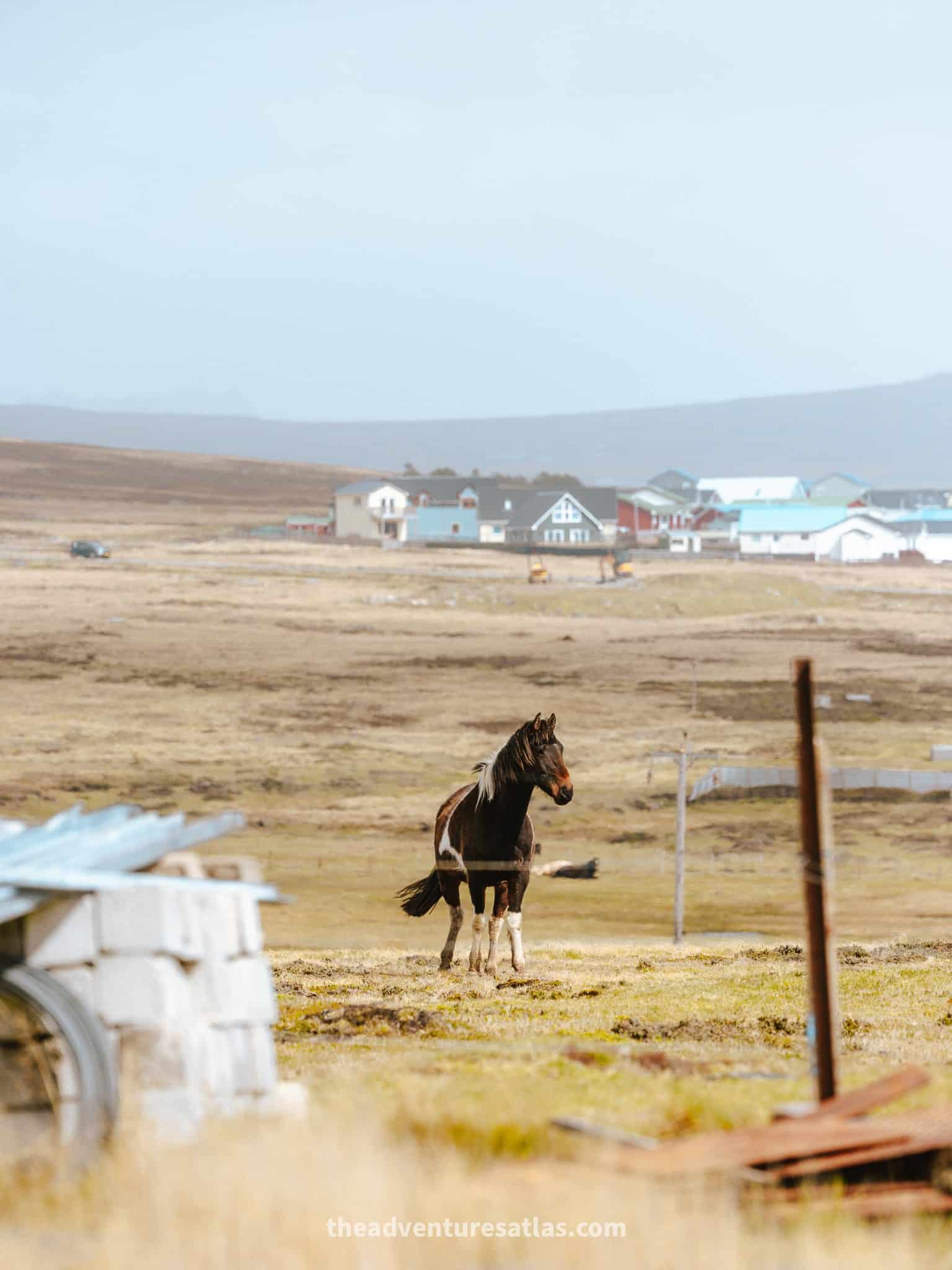
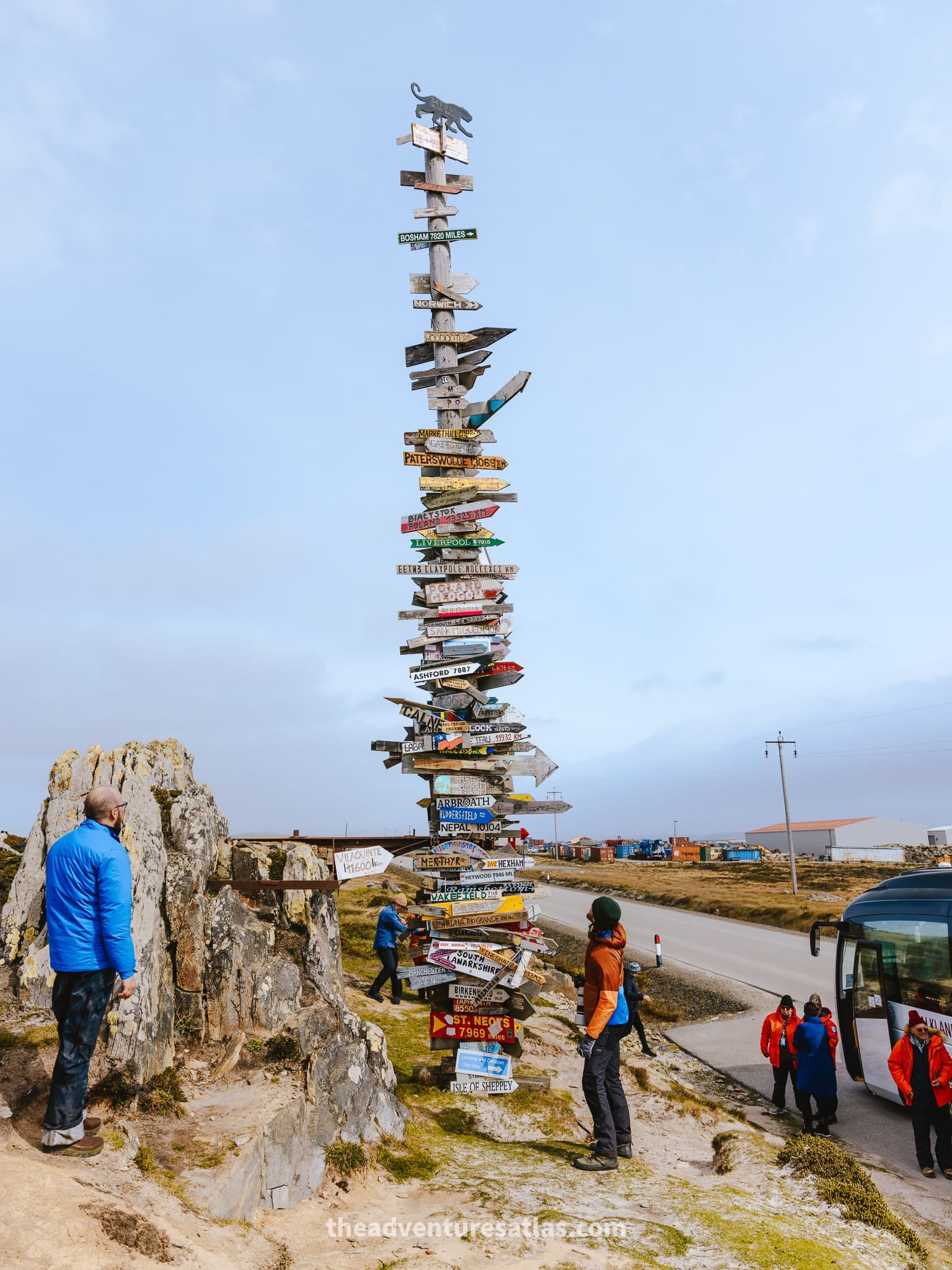
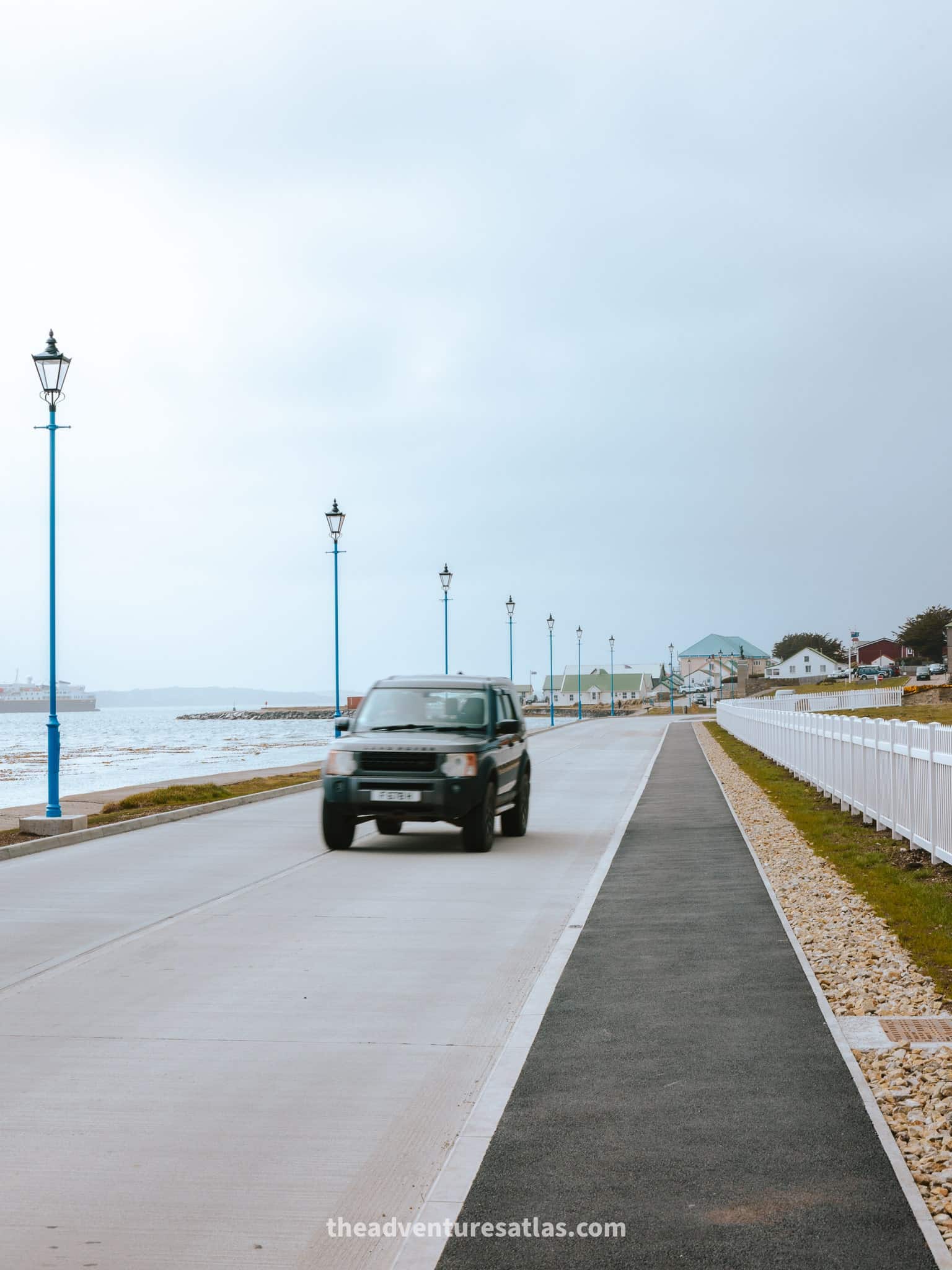
Stanley: The Charming Capital
A tour of Stanley was our last stop on our Falklands journey.
We pulled up to the jetty and were immediately greeted by two South American sea lions, which seemed like a fitting welcome to a town where wildlife is clearly in charge.
The town of Stanley is a quirky, charming outpost with a population of just a few thousand.
We learned that the Falklands are a self-governed territory with an economy that relies on tourism, fisheries (they supply 80% of the squid in Europe!), and agriculture.
It’s a place with no traffic jams, but if a penguin decides to cross the road, you wait. It could take all day.
South Georgia: The Serengeti of the Southern Ocean
After two days at sea filled with essential bio-security briefings, we approached South Georgia.
On the way, we passed the A23a iceberg, a colossal piece of ice the size of Rhode Island that took hours to sail past.
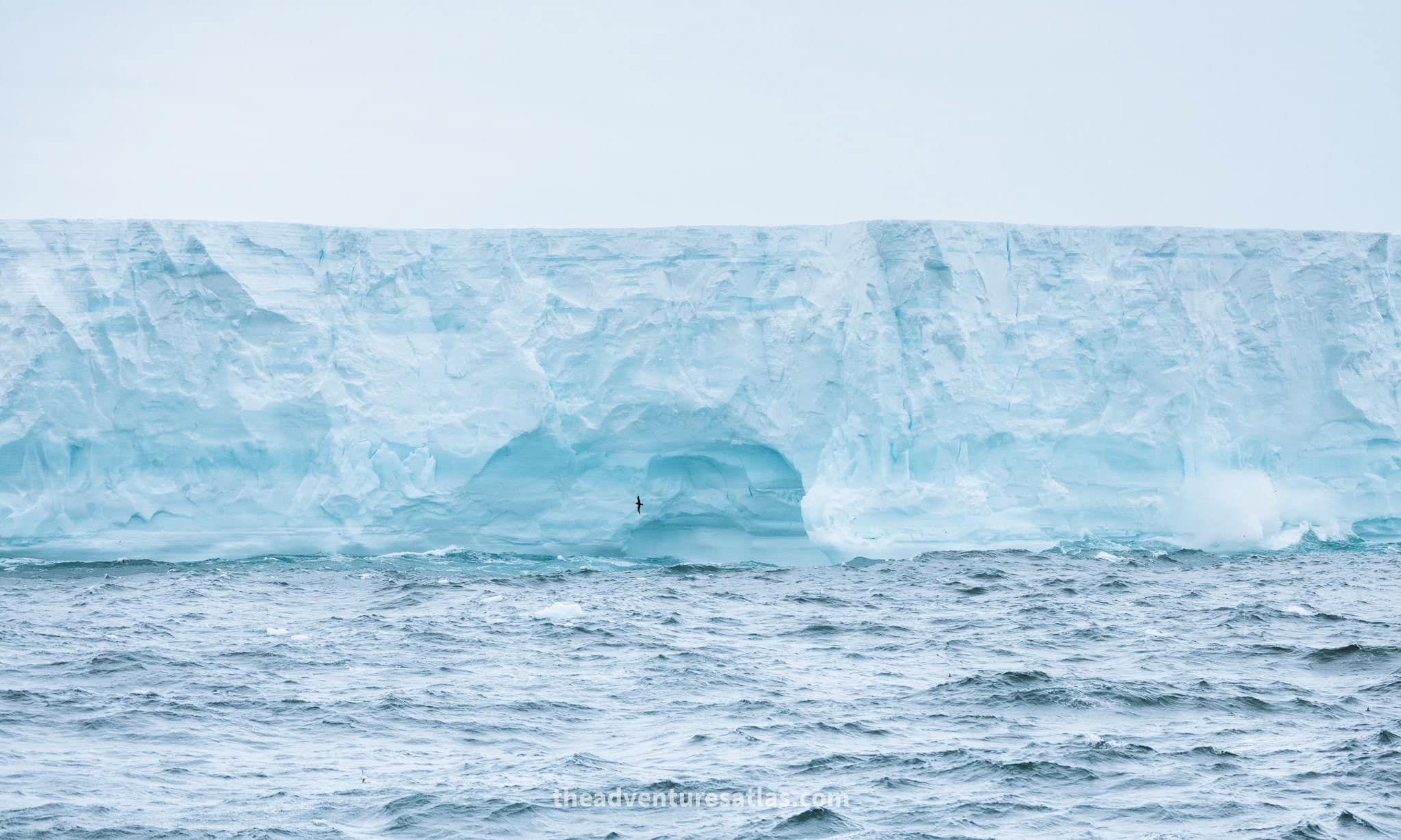 The massive A23a iceberg in the Southern Ocean with albatross for scale!
St. Andrew’s Bay and Right Whale Bay, South Georgia
Setting eyes on South Georgia Island changed my brain.
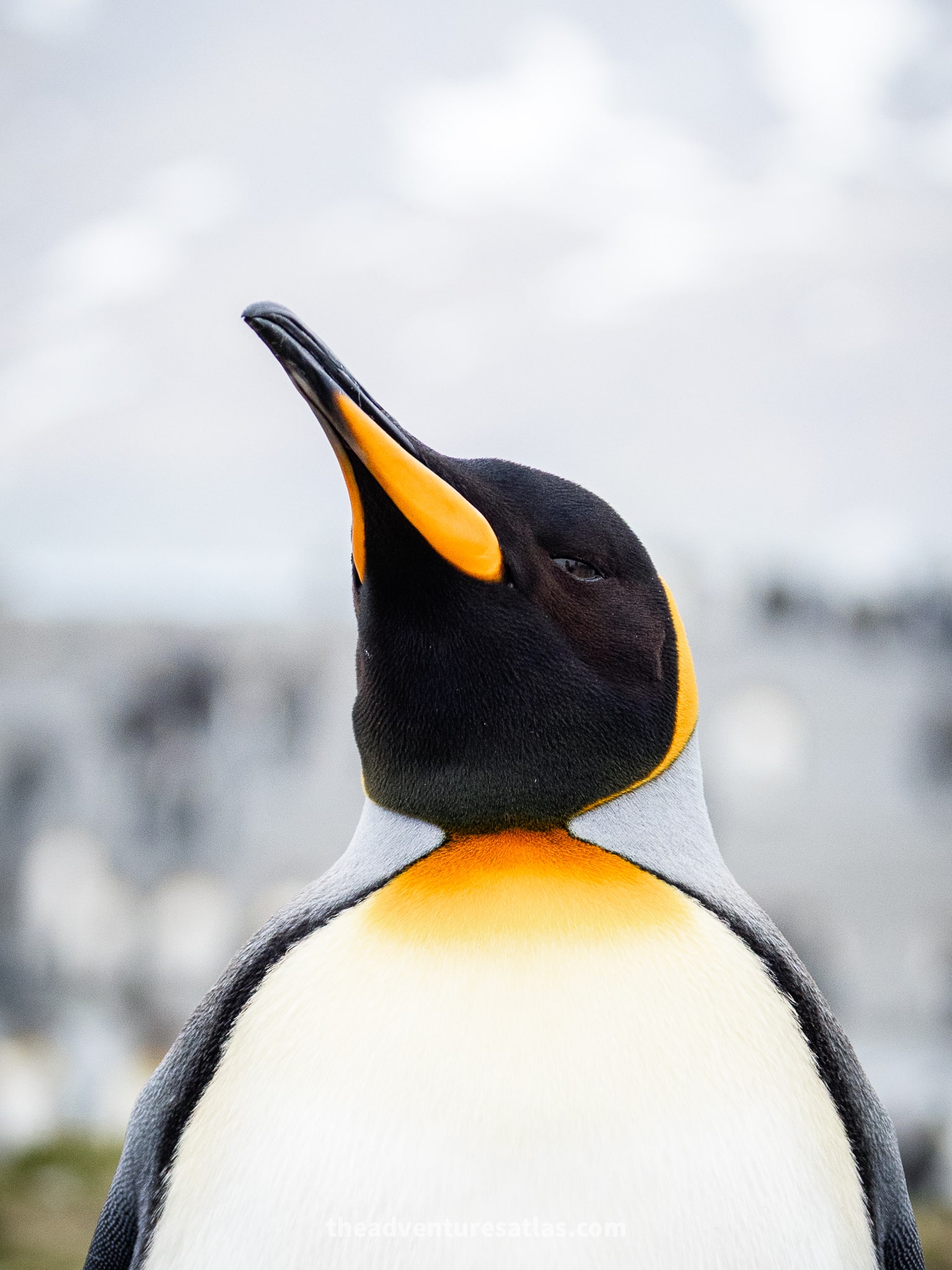
The beaches here are home to hundreds of thousands of southern elephant seals and over 7 million penguins. The sound is a deafening, chaotic symphony. The sight of a sea of black, white, and gold stretching as far as the eye can see is overwhelming. And it was smelly. Really smelly.
This was the first time I’ve actually been immersed in wildlife colonies and it is a COMPLETE sensory overload. This landings alone here make the longer voyage worth it.
Places like South Georgia only stay wild if we fight for them. Consider supporting wildlife protection and conservation in South Georgia by donating to the South Georgia Heritage Trust or Friends of South Georgia Island
Grytviken: The Abandoned Whaling Station
One of the most historically important parts of the trip was visiting Grytviken, the abandoned whaling station in South Georgia. It was once the international epicenter of the whaling industry, which took the lives of tens of thousands of whales.
Today it’s a mostly-abandoned village dominated by haunting, skeletal remains of the once-booming whaling industry, and the resting place of Sir Ernest Shackleton, one of the greatest Antarctic explorers.
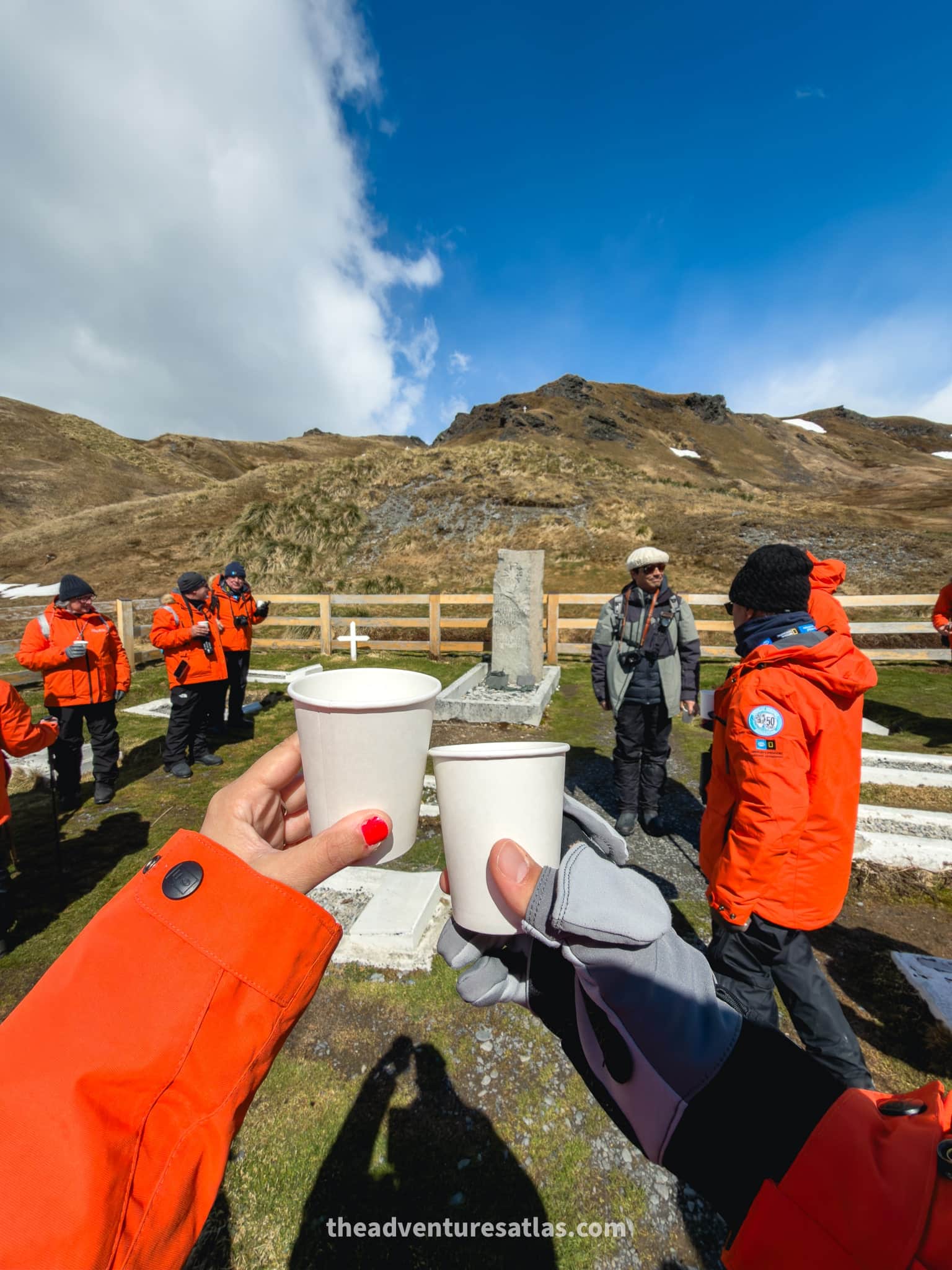
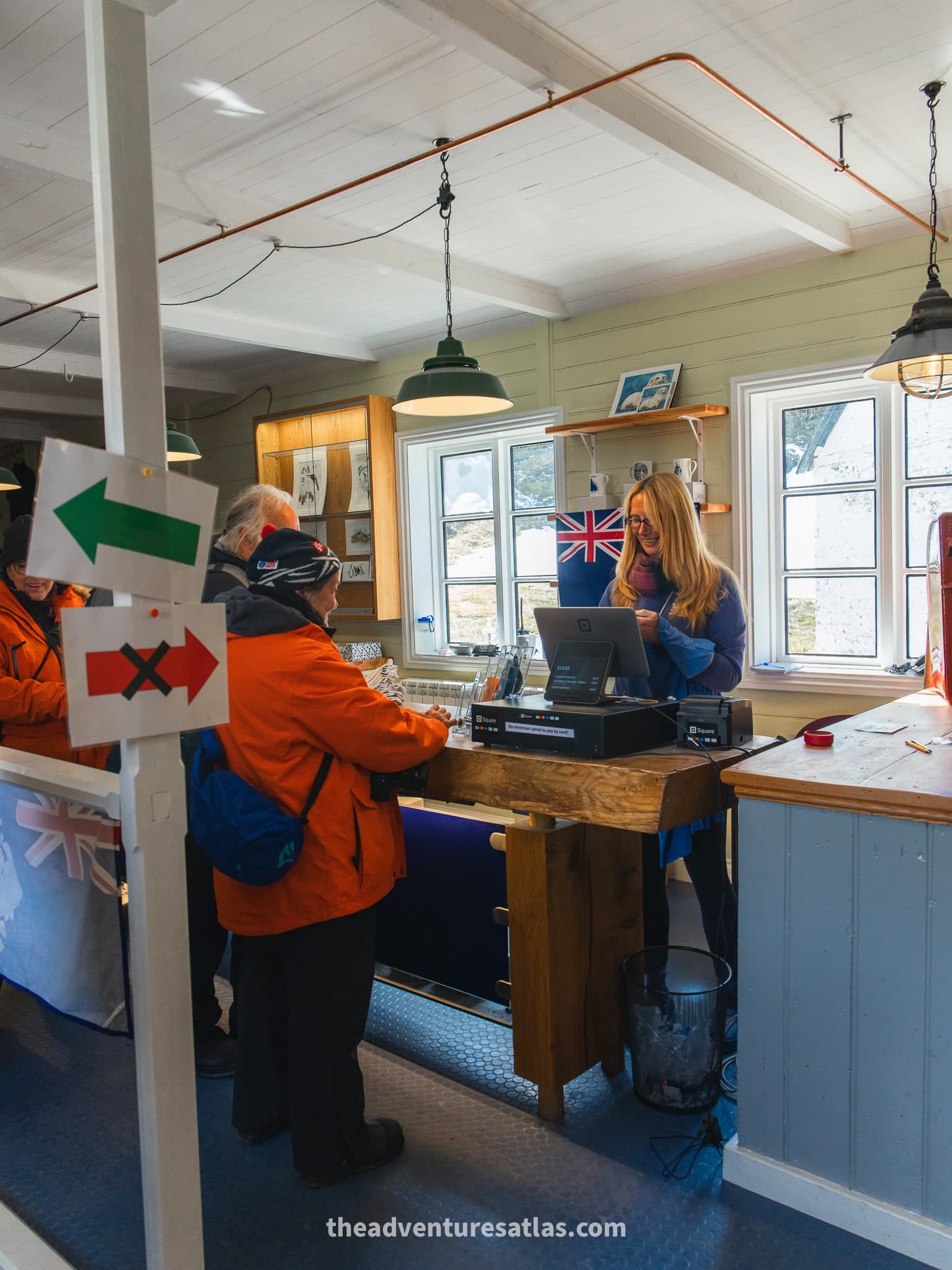
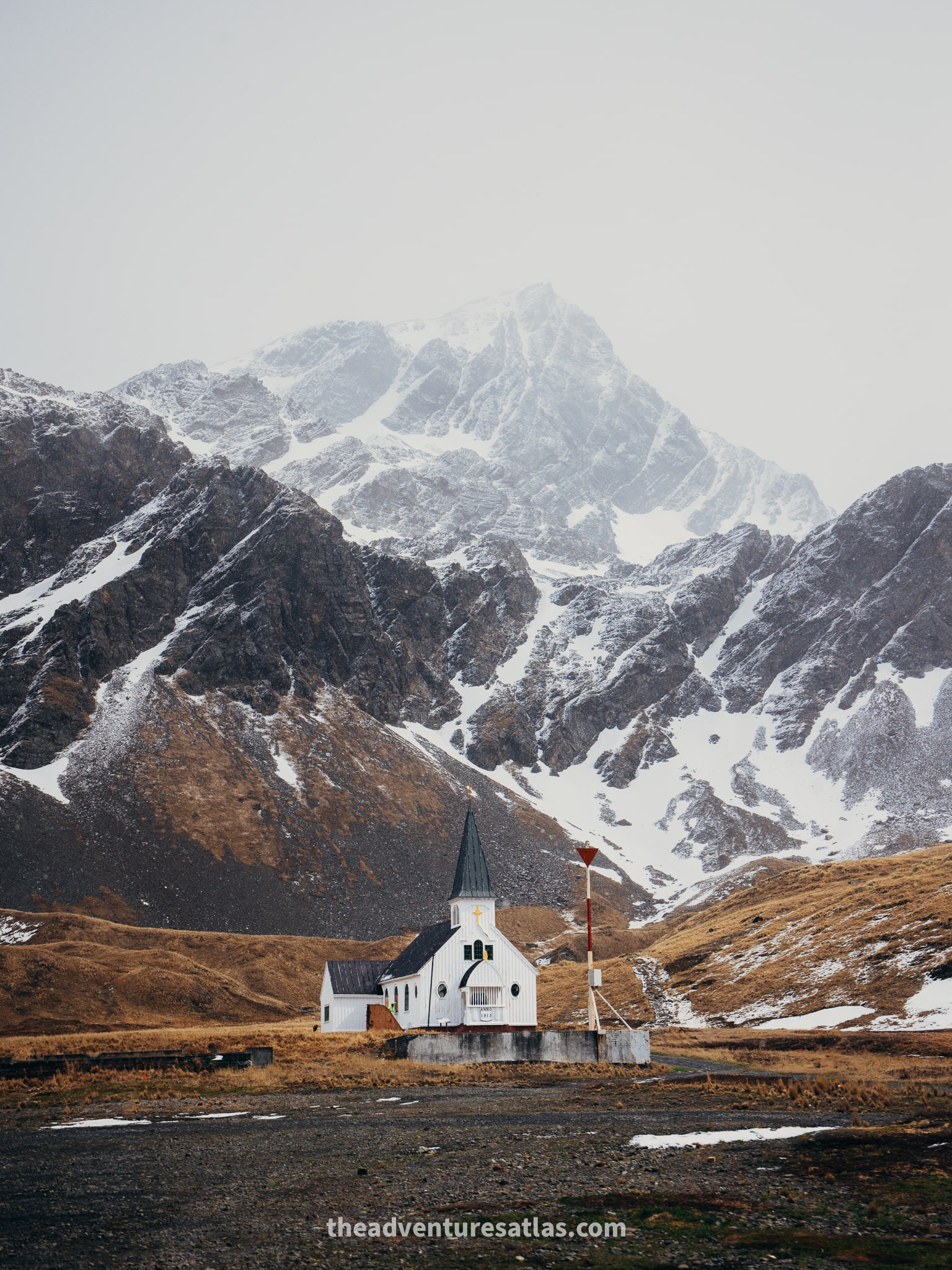
We toured the museum, mailed postcards from the most remote post office in the world, and toasted to the explorer Sir Ernest Shackleton at his resting place.
What I personally loved the most is that in the middle of the decaying equipment, nature has returned. Whale populations are rebounding, fur seals and giant elephant seals nap in the grass along the shore, and penguins waddle past discarded machinery.
Grytviken is a powerful, living testament to resilience. A place that has transformed from one of the world’s busiest hubs of destruction into one of its greatest wildlife sanctuaries.
It’s a profound and hopeful lesson on what is possible when we choose protection and conservation.
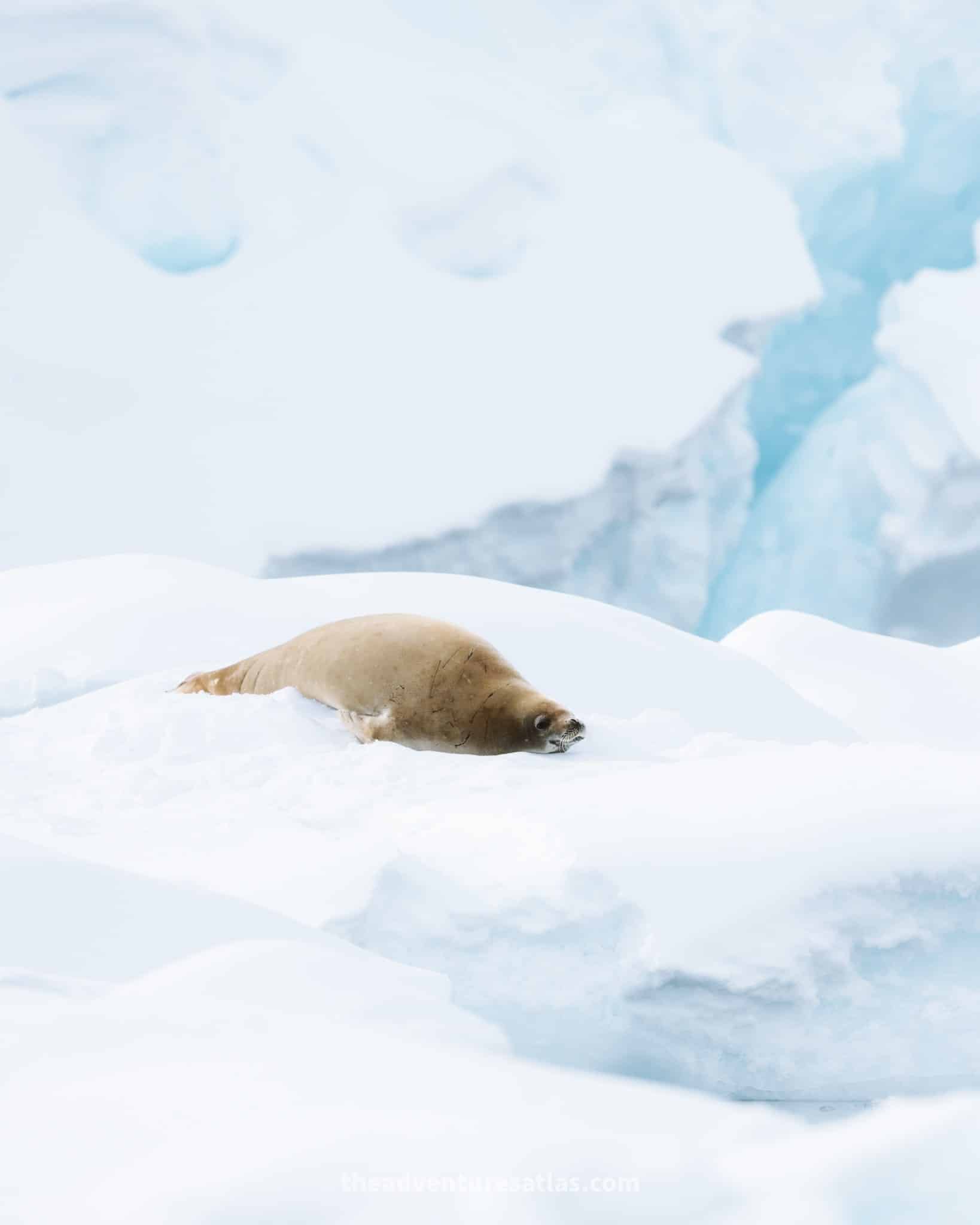
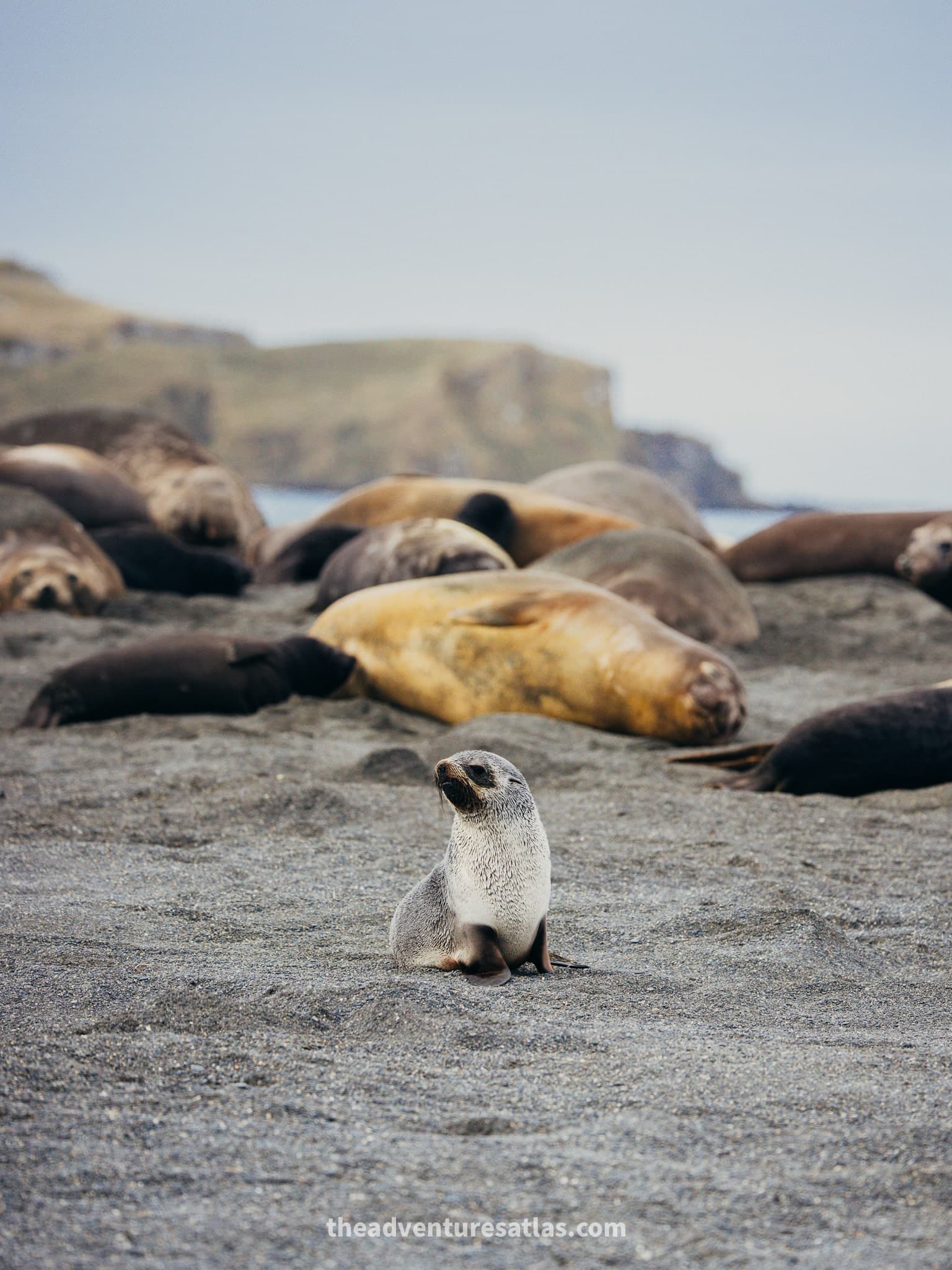 Antarctic seal pup siting in front of a group of elephant seals in South Georgia
The Antarctic Peninsula: The White Continent
Our final destination was Antarctica.
As we approached Antarctica, the air got noticeably colder, we started to see more icebergs, and the excitement on the ship became electric.
It’s one thing to describe what a day in Antarctica is like, but it’s another to see it. I put together a Reel of one of our most incredible days on the Peninsula!
Here’s a look at what a full day at the end of the world really feels like:
Elephant Island
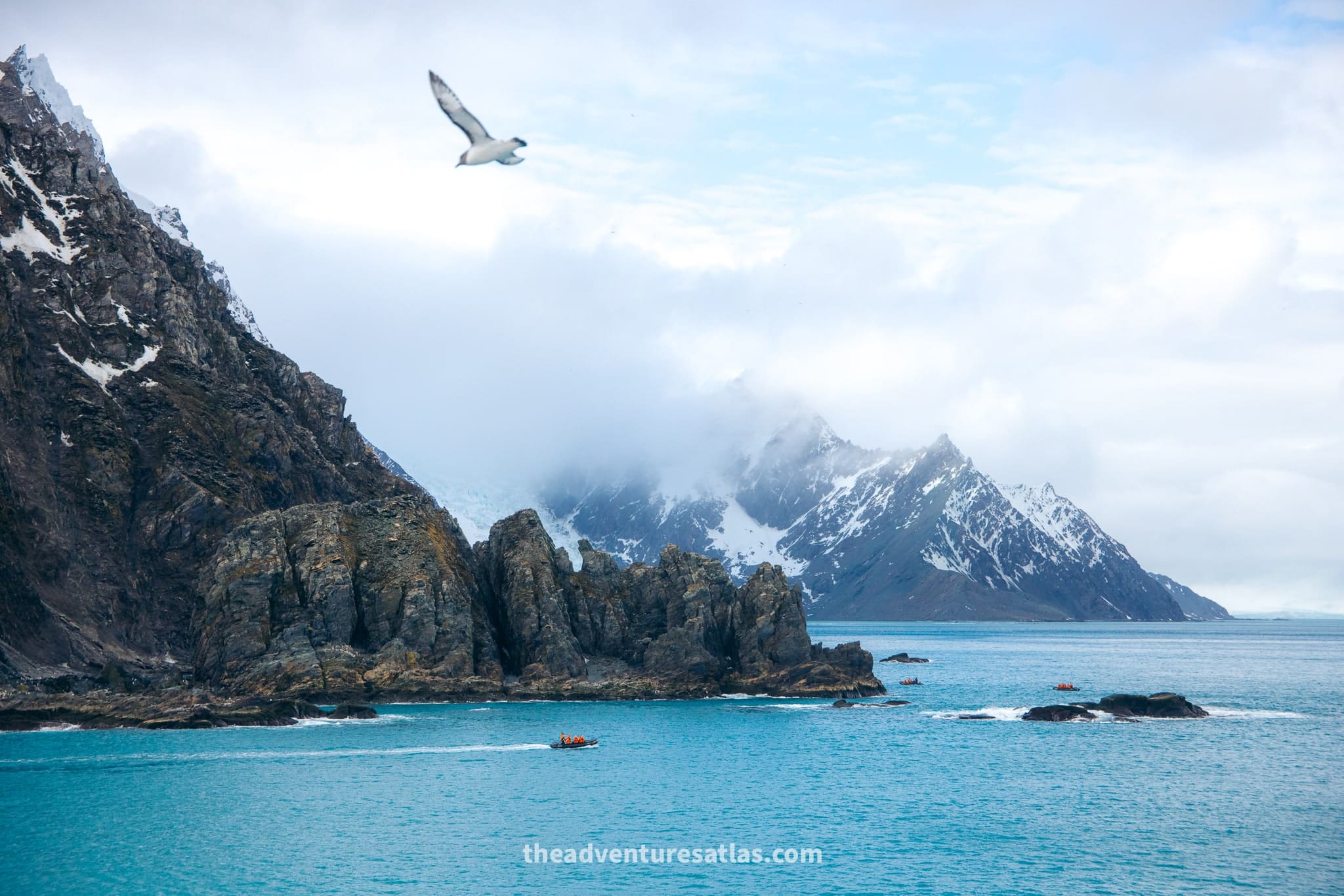
Our first glimpse of Antarctica proper was Elephant Island, a glacier covered island about 150 miles from the Antarctic Peninsula.
We cruised past Point Wild, the historic site where Shackleton’s men survived for months against impossible odds.
We later got in the zodiacs for a closer look at Cape Lookout, a place steeped in the heroic history of polar exploration and lotssss of chinstrap penguins.
Wilhelmina Bay: A Zodiac Cruise Through Heaven
I’ll never forget the feeling of waking up, opening our blackout curtains, and being greeted with our very first glimpse of Antarctica.
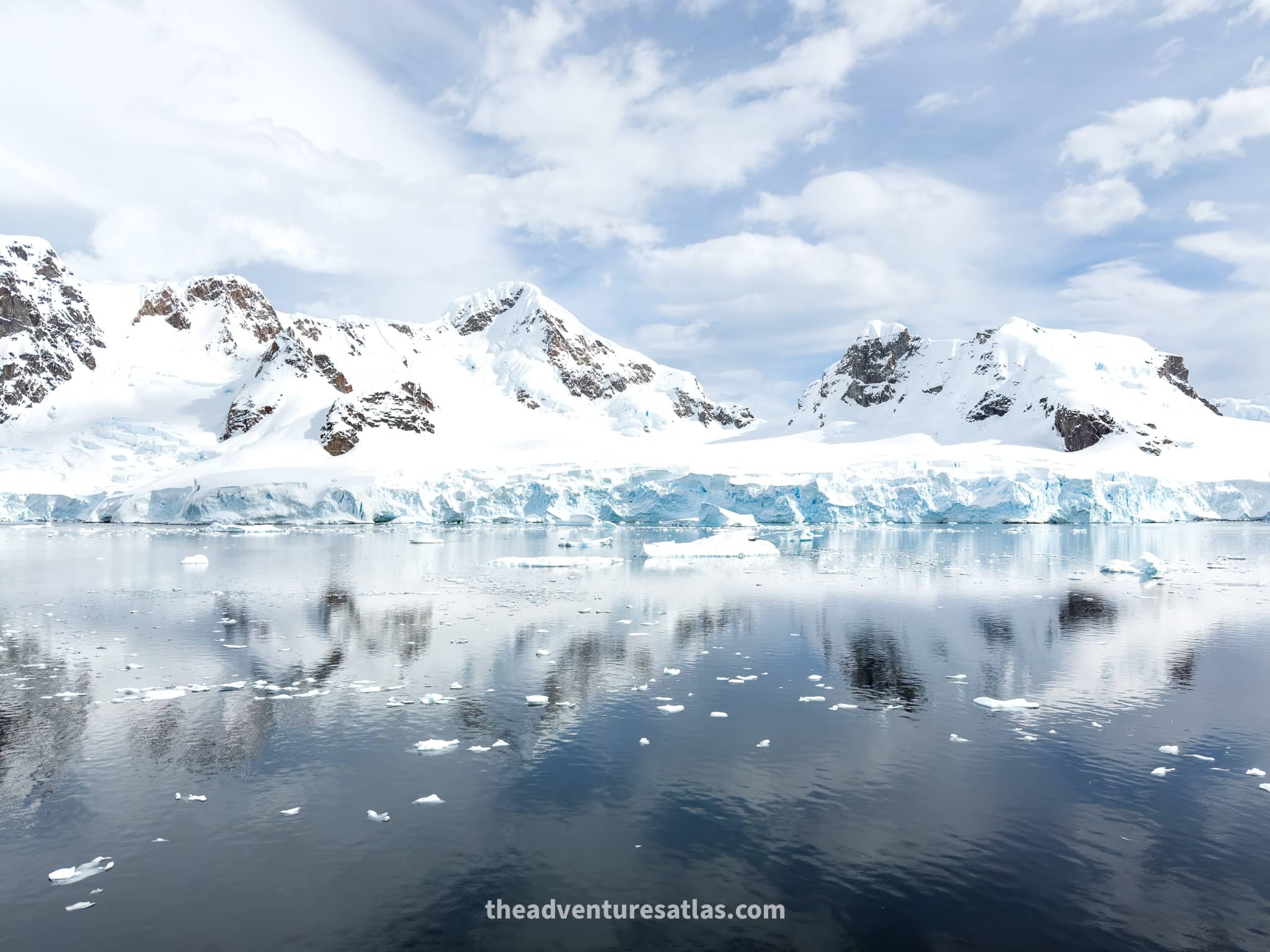
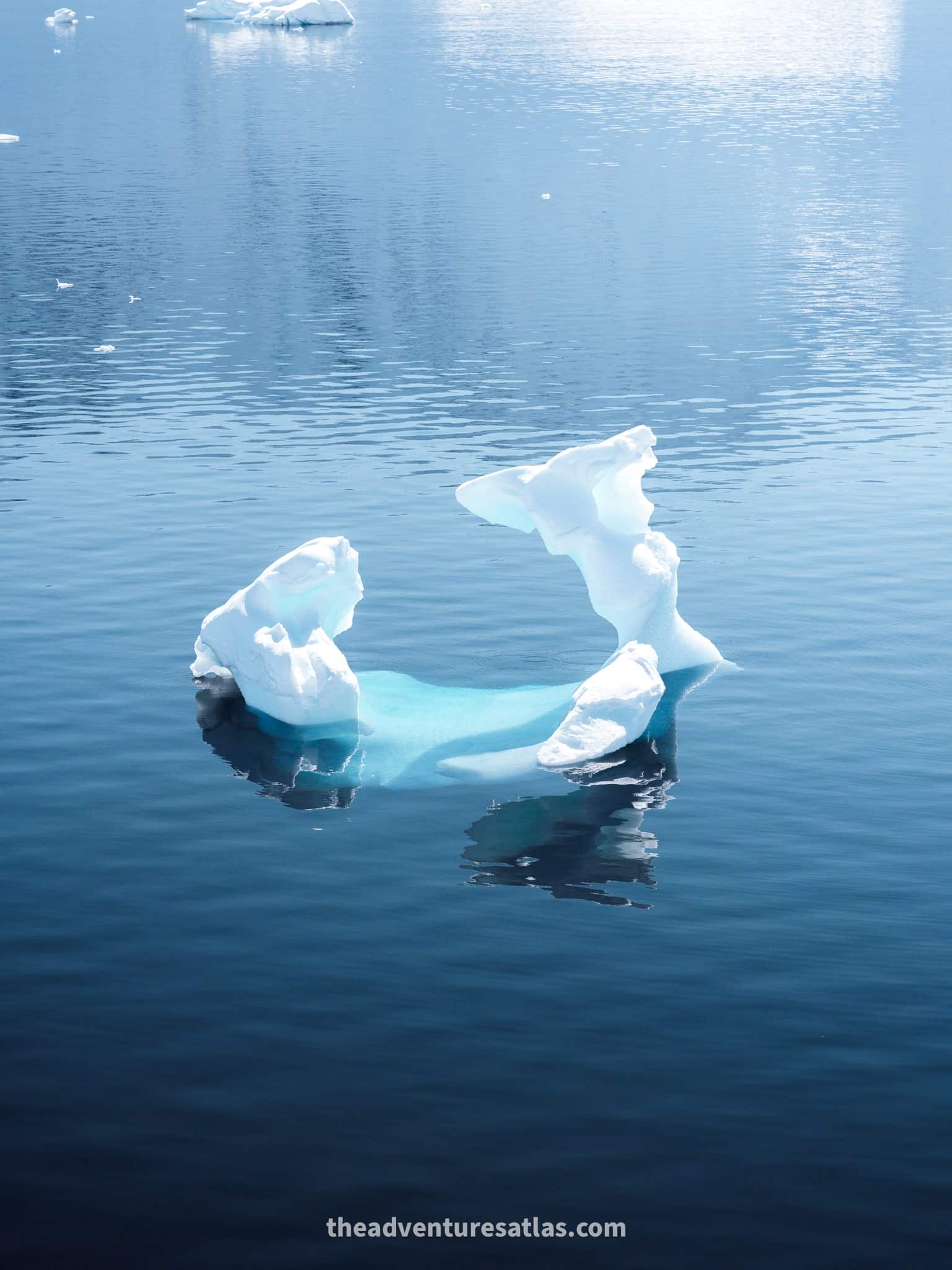
The view was SPARKLING in Wilhelmina Bay.
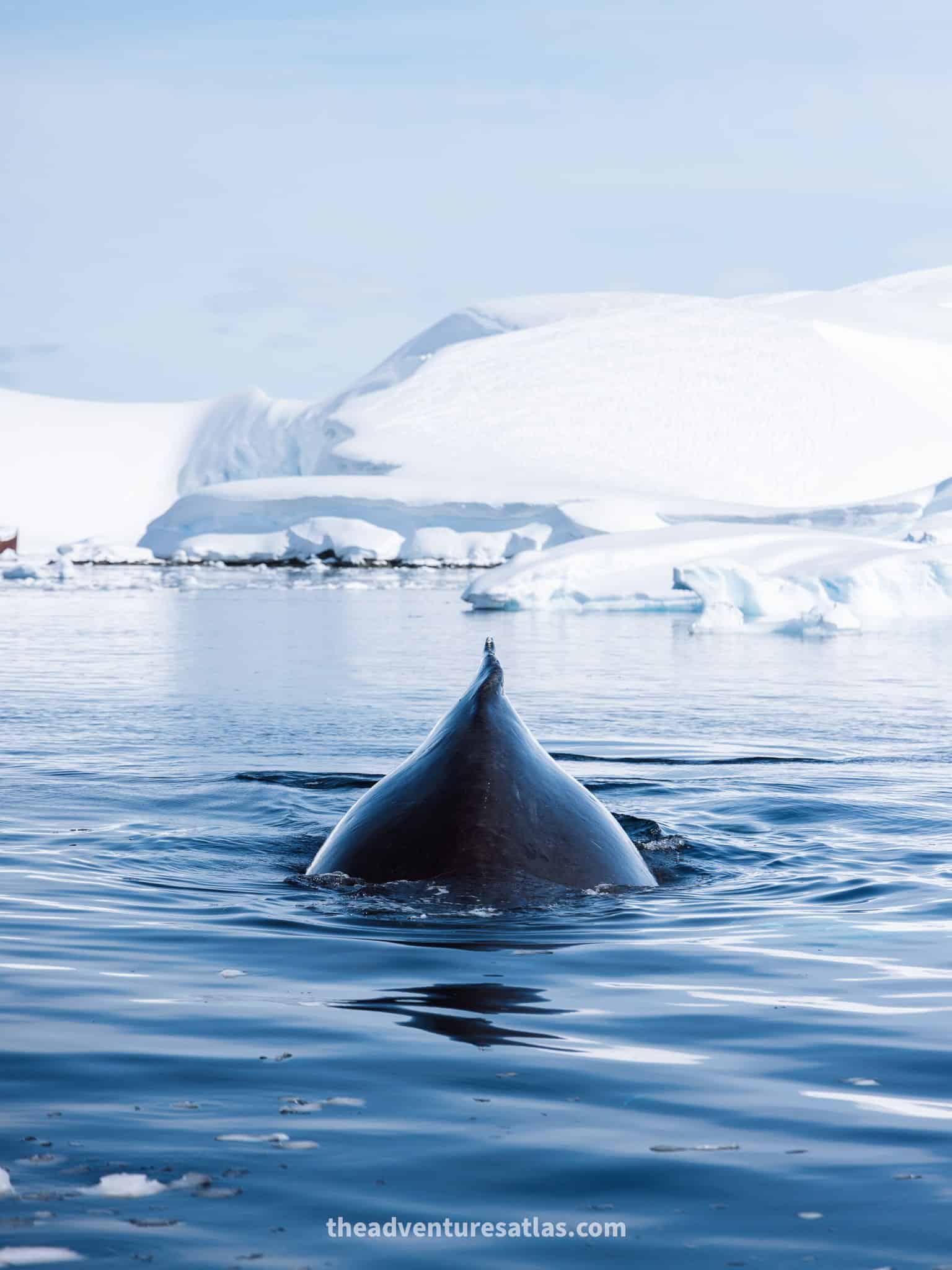
We were floating in bay surrounded by mountains of pure white snow and the sun sparkling off the crystal clear blue water with humpback whales resting nearby. Not a cloud in the sky.
Neko Harbor: First Steps on the Continent
Our first (and only) landing on the actual mainland of Antarctica was at Neko Harbor. We later learned that a landing on the continent, especially so early in the season, sometimes isn’t possible. So we got very lucky.
To step off the Zodiac and plant your boots on the seventh continent is a feeling I’ll never forget.
We walked among colonies of gentoo penguins, with the dramatic backdrop of a colossal, creaking glacier calving into the bay.
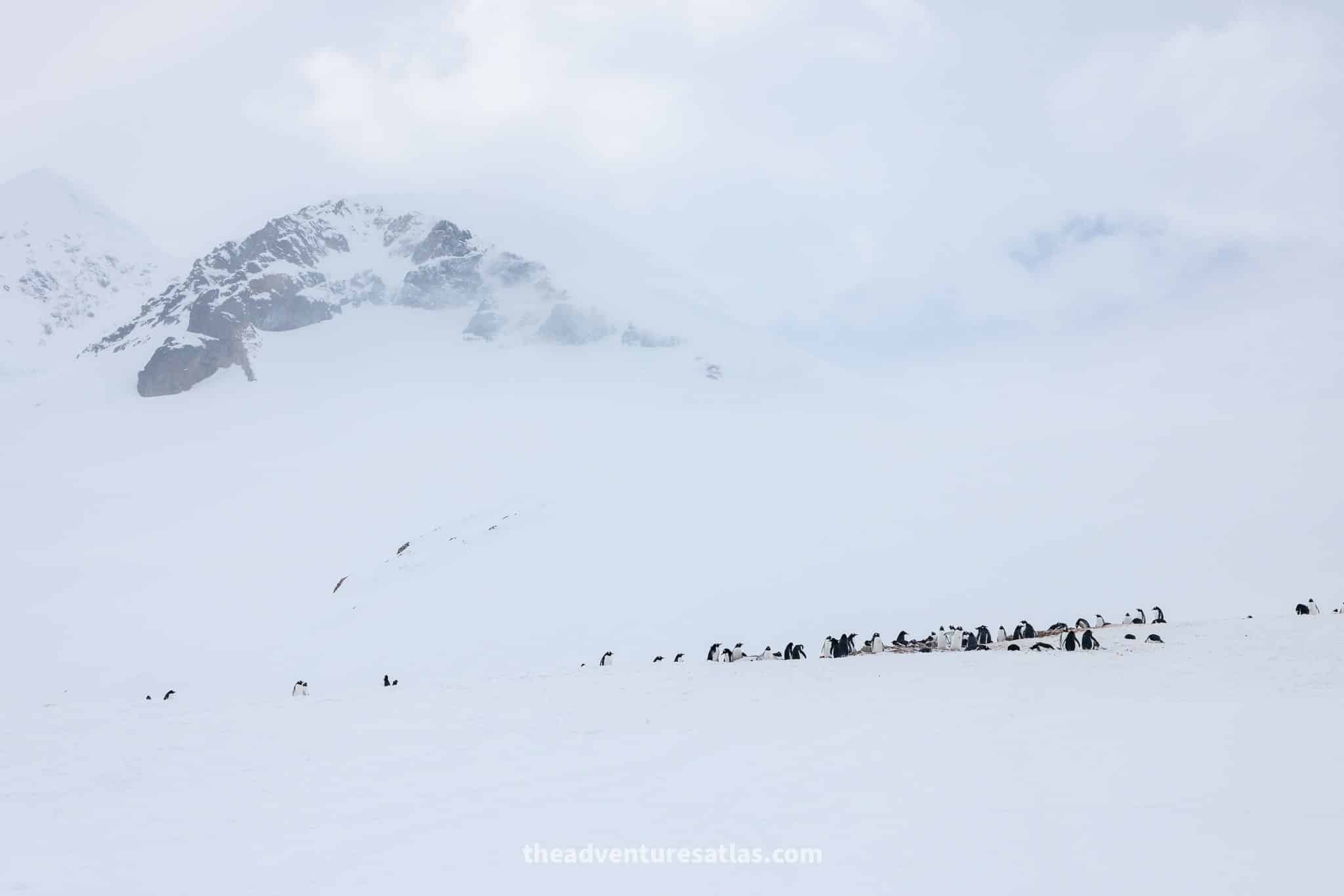 A colony of gentoo penguins nesting beneath a giant snow covered mountain at Neko Harbor
Lemaire Channel: The Grand Finale
On one of our last evenings, we sailed through the narrow, dramatic Lemaire Channel, where we were treated to the most insane, vibrant sunset of my entire life.
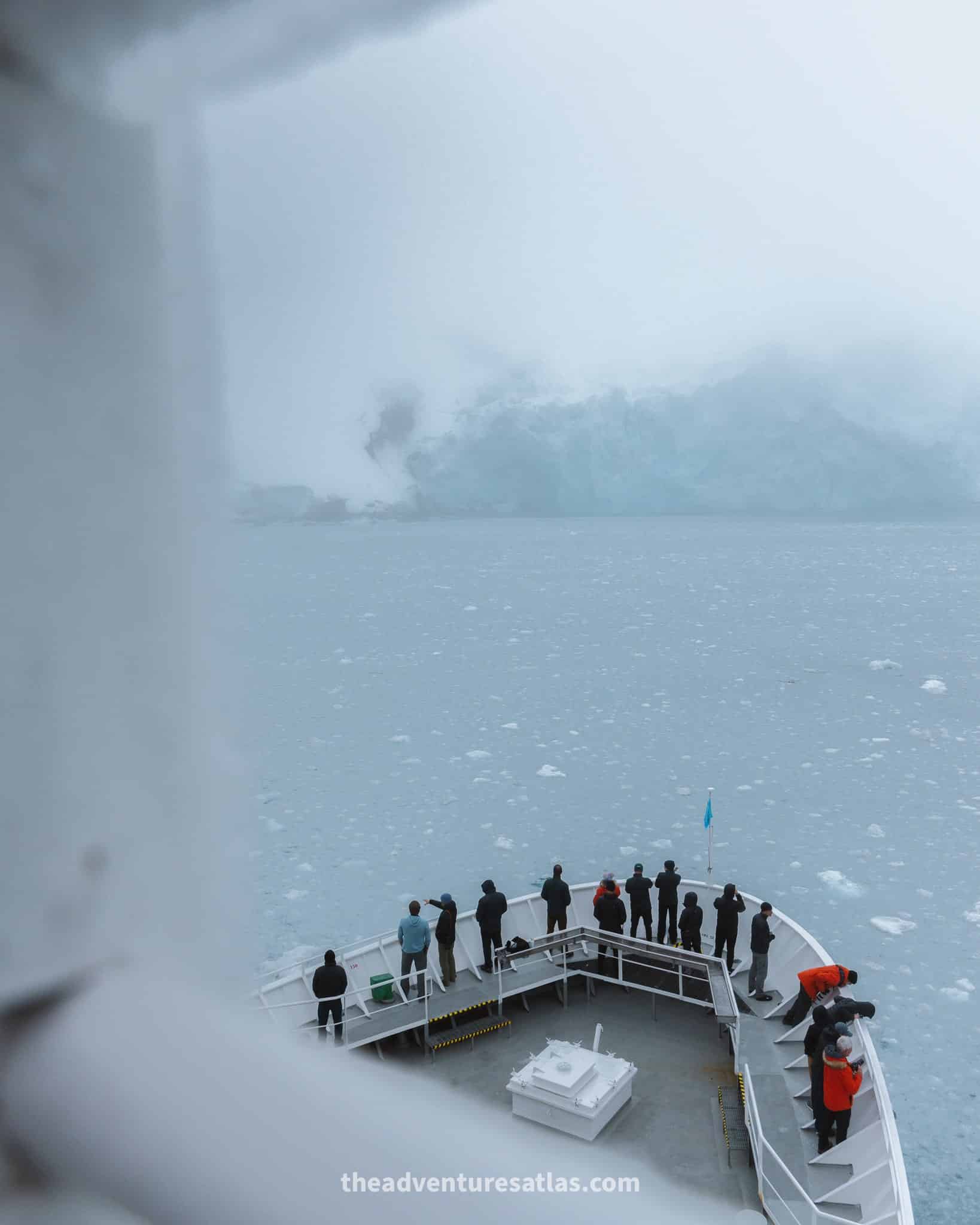
It was FREEZING outside, but every single passenger was bundled up around the bow, not wanting to miss a single second.
For over 2 hours, the sky exploded in a kaleidoscope of colors as the captain expertly navigated through icy waters. We all stayed out until the sun went down the moon came up.
It was the perfect, magical farewell from the seventh continent.
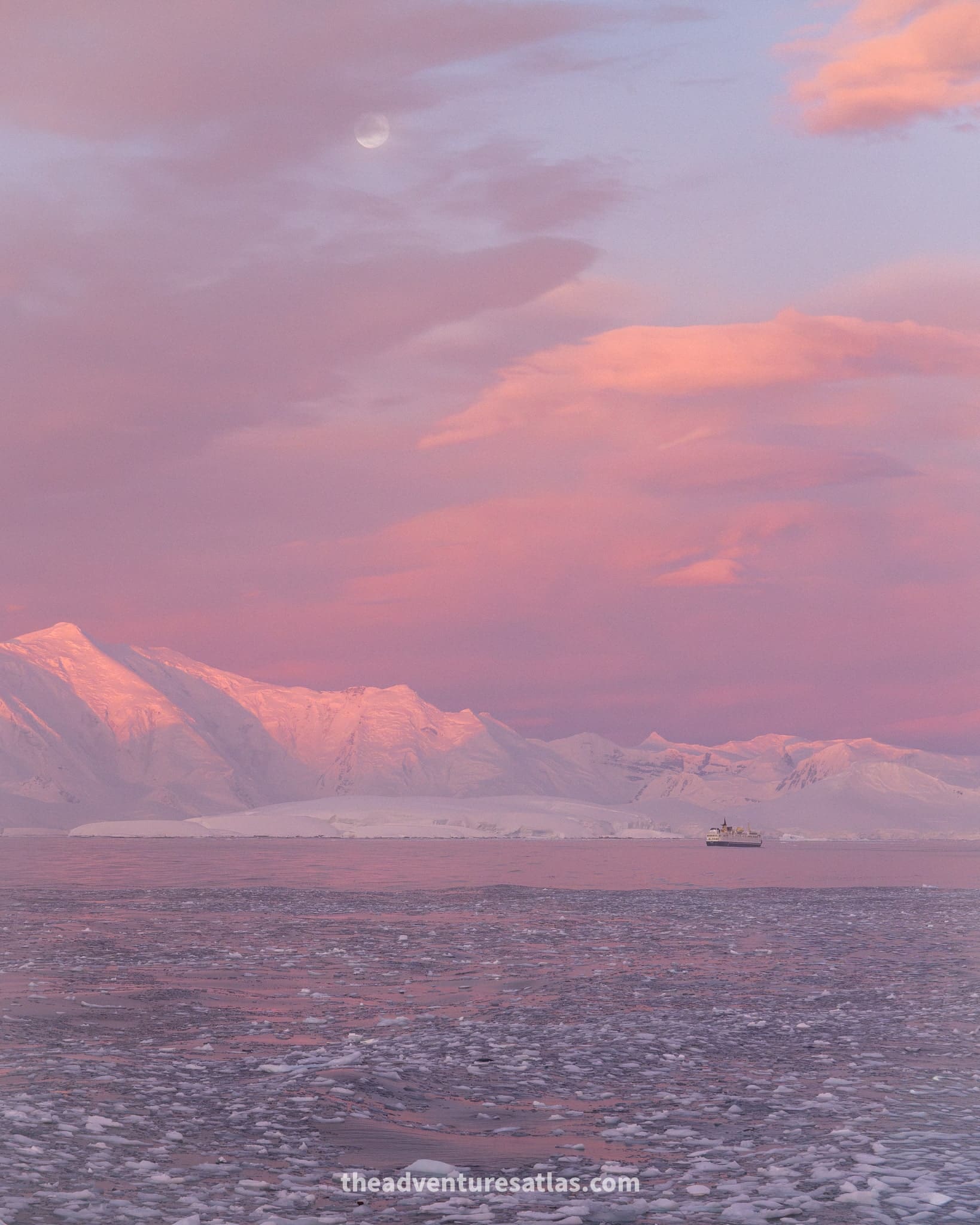
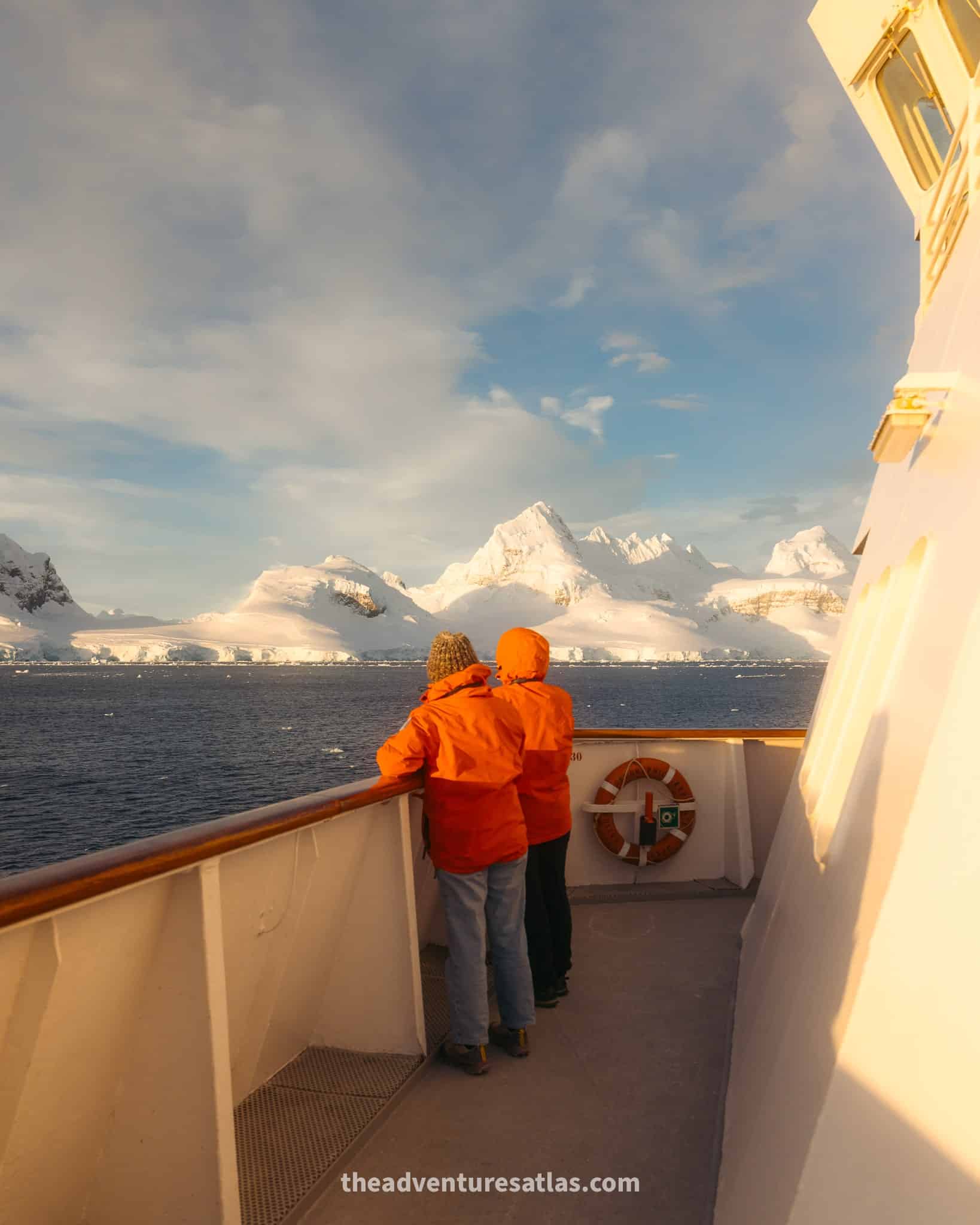
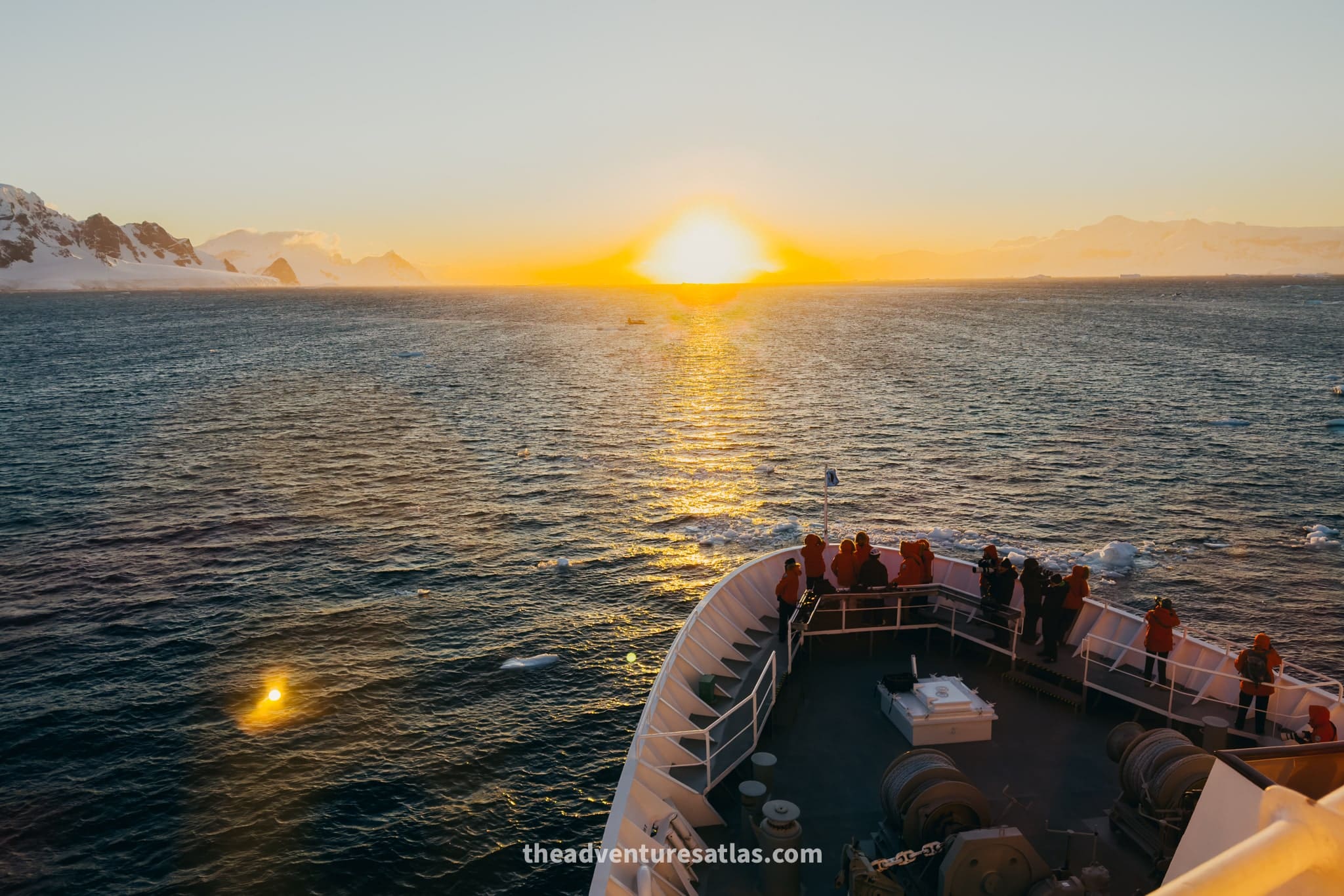 Passengers bundled up on the bow as we approached the Lemair Channel around 9:00PM
The Drake Passage: Earning Your Stripes at the End of the World
No trip to Antarctica is complete without crossing the Drake Passage.
This legendary 500-mile-wide body of water separating South America from the Antarctic Peninsula is known for having the roughest seas on Earth.
You might get lucky and experience the “Drake Lake,” where the water is eerily calm. Or, you might get the “Drake Shake,” a rollercoaster of 20- to 30-foot swells that will test your sea legs (and your stomach).
Luckily, you’ll only cross the Drake once if you go to the Falklands and South Georgia (compared to twice if you just do Antarctica alone).
We had a pretty mild crossing and the experts on board told us that calmer conditions are actually more the norm than the 20 foot swells you see all over social media. But, of course, calm seas don’t make for great content.
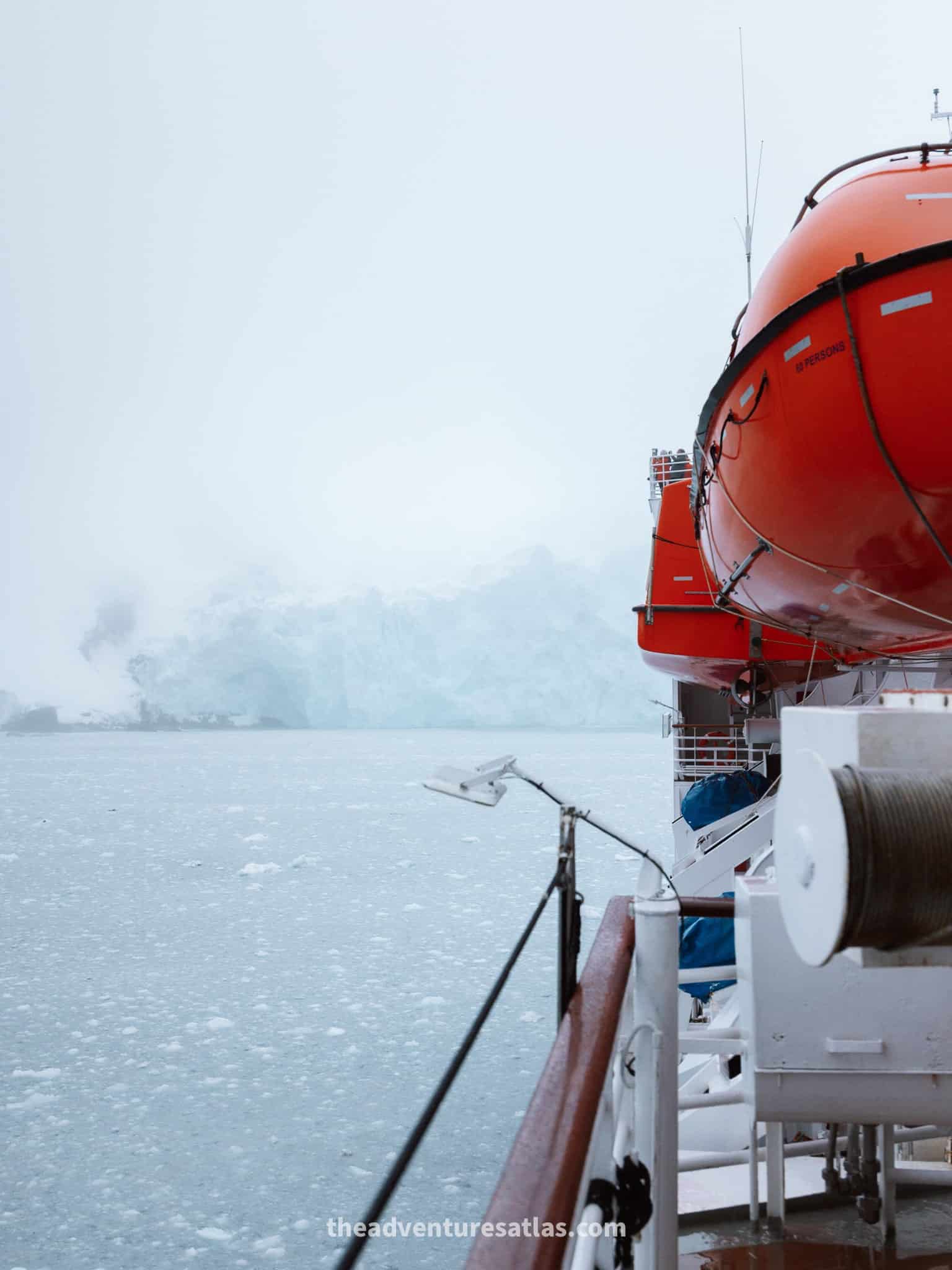
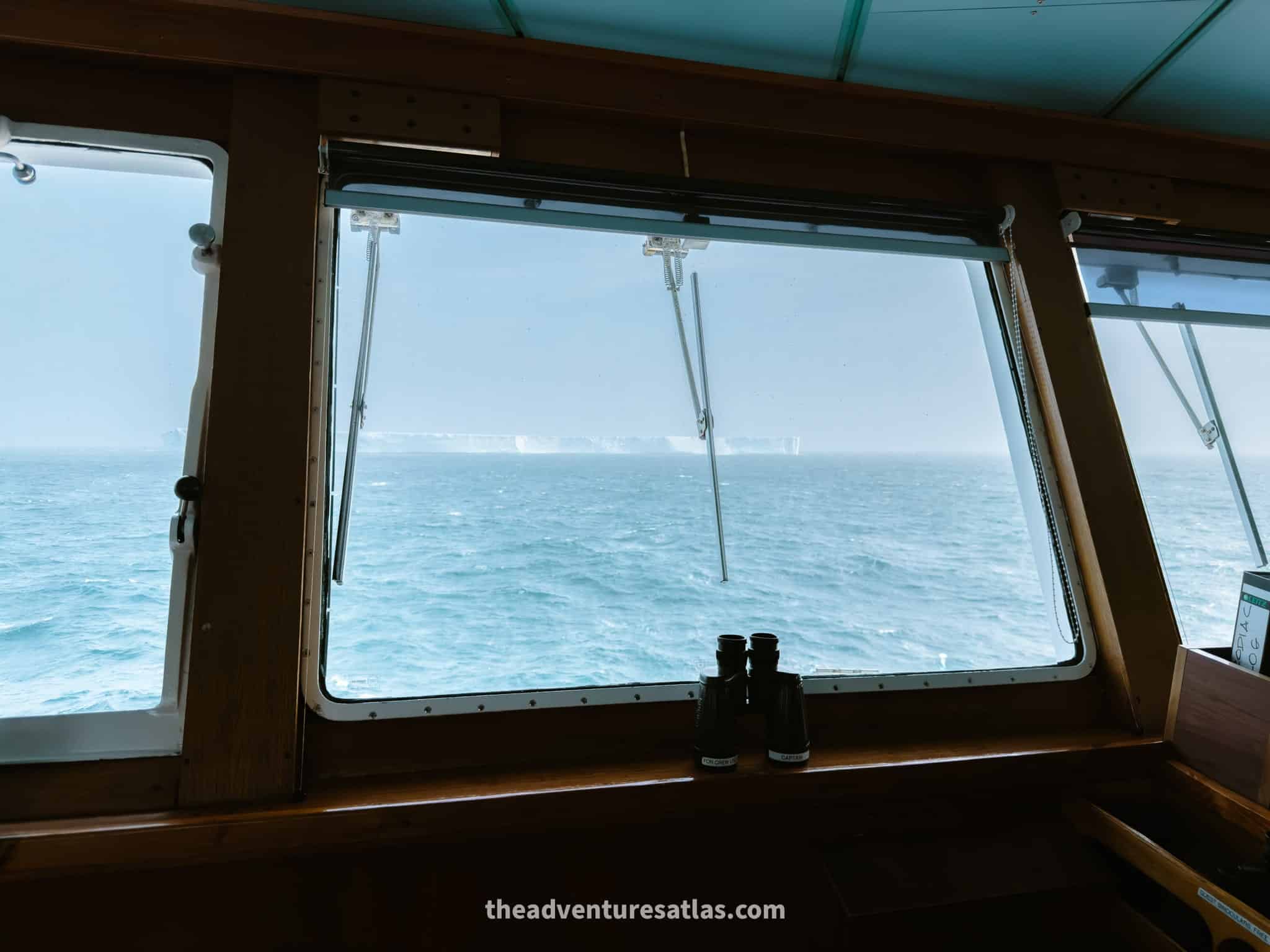 A view of the open sea from the bridge on the National Geographic Explorer
Can’t-Miss Antarctic Experiences
There are a lot of amazing experiences you’ll have on a trip to the Falklands, South Georgia and Antarctica.
But here are a few that stick out at the top of my mind:
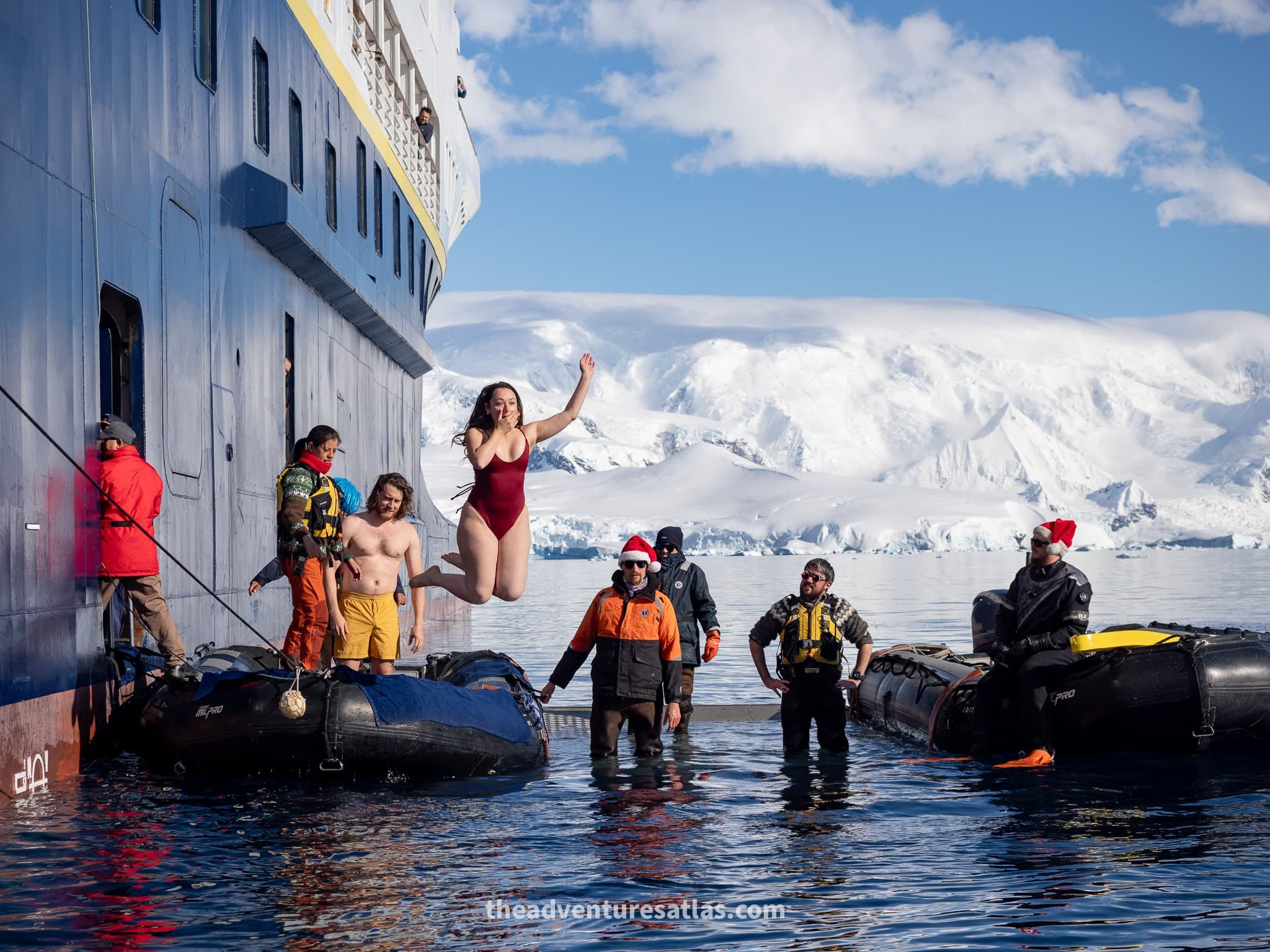
The Polar Plunge
This is a rite of passage and you have to do it! Well, you don’t have to, but I do think you’d regret not doing it, as long as you’re physically able.
We did it on a sunny day when the water temperature was 28F/-2C. The moment I hit that freezing water, every nerve in my body fired just pure adrenaline.
It’s a brief, breathtaking shock to your system. But it’s actually incredibly fun and the feeling of accomplishment you feel afterwards is only matched by the cheers of all the other passengers and the celebratory shot of vodka waiting for you.
And the lifetime bragging rights, of course.
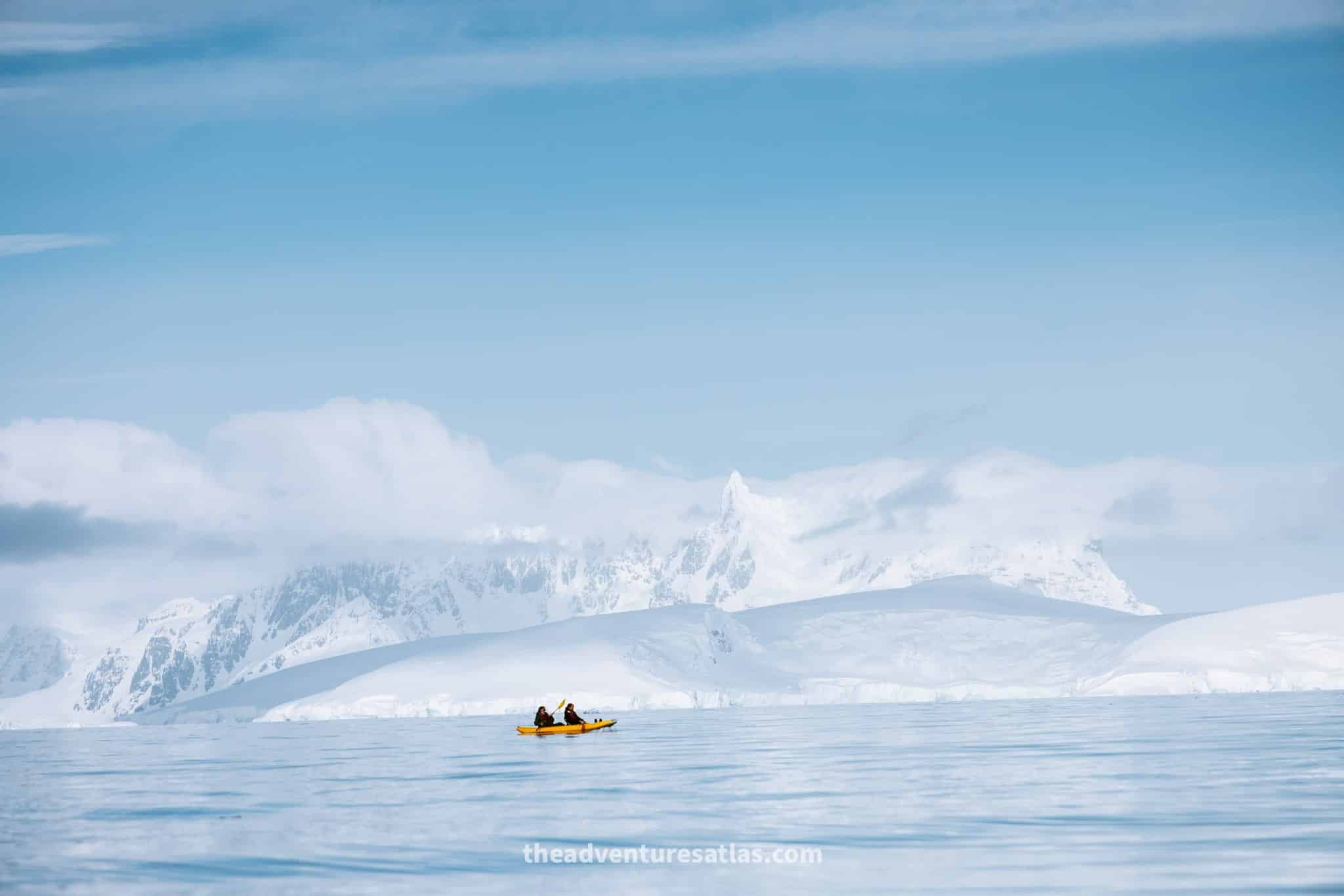
Kayaking in Antarctica
This was one of our most profound connections to the landscape. The world goes absolutely silent, except for the sound of your paddle and the crackling of ice around you. The water was so still it looked like we were floating on a giant mirror.
Mailing a Postcard from the End of the World
It might be the most unique piece of mail you’ll ever send.
There’s a little post office in South Georgia where you can purchase a postcard and some cool stamps to send a letter to yourself from the world’s most southerly post office. It only costs a few dollars.
We mailed one to ourselves and one to my fiance’s parents. It only took a few weeks to reach his parents, but it’s been over 2 months for us and we still haven’t received ours.
It might take months (or even up to a year) to arrive, but it’s an awesome souvenir.
An Honest Review of My National Geographic Lindblad Expedition
Okay, let’s talk about the biggest decision you’ll make when planning your trip: choosing who to go with.
We went with National Geographic Lindblad Expeditions, and after spending 22 days on board the Explorer, I have a lot of thoughts.
So, is it worth the splurge? Here’s my completely honest, no fluff review.
Ship (4/5 stars) ⭐️⭐️⭐️⭐️
Staff (5/5 stars)⭐️⭐️⭐️⭐️⭐️
Comfort and amenities (4/5 stars) ⭐️⭐️⭐️⭐️
Food (5/5 stars) ⭐️⭐️⭐️⭐️⭐️
Overall experience (5/5 stars) ⭐️⭐️⭐️⭐️⭐️
The Verdict: Is It Worth It?
Nat Geo-Lindblad is one of the most expensive options out there.
But having done it, I can say with 100% confidence that yes, it is absolutely worth the investment. It was an experience that went so far beyond our highest expectations.
The price is almost entirely all-inclusive (charter flights, hotels, drinks, all excursions, and even tips), so you aren’t getting nickel-and-dimed on board.
The real value, though, is in the quality of the experience itself. It’s important to recognize that you are paying for an expedition, not a cruise, and the difference is something you feel every single day.
What I Loved (The “Nat Geo Difference”)
For me, what sets Nat Geo-Lindblad apart boiled down to a few key things you just don’t get with other operators.
- The people are brilliant: This is the real secret. You aren’t just with guides; you are with active scientists, historians, and a National Geographic photographer. These are the people you see on documentaries, and they are on the ship with you, eating dinner, answering your millionth question about penguins, and their passion is absolutely contagious.
. - It’s very science focused: The lectures and debriefs are lot more science and data-heavy than other companies. The trip is about the true experience and learning about the local ecosystems, not just about hanging out on a luxury ship.
. - They GENUINELY care: The commitment to conservation is unmatched. South Georgia and Antarctica are some of the most ecologically sensitive places on earth and it feels good to travel with a company that so deeply respects the place you’re there to see.
What to Consider (Setting Realistic Expectations)
A balanced review is an honest one, so I’ll say that this trip is incredible, but it’s not for everyone. Here’s why:
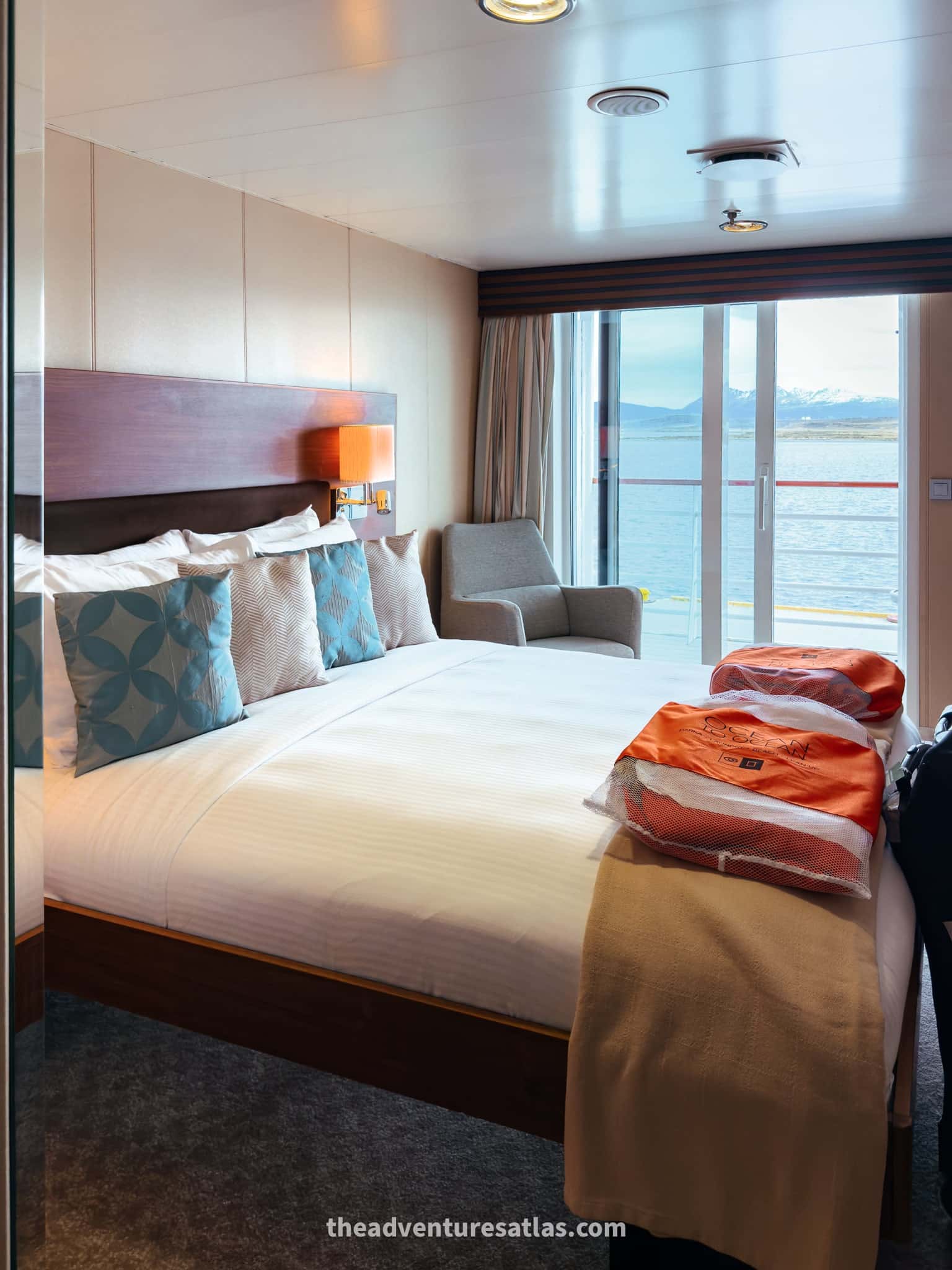
- It’s an Expedition Ship, Not a Floating Resort: We were on the National Geographic Explorer, which felt very much like an expedition ship. It’s comfortable, incredibly stable in rough seas, and built for the polar regions. But you won’t find a casino, a theater or formal nights here. The luxury is in the experience and the expertise, not the onboard bells and whistles.
.
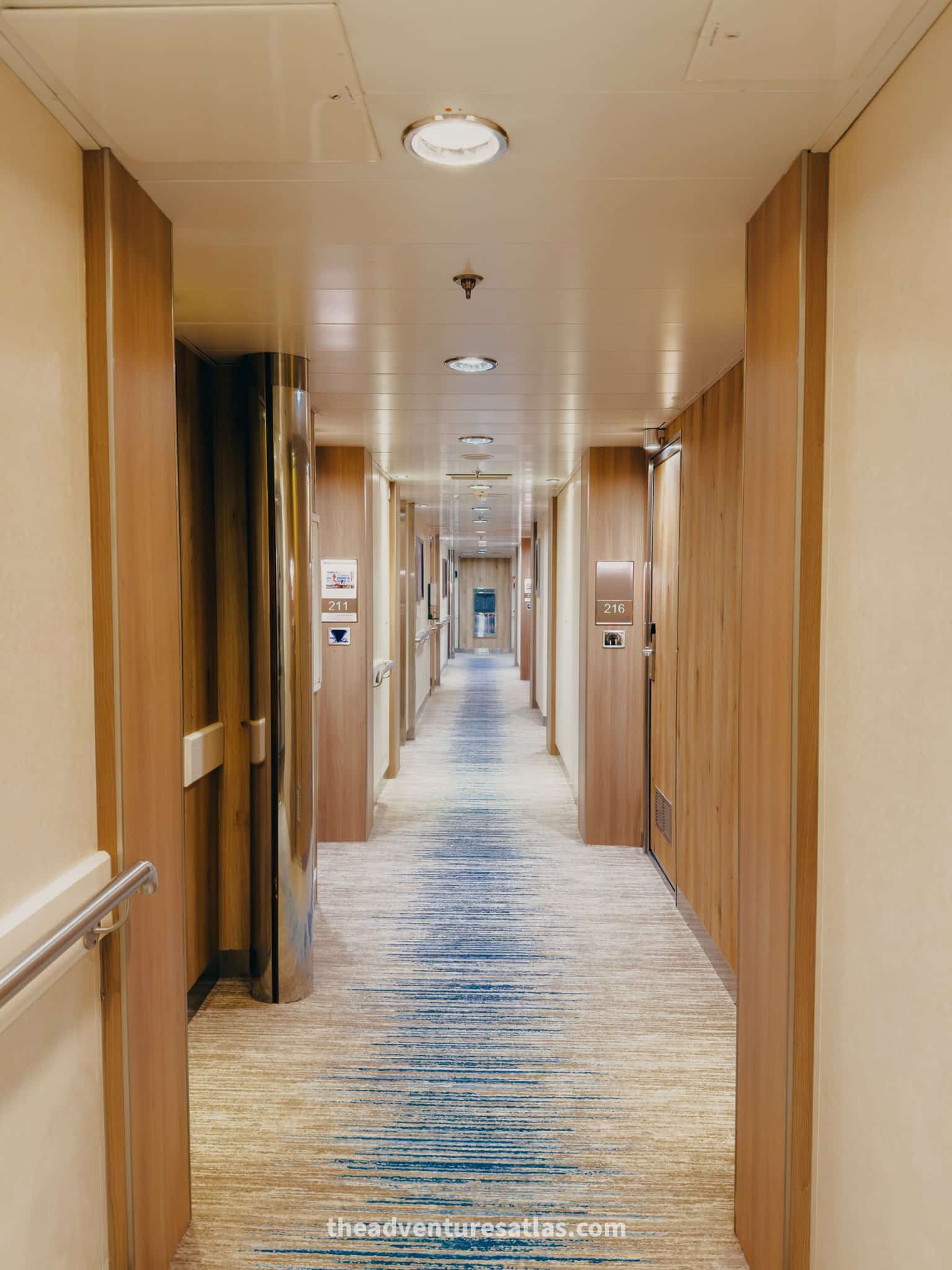
Our cabin, Room 216, really did feel like home. It was the perfect place to come back to after a day out in the elements, download photos, and get ready for the next adventure.
. - The Focus is on Learning: If you just want to sip cocktails and look at penguins from a distance, this might not be the trip for you. The days are packed with lectures, briefings, and opportunities to learn. It’s an immersive educational experience, which I loved, but it’s not a passive vacation.
Who is this Trip For?
This expedition is perfect if you’re a curious traveler, if you’ve ever dreamed of stepping into a real life Nat Geo documentary, and if you want to understand the “why” behind what you’re seeing and you want to come home with a deeper appreciation for the planet.
What to Read and Watch Before You Go
One thing I wish we did more of was prepare ourselves for everything we were about to learn on the trip.
To get truly hyped for your trip and to understand the incredible history of the place you’re about to visit, I highly recommend diving into some stories of Antarctic exploration beforehand. It gives you a much deeper appreciation for what you’re seeing.
- To Read – Endurance: Shackleton’s Incredible Voyage by Alfred Lansing: This is the book on Shackleton, the most famous Antarctic explorer. When you finally see South Georgia and Elephant Island, you’ll have goosebumps knowing exactly what those men endured right where you’re standing.
. - To Watch – Our Planet: Frozen Worlds (Netflix): Watch the wildlife you’re about to meet in 4K. It’s narrated by David Attenborough and the footage of the calving glaciers and massive penguin colonies is a great way to get excited for what you’re about to see!
Frequently Asked Questions About Your Antarctica Expedition
Do you get parkas on a National Geographic-Lindblad Cruise? How do they fit?
Yes! National Geographic provides a high quality, waterproof parka that’s yours to keep. They’re super warm, but also have a removable lining so you can adjust to your comfort level. We wore them every day.
The parkas are unisex, but I found that they run a bit small.
For reference, I’m usually a size small/medium in women’s jackets and a medium parka fit me just right, with room for a fleece and base layer underneath. However, my fiance is 6’3 and normally wears a large, but he had to size up to a XL because the sleeves were so short on him.
My recommendation is to go off the size chart they give you. If you’re between sizes, size up. If the jacket doesn’t fit right, you can always swap it out for a different size once you’re on board.
Read next: The Complete Antarctica Packing List (For a 10 to 22-Day Expedition)
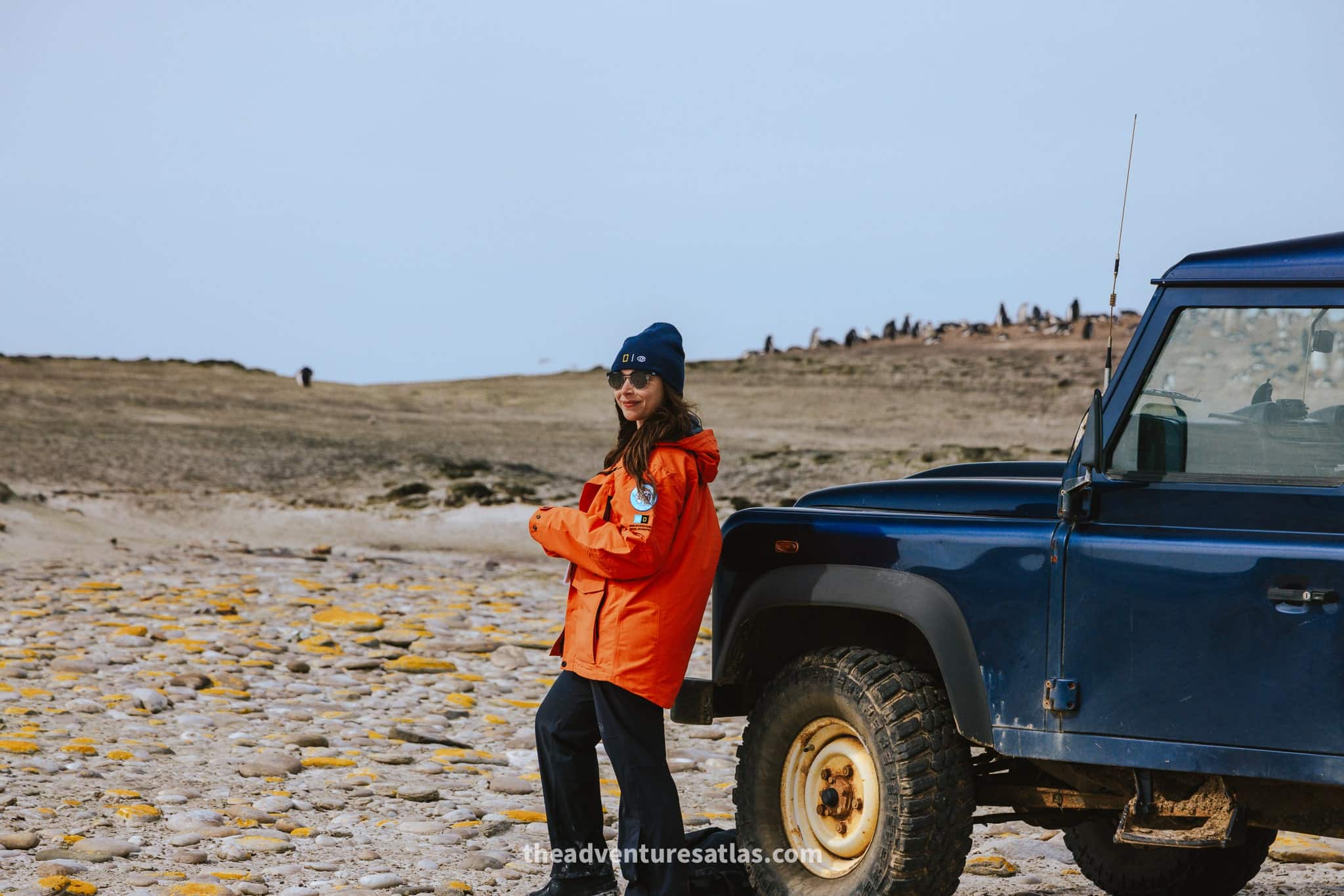
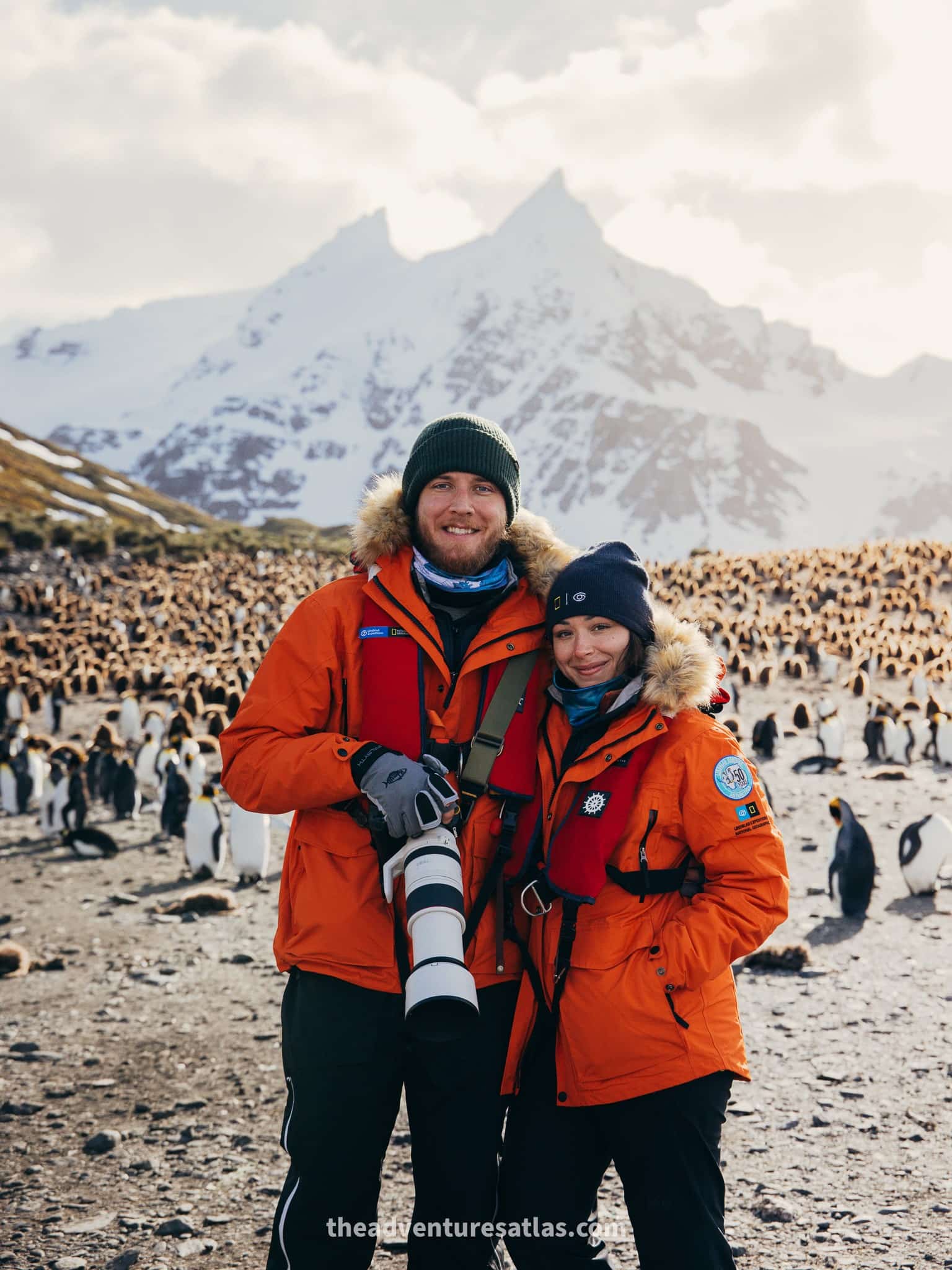 Here’s a photo of us in our National Geographic-Lindblad parkas! I’m wearing a size M and my fiance is wearing a XL
Will I get seasick on the Drake Passage?
Possibly, yes. The Drake Passage is legendary for a reason, but rough conditions aren’t guaranteed. You’ll either get the “Drake Lake” (eerily calm) or the “Drake Shake” (the rough rollercoaster). It’s kind of a gamble.
My advice: Come prepared for anything. Talk to your doctor before you go about prescription options like the Scopolamine patch, which many people on our ship had. At a minimum, bring regular seasick pills like Dramamine or Meclizine and start taking it before you feel sick (this is key).
The National Geographic Explorer also had a 24 hour buffet of ginger chews, green apples and sea sick meds. The ship’s doctor is also well equipped to help.
How physically fit do I need to be?
You don’t need to be a marathon runner, but you should have decent mobility. You’ll need to be stable on a moving ship, be able to step in and out of Zodiacs, and walk on uneven, snowy terrain. There are always options for different activity levels on landings.
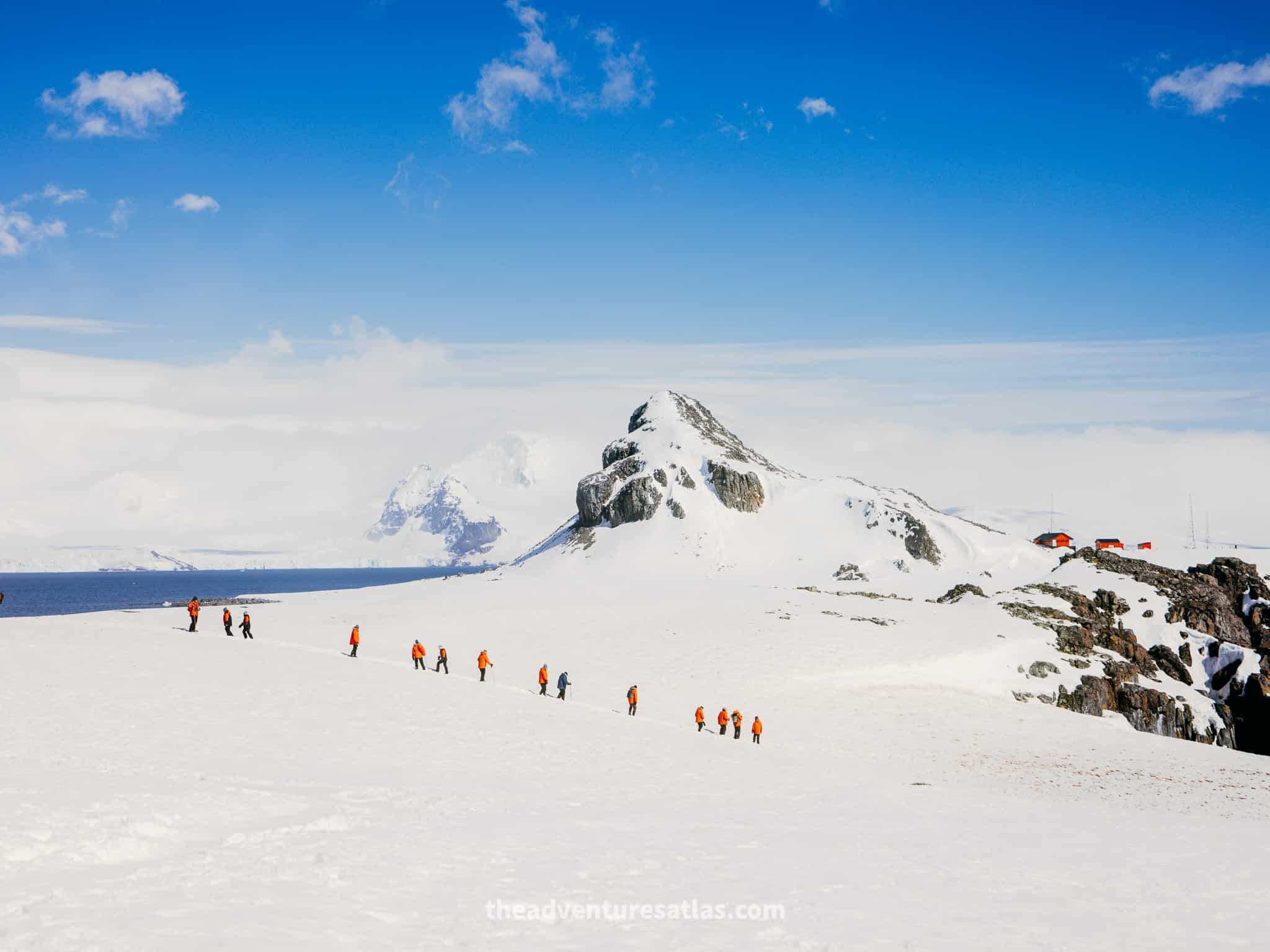 Hikers walking across Halfmoon Island, Antarctica
What are the Zodiac landings actually like?
The Zodiacs are the heart of the expedition and the entire reason you’re able to get off the ship.
Twice a day, you’ll get a call to head to the mudroom to gear up. The crew has a seamless and safe system for helping you board.
You’ll take these sturdy, inflatable boats from the larger ship to shore, or cruise around small bays and inlets if landing isn’t possible. The rides themselves are incredible! You get to cruise through a maze of icebergs, getting sprayed by sea mist, and watching for whales.
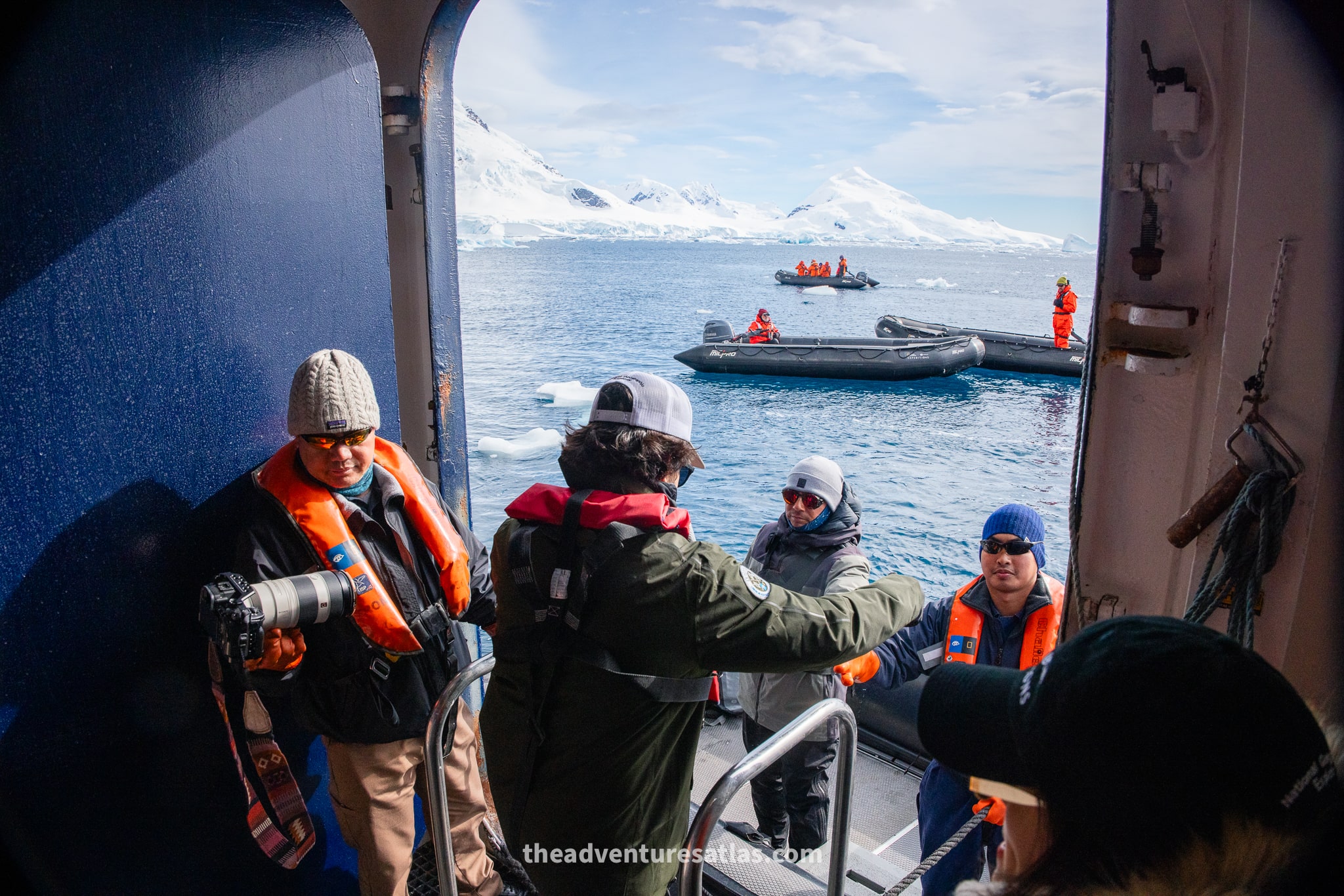 Boarding a zodiac for our afternoon outing in Antarctica
Can I use my cell phone? Is there WiFi?
Plan on being disconnected. Most ships offer Starlink packages but they’re slow and unreliable – mostly only good enough for sending a few emails or iMessages.
My advice though is to fully embrace the digital detox. It’s a rare opportunity to be fully present in one of the most remote places on Earth.
What is the food like on an expedition ship?
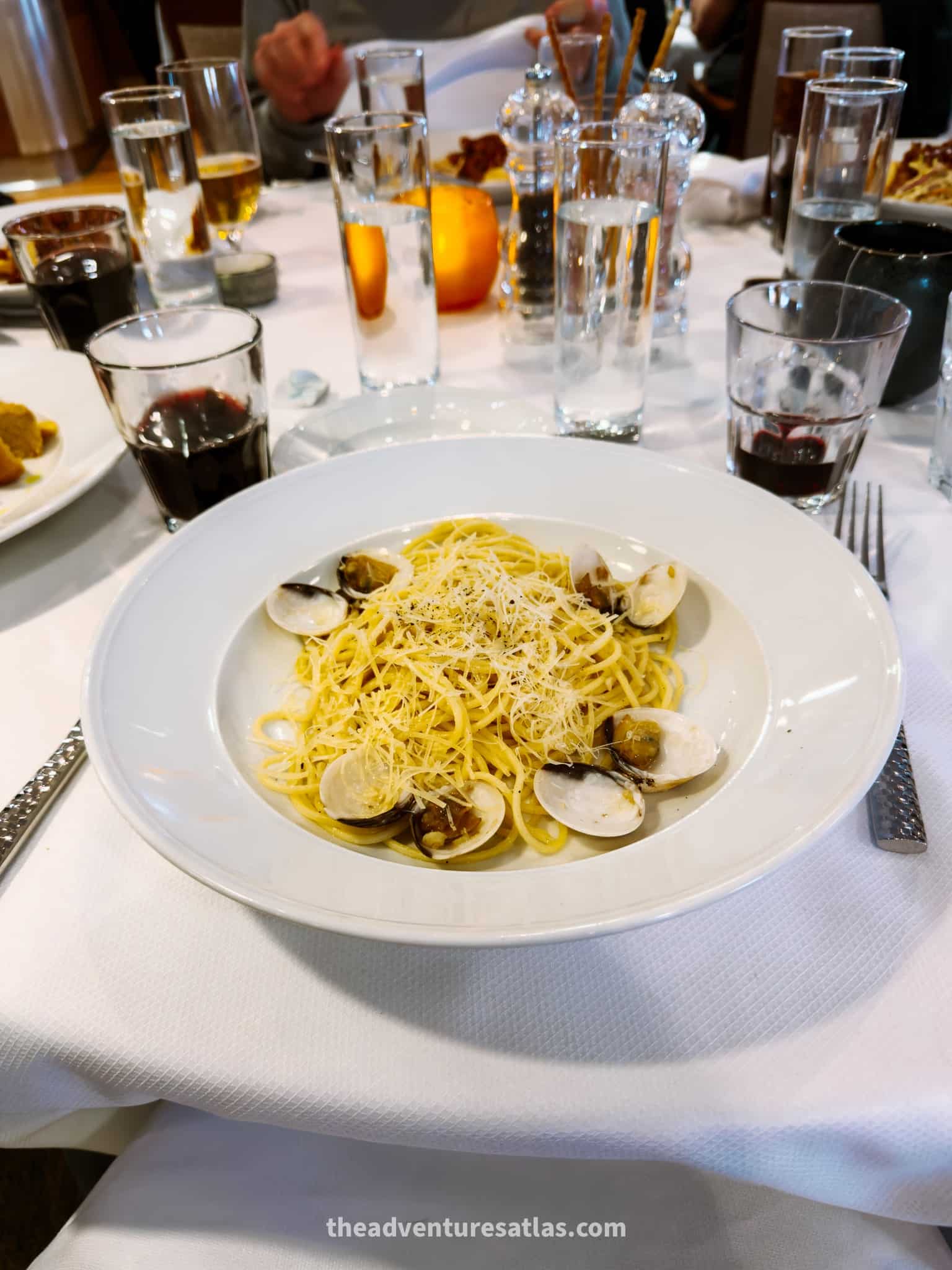
The food onboard the ship is excellent. I was so impressed by the quality and variety, and how the heck the chef managed to make a different meal for 200 people every day for 22 days.
We had multi course dinners, a huge range of options at the breakfast and lunch buffets, cocktail hour, and tea time with snacks. They catered to all dietary needs. You will definitely not go hungry.

Can I do laundry on board?
Yes, but it’s pricey. One load of laundry (a few personal things, some leggings, and a few base layers) came to around $50.
I recommend packing merino wool layers (which you can wear multiple times) and hand-washing small items in your cabin sink. The air in your cabin is super dry, so things dry pretty fast.
How much cash do I need to bring?
You don’t need to bring much cash with you. Almost everything on board can be charged to your cabin account, which you settle with a credit card at the end.
The only places you might need cash are for small souvenirs in Stanley and South Georgia. You’ll want to bring a few hundred US dollars just in case, but you will primarily use your credit card.
Extending Your Adventure: What to Do After Antarctica
Your journey doesn’t have to end when you step off the ship in Ushuaia! You’re already at the doorstep of one of the most beautiful regions on Earth: Patagonia.
Many travelers (including us!) use their Antarctica expedition as a launchpad for further exploration.
If you have extra time, I highly recommend:
- Hiking in Chilean Patagonia Region: Just across the border lies Chile’s crown jewel: Patagonia. The dramatic peaks of Torres del Paine National Park and remote wilderness regions are truly unforgettable. Here’s my guide to the best hotels in Torres del Paine National Park and the best places to see in Chilean Patagonia
. - Glamping in Torres del Paine: This is one of the most luxurious glamping experience in one of the most remote places on Earth. Here’s where you can read all about our own experience at EcoCamp Patagonia.
. - Experience Easter Island (Rapa Nui): For the ULTIMATE once-in-a-lifetime trip, you can combine your Antarctic expedition with another bucket-list destination: Easter Island. While it does require a few extra flights, seeing the Moai is an experience you’ll never forget (and you’re already halfway there!). Here’s my guide to planning a trip to Easter Island.
***
Antarctica isn’t a trip you just take; it’s an expedition you experience. Whole heartedly. It’s one of those rare places that gets into your soul and genuinely changes you.
This expedition is a complete immersion in a world that few will ever see. It is, without a doubt, the greatest adventure on Earth.
Did this Antarctica Expedition Guide inspire you to book your own trip? Let me know in the comments!

Hi, I’m Jackie! I’m a travel photographer and content creator based near the Adirondack Mountains of Upstate New York. I’m also a millennial who works full-time, yet I still find ways to travel frequently without breaking the bank, because traveling is what makes me feel most alive. Now I help fellow travelers who also work 9-5 and are looking for ways to travel more with limited PTO.
Related Posts
WANT TO SAVE MONEY TRAVELING?
Check out my list of reliable budget-friendly travel resources that are guaranteed to save you the most money, without compromising your experience.